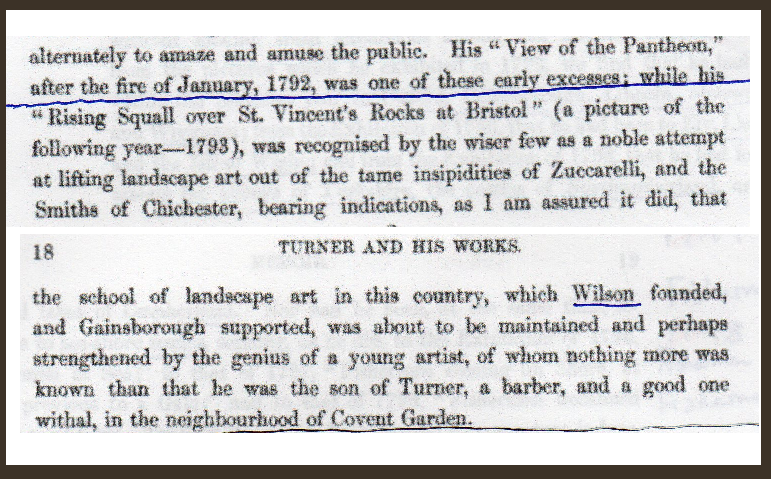

Successive Locations of 'The rising squall, hot wells, from St. Vincent's rock, Bristol'
Chapter VI: The Whereabouts of 'The Rising Squall', tracing alternative ownerships: Definitive locations from 1793 to 9th July 1864
Successive Locations of 'The rising squall, hot wells, from
St. Vincent's rock, Bristol'
Chapter VI: The Whereabouts of 'The Rising Squall',
tracing alternative ownerships: Definitive locations from 1793 to 9th July
1864
The Whereabouts of 'The Rising Squall', tracing
alternative ownerships
To determine successive locations of 'The rising squall, hot
wells, from St. Vincent's rock, Bristol'
To seek a contemporaneous description and find out where it might
have been abandoned
Definitive locations from 1793 to 9th July 1864
1. The Royal Academy Exhibition of 1793
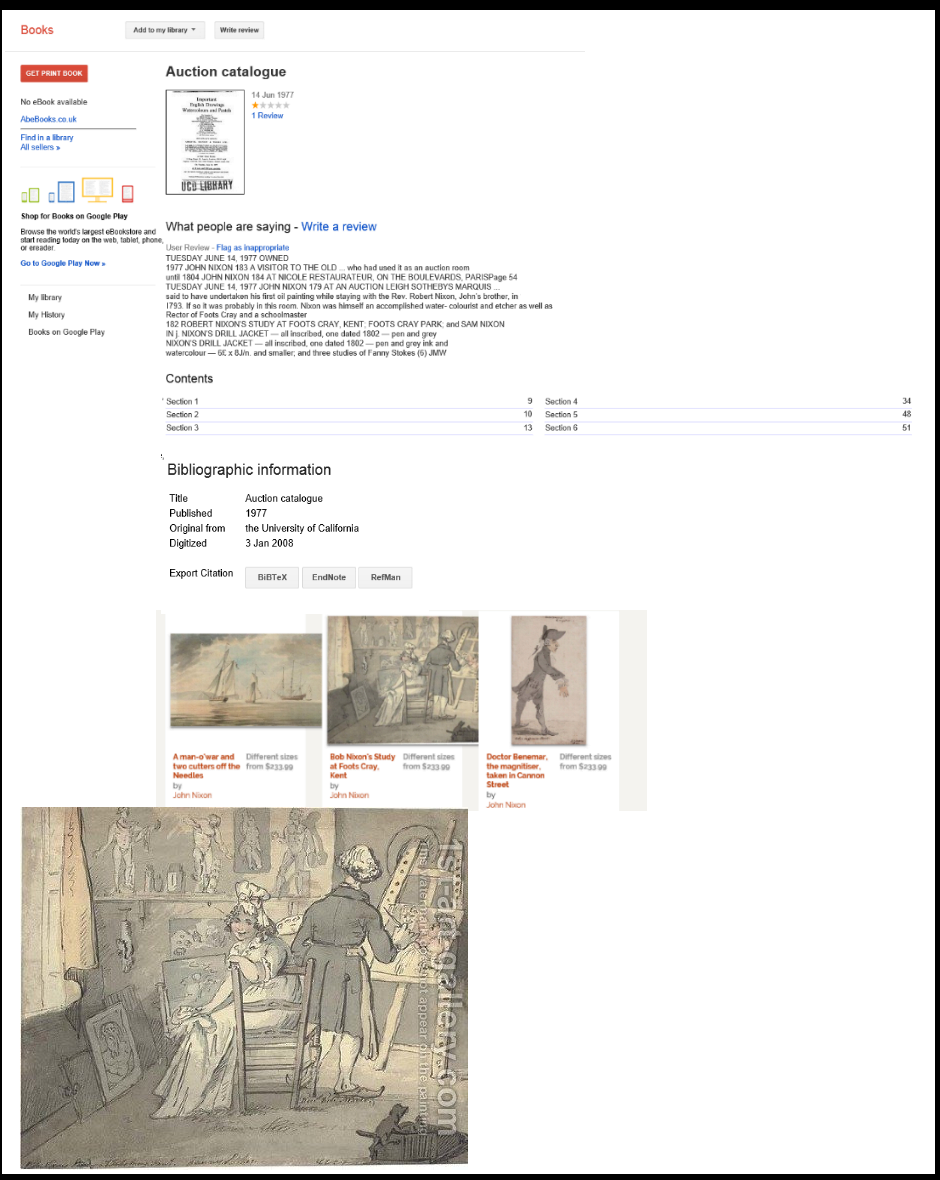
In 1793 the picture was in London with Turner, at Somerset House for the duration of the exhibition (May & June) and with Turner again after the exhibition (late June) [exhibition catalogue as evidence]
2. Rev. Robert Nixon at Foots Cray, Kent, London and Kenmure, 1793-1837
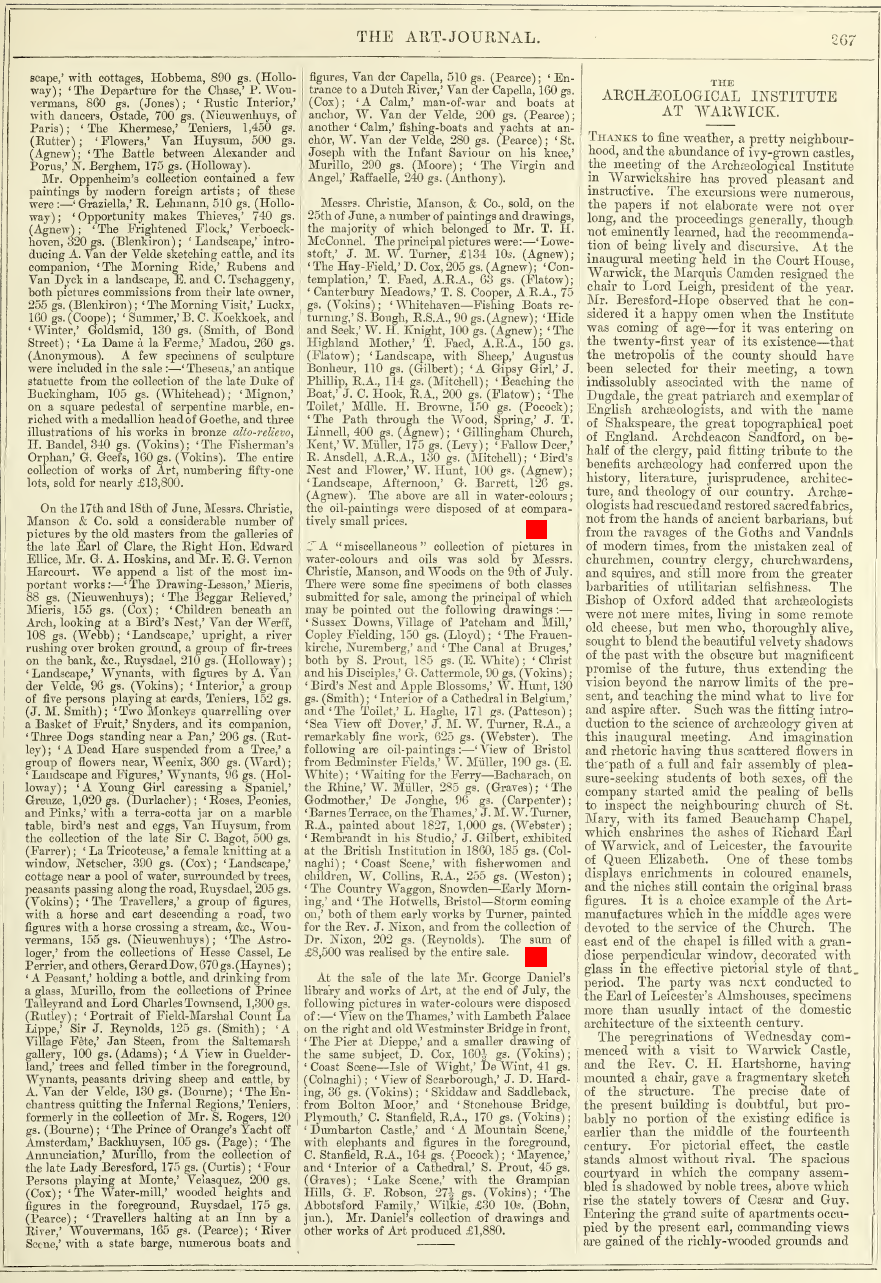
No record is found for the transfer of the picture from Turner to Nixon. However, Turner visited Kent in 1793 to work on the Walker commission and that would be an opportunity to deliver the picture to Foots Cray. Possession by Rev. Robert Nixon is established by a later reference, 'The Art Journal, 1864, page 267'.
Loans to exhibitions by Rev. Robert Nixon have not been found. By 1815 Nixon was living in London and by 1828 in Kenmure Castle, Scotland. It is not clear whether his collection was taken to Scotland. Nixon died in 1837. 'The rising squall, hot wells, from St. Vincent's rock, Bristol' descended to his second son, Francis Russell Nixon.
3. Rev. Dr. Francis Russell Nixon in London, Tasmania and York (1827), 1837-1864
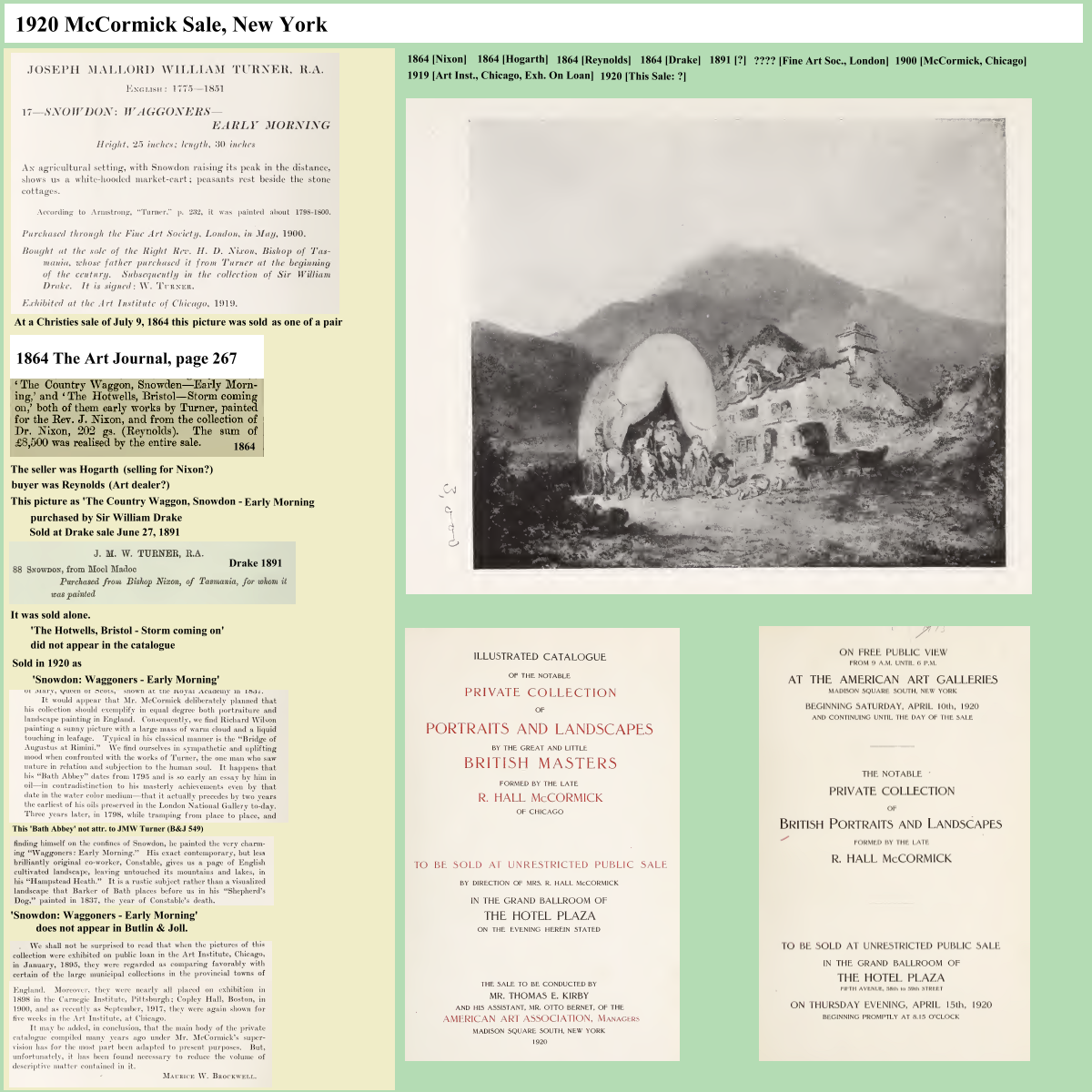
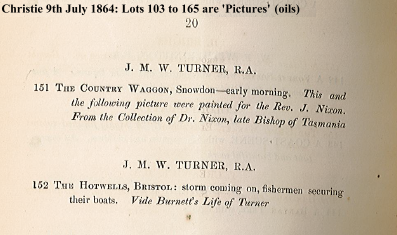
'The Art Journal, 1864, page 267' also shows that the picture was accompanied by another, 'The Country Waggon, Snowdon - Early Morning'. Hobart Town exhibition catalogues and historical documents suggest that Dr. Francis Russell Nixon did not know the title of 'The rising squall, hot wells, from St. Vincent's rock, Bristol' for he called it simply, 'Landscape'. The same refernces show that FR Nixon had only five Turner's and that only two of them were oils. 'The Art Journal, 1864, page 267' shows FR Nixon's two JMW Turner oils sold together, thus it is established that 'Landscape' is 'The rising squall, hot wells, from St. Vincent's rock, Bristol'
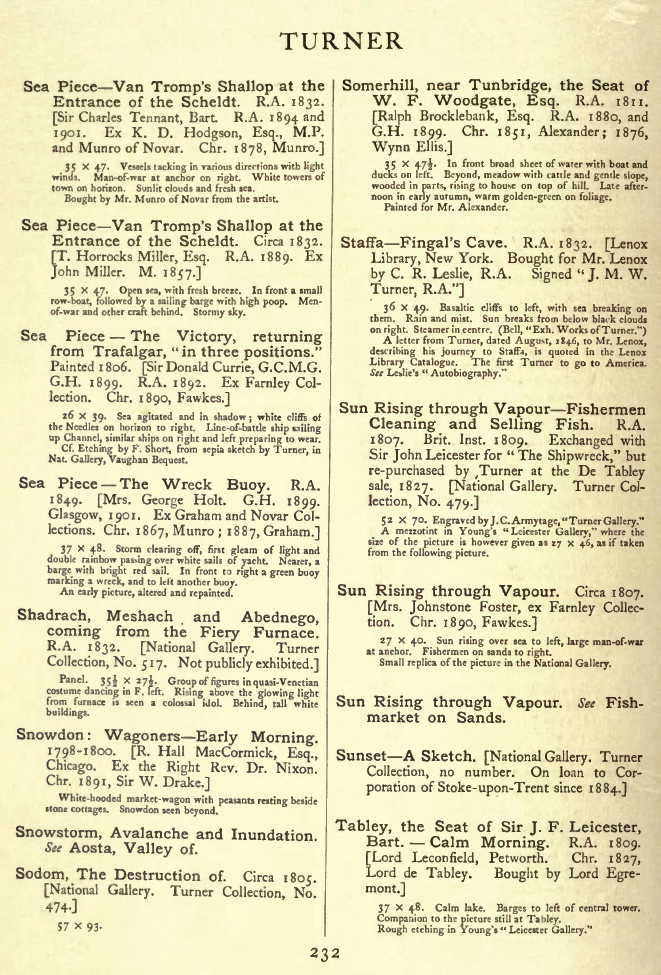
In 1842 Nixon was appointed Bishop of Tasmania. The picture's presence in and around Hobart Town from 1843 to 1862 is well documented by two exhibitions, historical documents and letters. However, 'The Country Waggon, Snowdon - Early Morning' (as 'A view of Mount Snowdon in Wales') gets far more attention because FR Nixon thought it was the first oil painted by Turner. (There is also later documentation for 'The Country Waggon' in Armstrong p 232and McCormick.)
Hobart Town documents provide evidence that Bishop Nixon owned only
five
Turners and that two were oils. He called one of the oils
'Landscape' and we rely on the Art Journal 1864 evidence as proof that
'Landscape' was 'The rising squall, hot wells, from St. Vincent's rock,
Bristol'. As regards 'The Country Waggon', it is in
Armstrong p 232 where it is described.
The three JMW Turner watercolours in Bishop Nixon's collection were:
'Ruins
of Sir Gregory Page Turner's House, Blackheath', 'River
Scene, View on the Dee' and 'Shakespear's
Cliff, Dover'.
4. At Christies on 9th July 1864 as recorded in The Art Journal
'The rising squall, hot wells, from St. Vincent's rock, Bristol' was in London at Christie's on 9th July 1864.
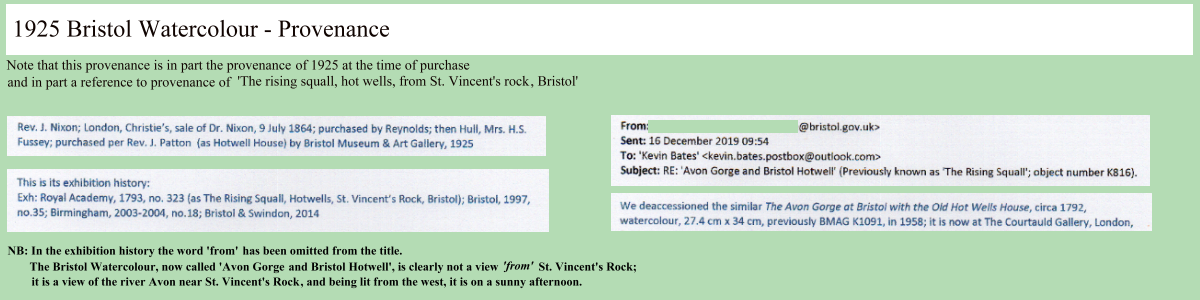
The Art Journal 1864, catalogue for 9th July 1864 and the Bristol Watercolour provenance provide evidence that
[To be updated] To display Hobart Town List of collection next to the Art Journal or catalogue entry