April 2021
JMW TURNER
The Country Waggon, Snowdon - Early Morning
25" x 30"; oil (on canvas ?); signed 'W. Turner'
Alternative names:
This work is of interest because it accompanied 'The rising squall, hot wells, from St. Vincent's rock, Bristol' (as 'The Hotwells, Bristol: storm coming on, fishermen securing their boats') at Christies sale of 9th July 1864. It was one of Bishop Nixon's five Turners and its history has been traced to 1920.
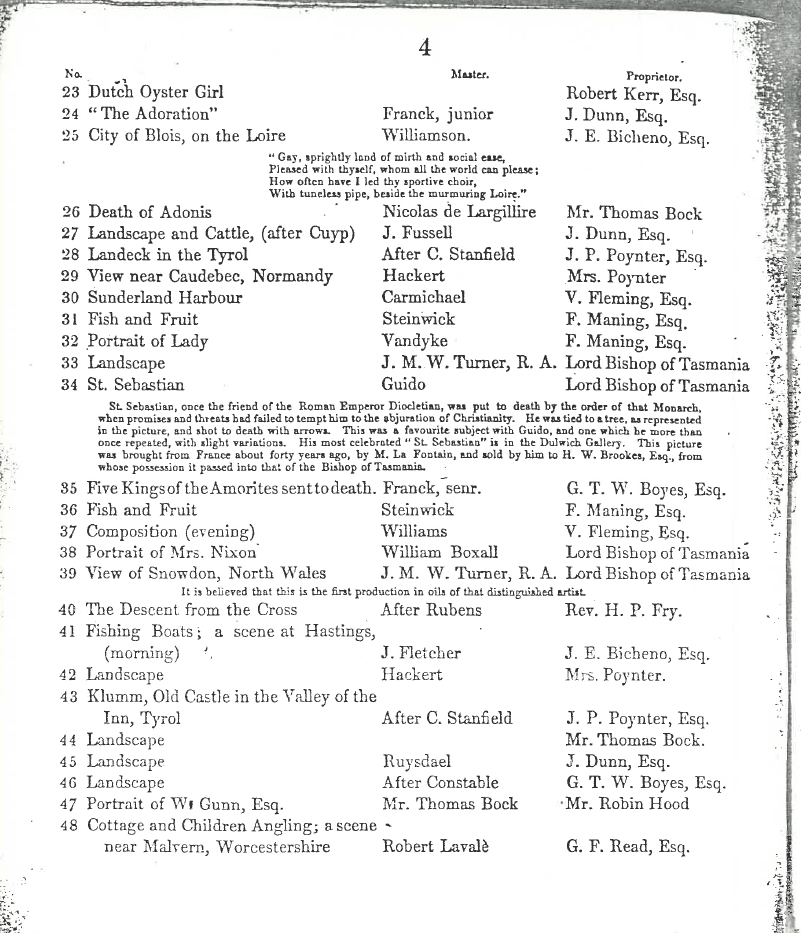
The first record of 'The Country Waggon, Snowden - Early Morning' is found at the Hobart Town Exhibition of 1845 in the possession of Rev. Dr. Francis Russell Nixon, Lord Bishop of Tasmania, No. 39 as 'View of Snowdon, North Wales'. Bishop Nixon claimed that this was Turner's first oil painting. (Here it was also accompanied by 'The rising squall, hot wells, from St. Vincent's rock, Bristol' but presented only as 'Landscape', No. 33.) Page 4 of the catalogue (shown) is in the section for oil pictures; watercolours start on page 7.
'The Country Waggon, Snowden - Early Morning' was exhibited again at the Hobart Town Exhibition of 1858.
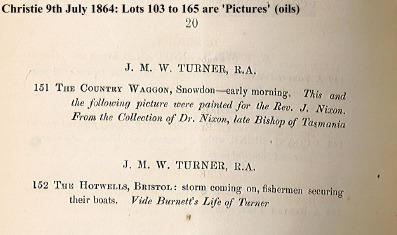
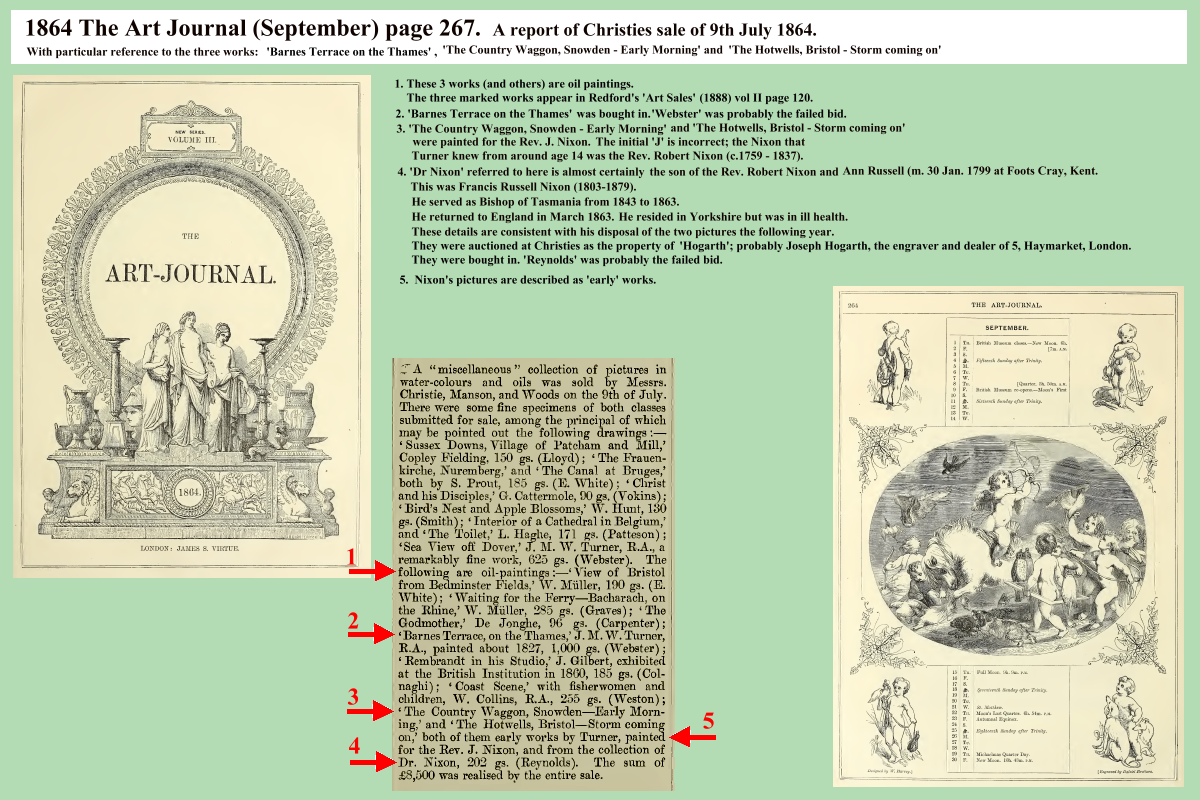
At Christies sale of 9th July 1864 the Art Journal reports that both were sold together, Redford and Christies report that they were bought in; the property of 'Hogarth' (probably Joseph Hogarth, engraver and dealer, 5 Haymarket, London). The art Journal reported 'Reynolds' as buyer but it is likely that this was the unsuccessful bid and the property was returned to Hogarth.
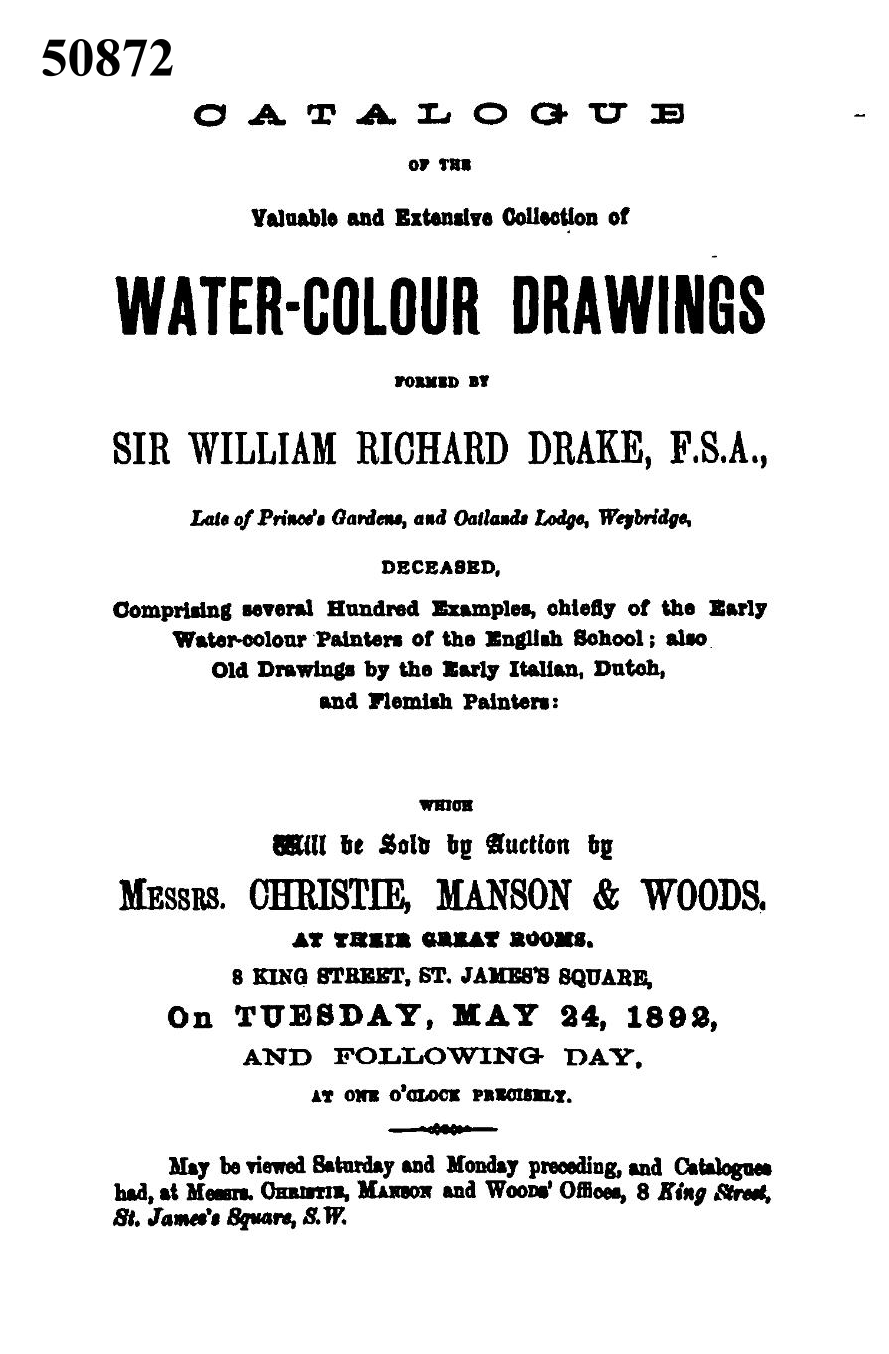
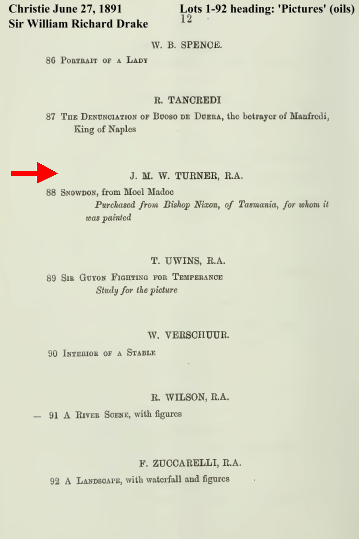
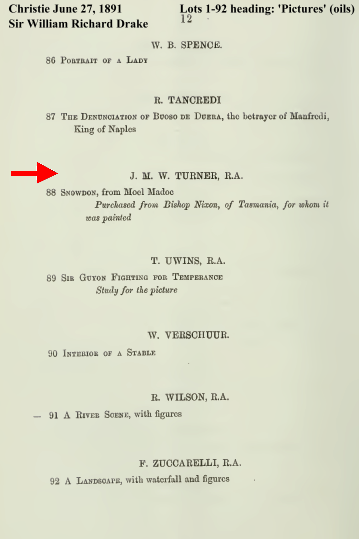
Its next appearance at auction was 27th June 1891 as 'Snowdon, from Moel Madoc' in the property of Sir William Richard Drake (Deceased). The catalogue states that it was purchased from Bishop Nixon. However, it is more likely that Drake purchased it from 'Hogarth' who had previously placed it in the 9th July 1864 sale. This 'Hogarth' appears to be the engraver and dealer 'Joseph Hogarth of 5 Haymarket, London'.
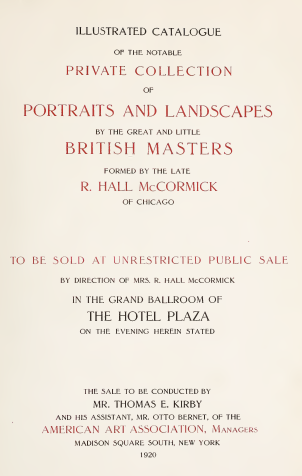
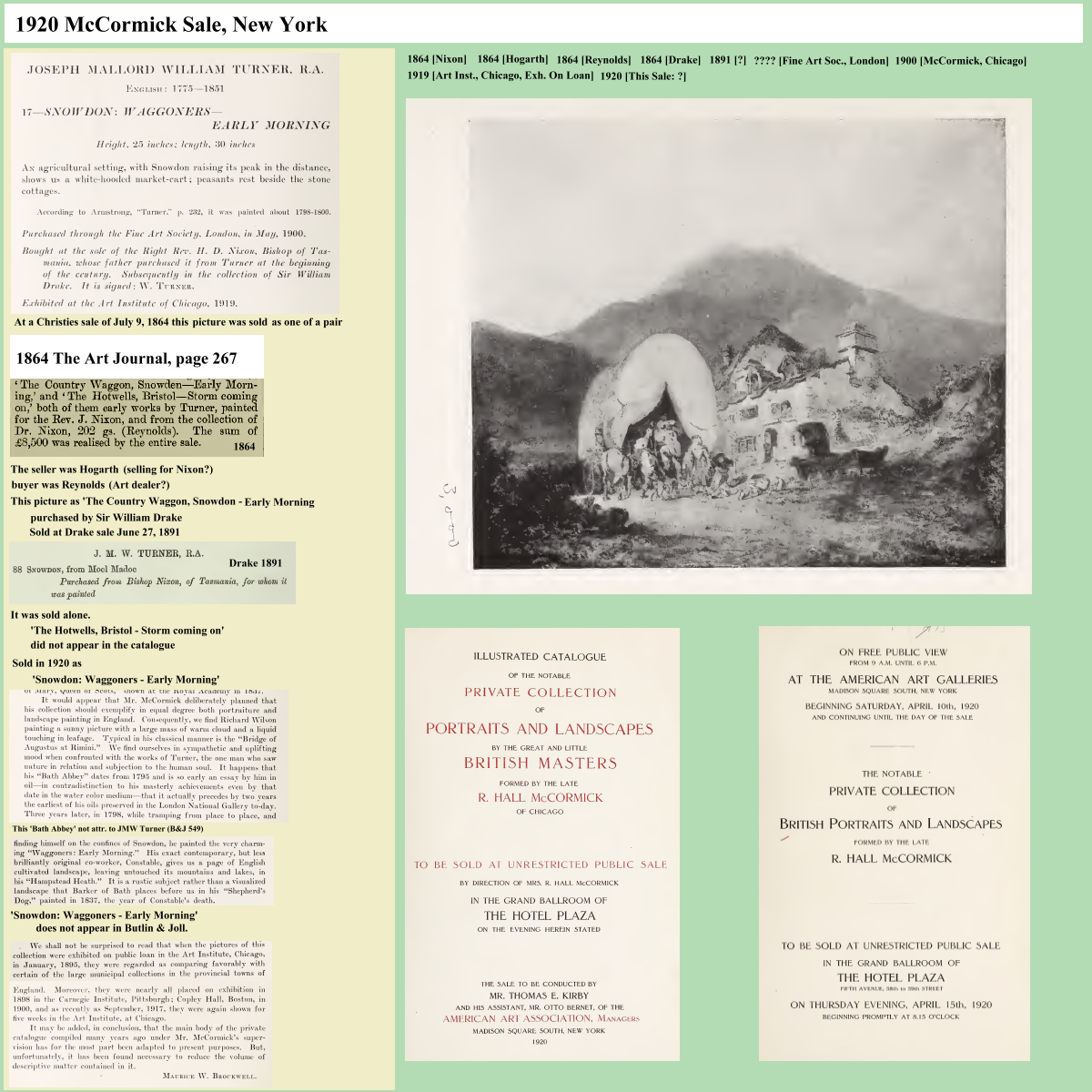
Its next auction sale was at an American Art Society sale of 15th April 1920 R. Hall McCormick, deceased. Note that McCormick bought the picture in May 1900 from The Fine Art Society, London.
Chronology
Information marked as 'unknown' merely means 'unknown
by us at the time of writing'.
Lines of enquiry or questions for which evidence has not yet been
found are marked as 'for further research'.
1792 (September) The Bishop claimed that this was Turner's first oil
painting. That cannot be correct in the light of the
Nephew's Letter from 'Once A Week' page
162. However, this could be the second oil painting on canvas
purchased at Rochester. The date (September 1792) for the 'first Kent
Tour' is given in Finberg.
Armstrong's estimate of the date would be wrong; [Armstrong
1902 page232]. There is no supporting evidence for the date which
Armstrong quotes as 1798-1800. From the one monochrome photograph
available the picture appears to be earlier.
The picture was painted for
Rev.
Robert Nixon (1758-1837)at Foots Cray, Kent. The supporting evidence
for the aquisition is in the Christie's catalogue for 9th July 1864 and
repeated in The Art Journal,
September 1864 page 267 col 2, centre, but both incorrectly showing
'Rev J..." instead of 'Rev R...'. (Note that this cannot have been
one of the 'J Nixons' because they did not have the title 'Rev'.)
1829 Taken to Kenmure with Rev. Robert Nixon.[for further research: No record has yet been found to categorically place the collection at Kenmure. It could have been divided between the sons before moving to Scotland. Edward Fenn (researcher of his family's ancestry) stated in an e-mail of 2021-03-29 that Nixon was unlikely to have a financial interest in Kenmure - it was owned by Gordon family. Robert Nixon was aged around 70 when he moved to Kenmure. This has been confirmed, Robert Nixon was appointed as a curate at Kenmure.]
1837 On the death of Rev. Robert Nixon (if not before) descended to his second son (later known as) Rev. Dr. Francis Russell Nixon, Bishop of Tasmania. [The evidence for this originates from Christie's catalogue for 9th July 1864 and The Art Journal, September 1864 page 267 col 2, centre]
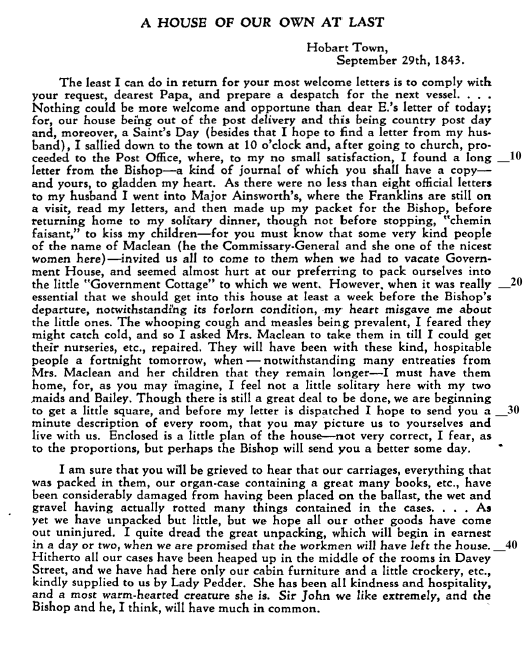
1843 Taken to Tasmania by Rev. Dr. Francis Russell Nixon, Bishop of Tasmania [National Library of Australia - extract]. Some goods were damaged; the paintings are not mentioned specifically. [letter September 29th 1843; report of damage during journey (line 36)]
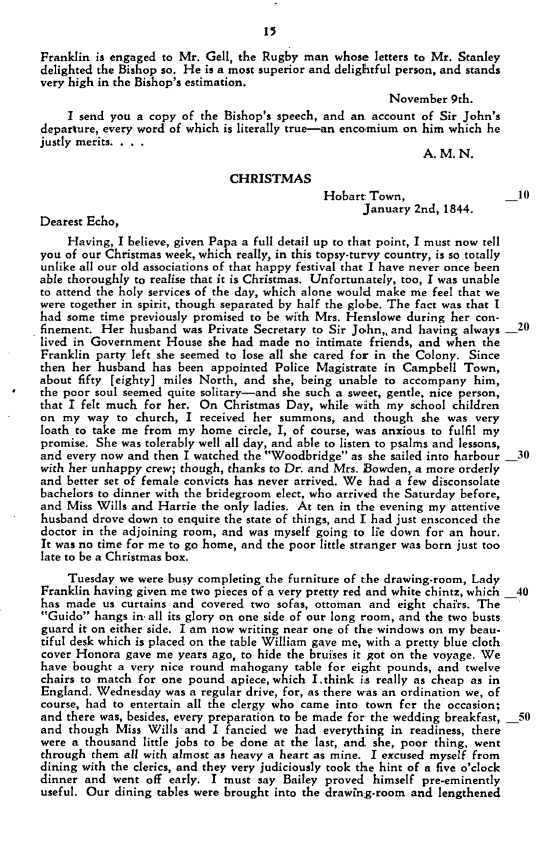
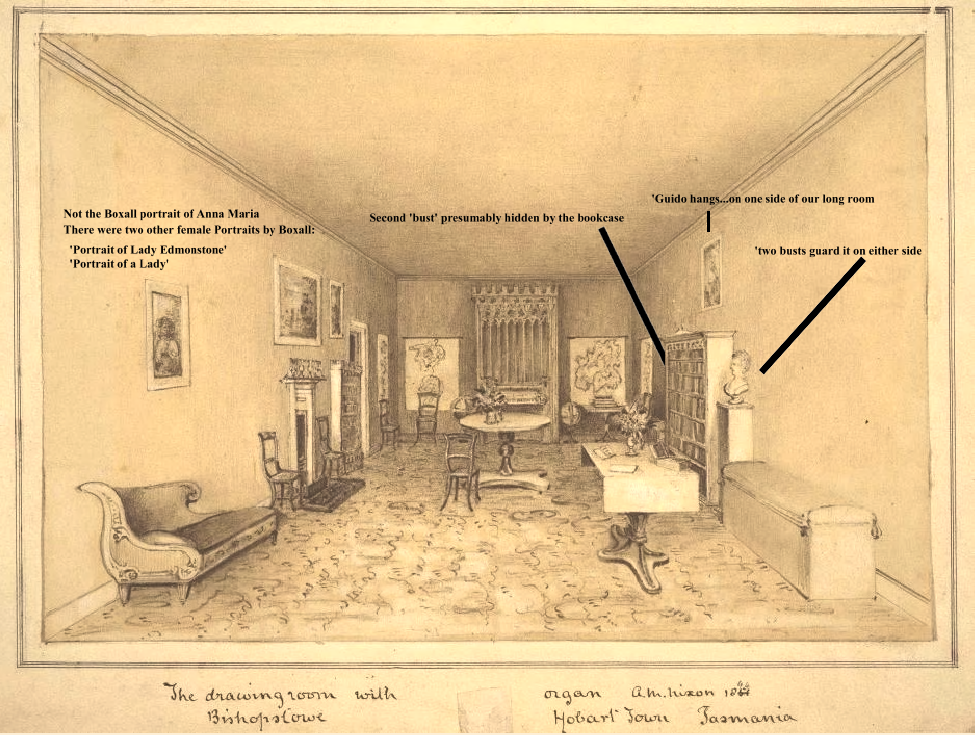
1844 Hanging of the pictures in Upper Davey Street - the Guido is mentioned specifically; it is not clear where the Turner was hung.[letter 2nd January 1844 line 42] Anna Maria Nixon made a sketch of the drawing room at this time. [Sketch of the drawing room - annotated]
1845 Lent to an exhibition in Hobart Town as, " 'View of Snowdon, North Wales', said by Francis Nixon to have been painted at his father’s parsonage as Turner’s "first production in oils". [Hobart Town (Tasmania) Exhibition 1845] This is the earliest documentary reference to this picture.
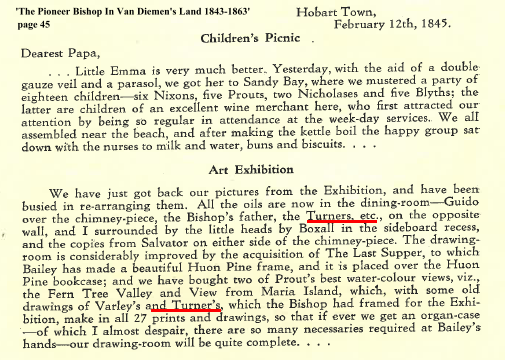
1845 After the exhibition the Bishop's oils were hung in the dining room at Upper Davey Street, Hobart Town Tasmania. (The Turner watercolour-drawings were hung in the drawing room.)[Anna Maria's letter of 12th February 1845] In this letter the Guido is said to be over the chimney-piece; a different arrangement from the sketch of 1844.
1850 The Nixon family moved to New Town. The house is now Runnymede Museum.
1858 Lent to an exhibition in Hobart Town as, " 'A view of Mount Snowdon in Wales'.[Hobart Town (Tasmania) Exhibition 1858]
1862 Returned to England with Rev. Dr. Francis Russell Nixon, Bishop of Tasmania who moved to York, being unwell.
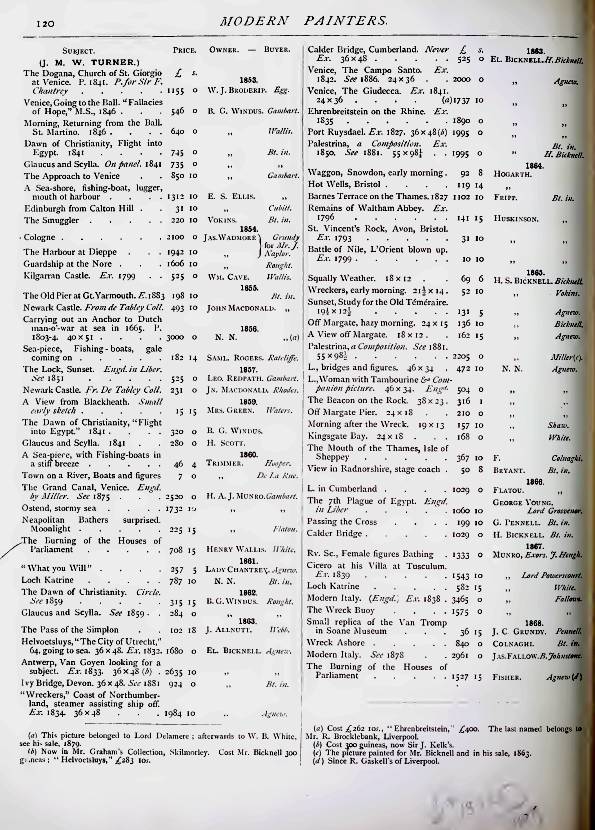
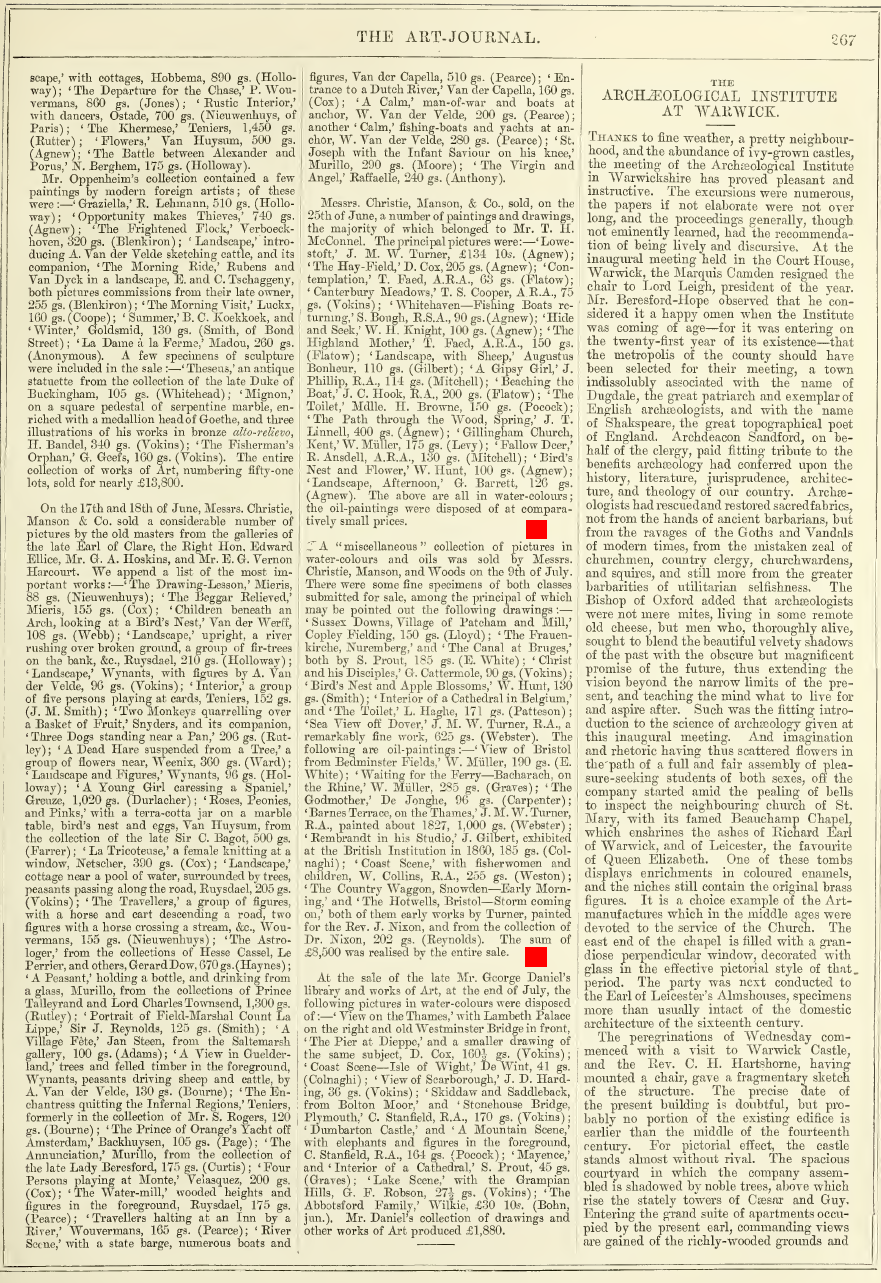
1864 Apparently sold by Nixon to Hogarth and placed for sale by Hogarth (with 'The rising squall, hot wells, from St. Vincent's rock, Bristol' ) on 9th July 1864 at Christie's, (reported inThe Art Journal, September 1864 page 267 col 2, centre])
1864 Both pictures were bought in and returned to Hogarth [Redford and Christie]
1864 or a little later bought by Sir William Richard Drake. Sir William bought at least four of Bishop Nixon's five Turners at this time. We examined the possibility that he may also have bought 'The rising squall, hot wells, from St. Vincent's rock, Bristol' [The Proposition that Drake Bought 'The Rising Squall']
1891 At Drake's executor's sale of Christie, June 27 1891, as lot 88; 'Snowdon, from Moel Madoc'
**** The buyer has not been identified. However, 'The Country Waggon, Snowdon - Early Morning', lot 88 in the 27th June 1891 sale, was not accompanied by 'The rising squall, hot wells, from St. Vincent's rock, Bristol'. The pictures were separated.
1900 with the Fine Art Society, London, May 1900 (sold to R Hall McCormic)
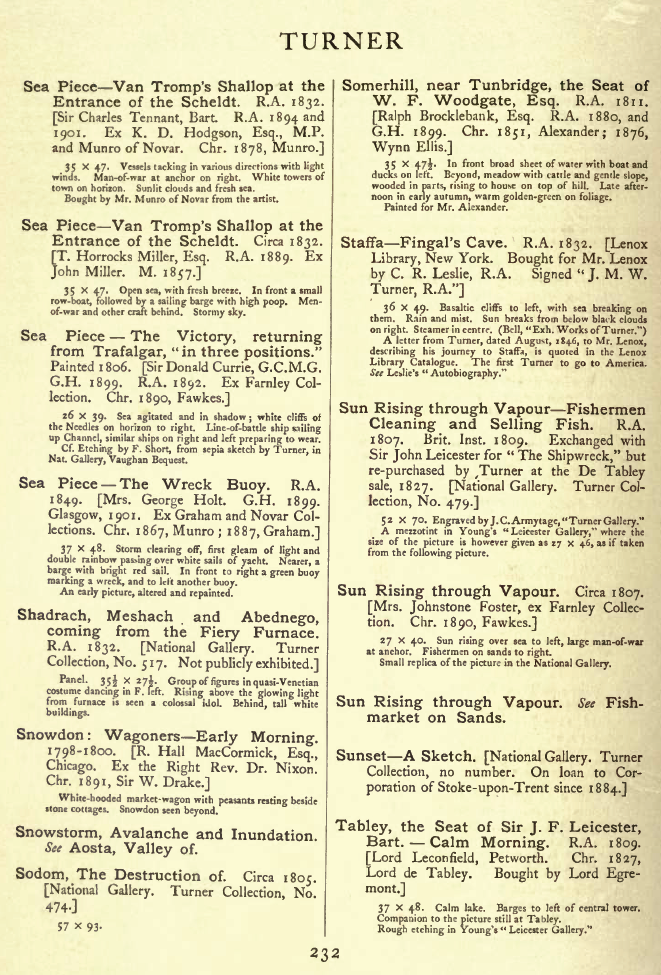
1902 Armstrong as 'Snowdon: Wagoners - Early Morning'. Armstrong's description matches a later illustration in the R Hall McCormic catalogue of 1920.
1919 Exhibited at the Art Institute of Chicago. [McCormick Sale Catalogue]
1920 At the sale of R Hall McCormic, New York as 'Snowdon: Waggoners
- Early Morning', Armstrong's title.
Buyer: unknown. An illustration in this catalogue matches Armstrong's
description of 1902. American Arts Association archives appear to be
synonymous with Smithsonian Institution's Archive of American Art who
reported, in an e-mail dated March 29th 2021, that they have no
information as to the buyer at this sale.
****
2020 Current Location unknown
Comments on The Art Journal entry of 1864
1864 The picture was bought in and returned to Hogarth. Reynolds,
reported as buyer in Ther Art Journal was probably the unsuccessful bid.
Comments on 1891 June 27, Christie's
Drake Sale
Lot 88, Snowdon, from Moel Madoc. Purchased from Bishop Nixon, of
Tasmania, for whom it was painted
Lot 88 was not painted for the Bishop. Turner painted it for the Bishop's father, Rev Robert Nixon, one of Turner's earliest patrons.
'The rising squall, hot wells, from St. Vincent's rock, Bristol' did not accompany 'The Country Waggon, Snowdon - Early Morning' at this sale or two following sales of Drake's collection, [1892-05-24] and [1893-01-07]. A large part of Drake's collection descended to his adopted daughter Mrs. Ella Katherine Hornsby-Drake.
Comments on Armstrong's Entry (Published 1902)
1902 Armstrong, Page 232 (col 1, bottom). Listed as: 'Snowdon: Wagoners - Early Morning' in the possession of McCormick. There is no mention of the size. Armstrong's earlier provenance ends with Drake so the period 1892 to 1899 is unaccounted for. Armstrong's description is detailed; it matches very well with the later illustration in the 1920 McCormick sale catalogue. (Note that Armstrong included 'Bath Abbey' in his list (page 218) a picture no longer attributed to Turner and which appears in ther McCormick sale No.40).
Comments on The McCormick Sale of 1920
1920 McCormick Sale, American Art Association, New York, 15th April 1920. The first mention of the size is found in these sale catalogue notes. The date, 1898, may have been sourced from Armstrong.
Butlin & Joll
No mention of 'Snowdon: Wagoners - Early Morning' was found in Butlin & Joll. It is possible that it is mentioned under a different title in the text for some other picture but no plate resembling this picture was found. The McCormick sale was cited elsewhere, No.549, 'Bath Abbey' plate 541 which is the same as No. 40 in McCormick.