March 2021
JMW TURNER
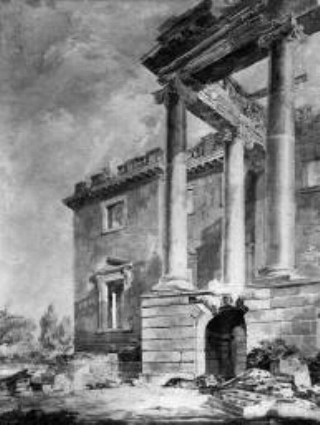
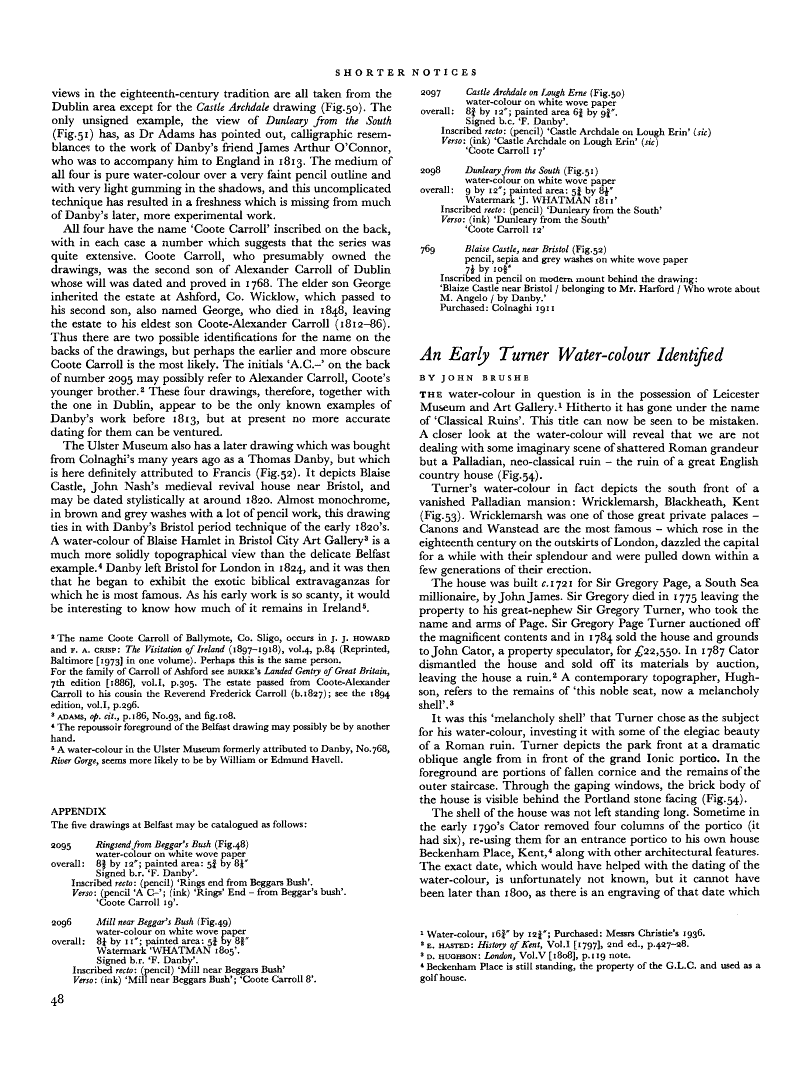
Ruins of Sir Gregory Page Turner's House, Blackheath The
earliest known title.
also known as:
'Ruins of Wricklemarsh, Blackheath'; Its modern title in Leicester
Museum & Art Gallery.
'Classical Ruins'; A modern title by which it was sold in 1936.
'View of Mr. Gregory Page Turner's House'; Title by which it was sold
by Drake's executors in 1891
'Wricklemarsh, Blackheath, Kent'
Watercolour-drawing; 16¾" x 12¾". c1790
There is an inscription but no signature
According to records in Leicester Museum & Art Gallery 'Ruins of Sir Gregory Page Turner's House, Blackheath' bears an inscription which begins "JWM Turner RA delt...". The Burlington Magazine January 1975 page 48 (and other references) report that Wricklemarsh originally had six columns, four of which were removed in the 'early 1790's'. Turner's drawing shows three columns and must therefore date from before the 'early 1790's. The inscription shows him as 'RA' which first appears in the Royal Academy Catalogues in 1802. The inscription is therefore later than 1802 and given that his initials are misplaced likely to have been written by somebody else. Handwriting comparisons might help, it should be possible to obtain letters by Rev. Robert Nixon, Rev. Dr. Francis Russell Nixon and Sir William Richard Drake but these three do not seem to have a motive for inscribing the watercolour-drawing. If Joseph Hogarth bought it from Rev. Dr. Francis Russell Nixon (later selling it toSir William Richard Drake) then Hogarth, having no personal history with the work, might be the author of the inscription. [information: Burlington Magazine, Jan 1975, vol 117 No. 862 pp48-51]
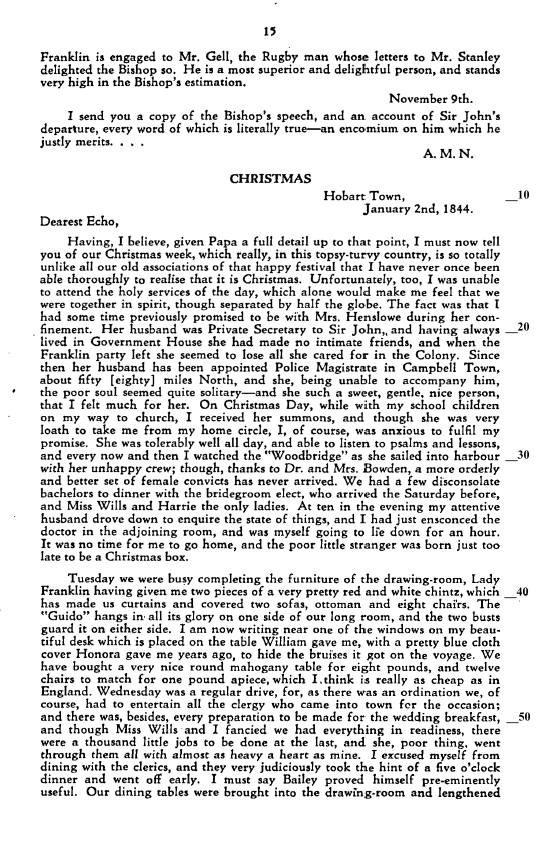
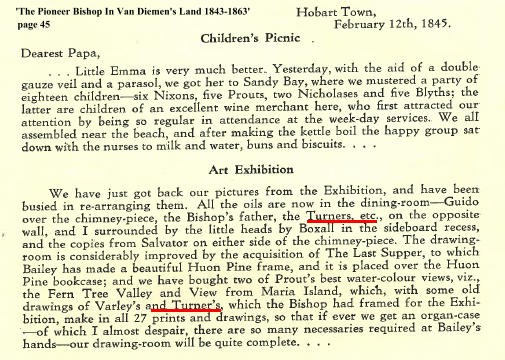
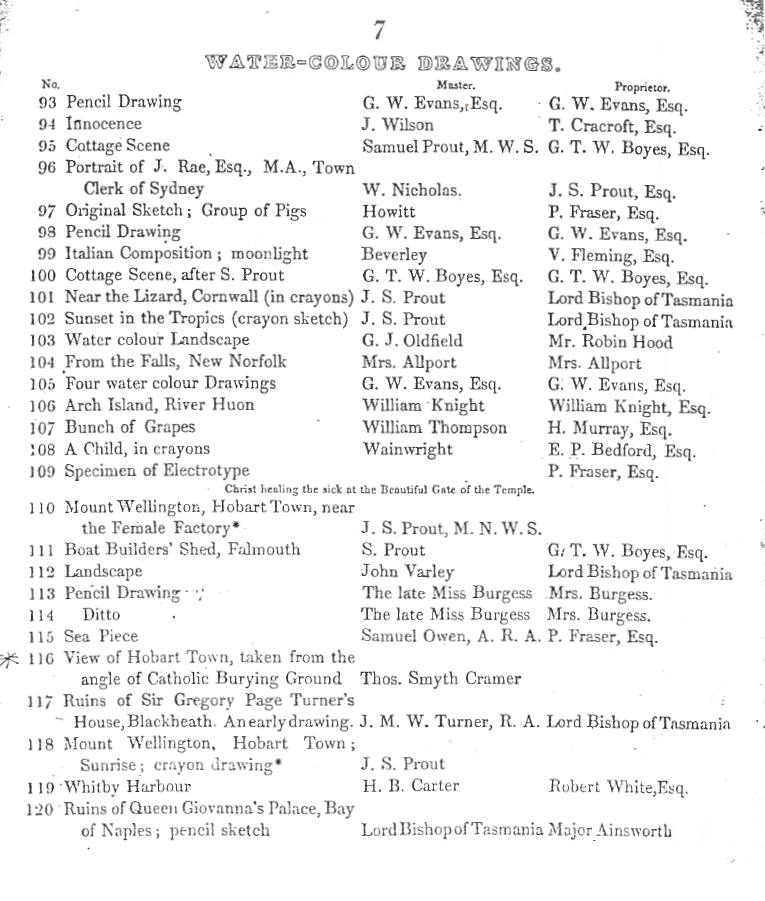
We can almost certainly say that 'Ruins of Sir Gregory Page Turner's House, Blackheath' was acquired from Turner by the Rev. Robert Nixon of Foots Cray, Kent. It descended to Robert's second son, Rev Dr. Francis Russell Nixon in 1837. Francis became Lord Bishop of Tasmania in 1843 and took his collection to Tasmania where it is well documented. 'Ruins of Sir Gregory Page Turner's House, Blackheath' was one of the Bishop's five Turners and was exhibited in 1845 (No. 117) which appears to be the first documentary reference to it.
Hobart Town Exhibition 1845 Catalogue page 7 No. 117 [1845 Exhibition notes]
 (click
for enlarged image)
(click
for enlarged image)
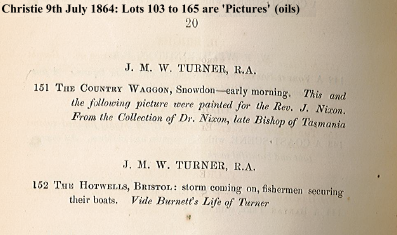
The five Turners returned to England with the Bishop in 1842 and shortly afterwards were probably sold to the engraver and art dealer Joseph Hogarth whose premises were in Haymarket at that time. Hogarth auctioned the two oils at Christies on 9th July 1864.

Before his appointment in Tasmania Francis and his (second) wife Anna Maria lived in London and it appears that they entertained friends in their home one of whom was William Boxall. This is of significance because his work may have been influenced by Nixon's collection and provides another avenue of research as to the identity of the five Turners. However, the identity of 'Ruins of Sir Gregory Page Turner's House, Blackheath' now known as 'Ruins of Wricklemarsh, Blackheath' is not in doubt.
Whilst in Tasmania Francis and Anna entertained many friends and associates some of whom were local artists. Francis and Anna were both prolific artists themselves. Francis was one of Tasmania's pioneering photographers and it was hoped that a photograph containing images of the five Turners would be found but despite extensive searches by several Tasmanian institutions none has yet been found.
The succession of 'Ruins of Sir Gregory Page Turner's House, Blackheath' as far as has been ascertained at this time is:
This image came from Tate Gallery website but has been removed;
accession number: tw349.
A similar, coloured photograph of the watercolour-drawing in
Leicester Museum and Art Gallery confirms that this is 'Ruins of Sir
Gregory Page Turner's House, Blackheath'