October 2022
JMW TURNER
Rochester Castle and the Adjacent Ground
JMW Turner's very first oil on canvas; probably his very first oil
painting. Painted at Rochester at the home of Rev. James Douglas in 1792.
Given to the Douglas family; probably specifically given to the adopted
daughter,
Margaret
Martha Whiteman Douglas (Later Margaret Martha Tucker). Given by
Margaret to her nephew (or neice) probably in the 1830's and later sold by
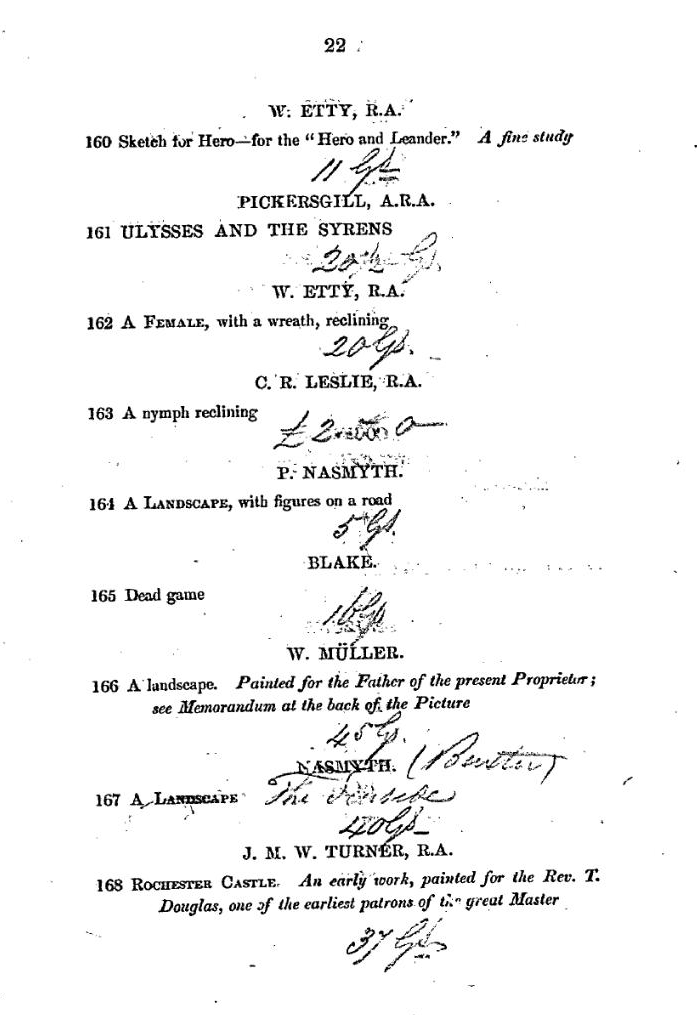
the nephew to Dr. William Hering. Auctioned at Christie's
14th May
1860 lot 168but bought in, the picture was still in Hering's
posession in 1862. Hering moved from 38 Mortimer St. Cavendish Sq. to 3,
Gloucester St, Portman Sq. W. at around that time. In 1868 he left London
and died in 1876 in Reigate. In 1872 the picture was auctioned by May and
Co. (Christie
1872-06-29)
Size: unknown but possibly out of the division of a yard of canvas. At
the start of the study this was thought to be a yard cut into four equal
pieces. However, the sizes of the two known pictures (painted during the
1792 Kent tour) preclude this and suggest that 'Rochester Castle and the
Adjacent Ground' had a maximum dimension of around 10".
Present whereabouts: unknown.
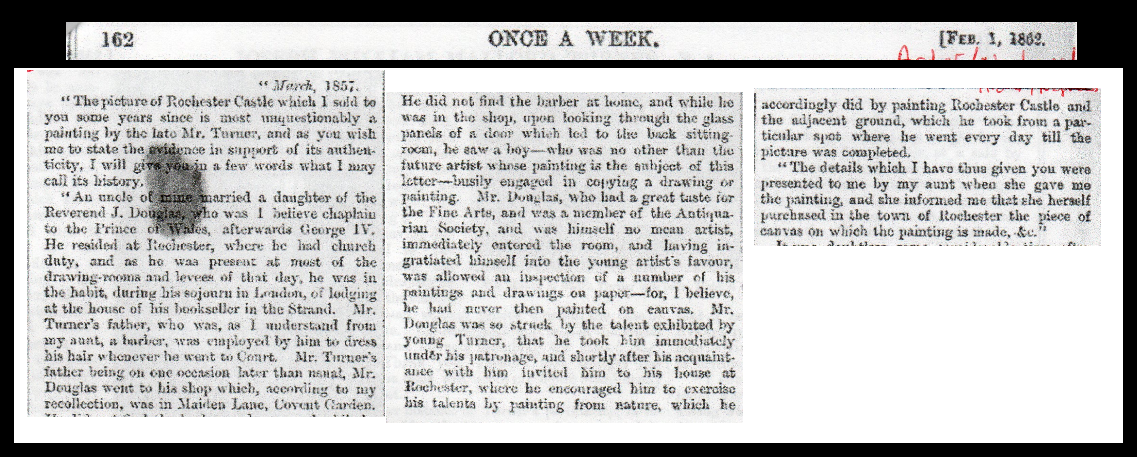
Evidence for the provenance of this oil on canvas is primarily found in
a letter known as
The
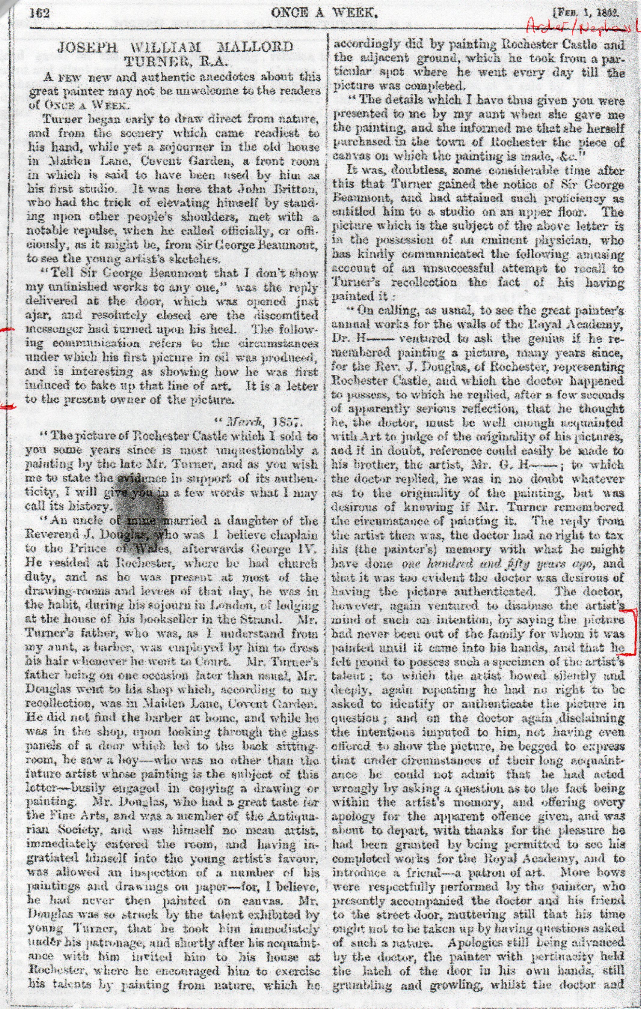
Nephew's Letter of March 1857. This letter was published in an
article by J Wykeham Archer in 'Once A Week' magazine in 1862. ['Turner'
by J Wykeham Archer]
- The Nephew's Letter shows
that:
- 'Rochester Castle and the Adjacent Grounds' was JMW Turner's
first oil on canvas and probably that it was actually his first oil.
- The canvas was purchased in Rochester
- The picture was completed in Rochester and remained with the
Douglas family until the early/mid 1800's
- Some time before 1857 the picture was given to 'the Nephew' and
the Nephew sold it.(to W Hering).
- Archer's article
shows that:
- The picture was sold to an eminent physician.
- The eminent physician is
Dr. W. Hering (by
reference to his brother the artist).
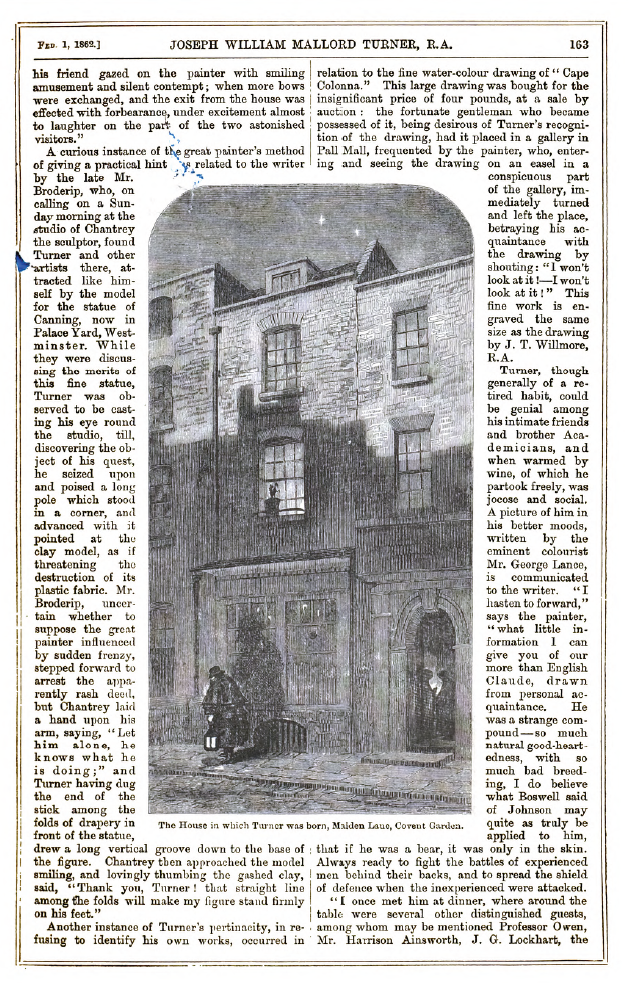
- Hering met Turner at an RA Exhibition, which must have been
before Turner's death in 1851, and discussed the picture [page 162,
col 2]. The picture was therefore in Hering's possession before
1851. (Oddly at the end of this anecdote Archer suggests an
'exit from the house' [top
of page 163] making it unclear whether the discussion took
place at the exhibition or in a private house.)
- Dr. Hering had the picture in his possession in 1862. (In 1862
[page 162 col 2 line 14] Archer has written, "The picture which
is the subject of the above letter is in the
possession of an eminent physician".)
- Finberg gives the timing -
September 1792:
- On page 22 lines 11 to 20 are not definitive. However, this
passage suggests that this is the time that a Kent tour took place.
This, the 'first Kent tour' (Miller's 'previous occasion' -see
below-) would be the one before the 'second' Kent Tour (accompanied
by E. Bell and for the purpose of the Walker Commission in August
1793).
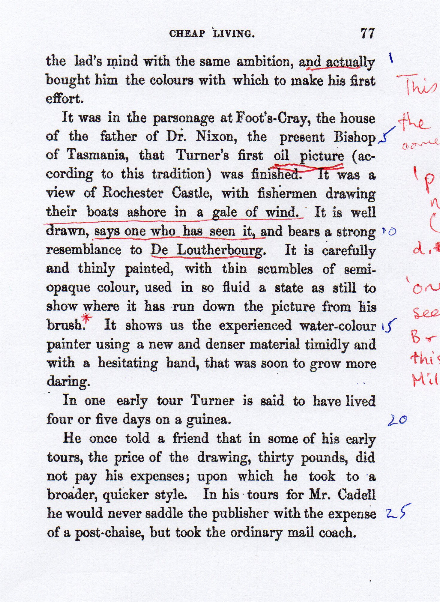
The assertion or suggestion that this was JMW Turner's first oil was
made and supported by statements in
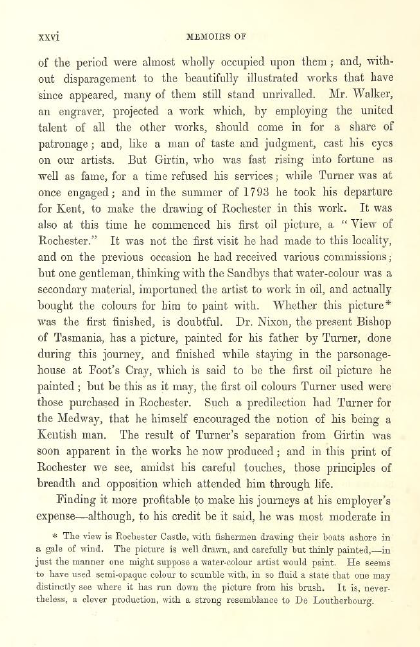
Thomas Miller 'Turner and
Girtin's Picturesque Views, Sixty Years Since' (1854) concering
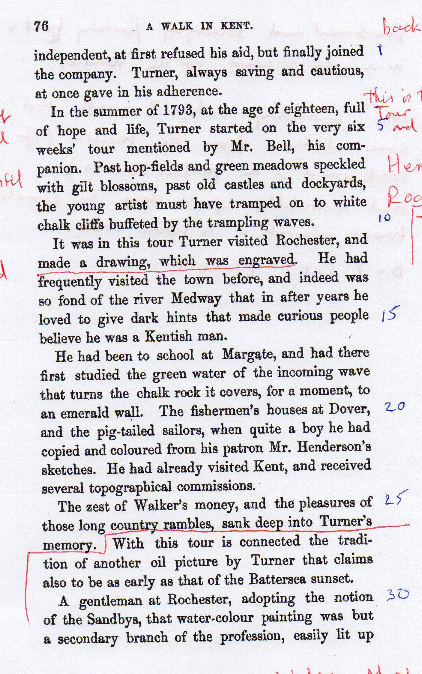
Turner's first oil paints. These comments were repeated by
Thornbury in 1862 vol 1, page 77
but Thornbury's account is somewhat muddled:
- Miller, on page
26 in respect of the timing and the oil paints:
- On lines 12 & 13 Miller writes of a 'previous occasion' (that
is: previous to the Walker commission in the summer of 1793) and it
can be seen from Finberg -above- that this 'previous occasion' was
September 1792.
- On line 16 in respect of a gentleman in Rochester (the Rev. James
Douglas), the oil paints and on the 'previous occasion' Miller
wrote:
'importuned the artist to work in oil, and actually bought the
colours for him to paint with.', and
- On line 21:
Continuing his reference to the 'previous occasion'
'The first oil colours Turner used were those purchased in
Rochester.'
- Thornbury's account, Thornbury
1862 vol 1, page 76 and page
77 lines 1-3 is so obviously copied from Miller but also
embellished (with language such as, 'the lad's mind', page 77, line 1)
and missing Miller's point that this episode with the paints took place
'on a previous occasion' [Miller page 26 line 13 - (for a full analysis
of Miller's account see:Events
Recorded by Miller for 1792-1793)].
The period of ownership by Dr
William Hering is uncertain but from the information given by Archer
must date from before JMW Turner's death in 1851. The picture was a
lifetime gift from
Margaret
Martha Tucker (neé Whiteman Douglas) and the tone of the
Nephew's letter suggests that he would not have sold it whilst she was
still alive. The date of Margaret's death is uncertain Dr. Hering
auctioned the picture at Christies on
14th May
1860 as 'Rochester Castle' but it was bought in. There are reports
of this sale:
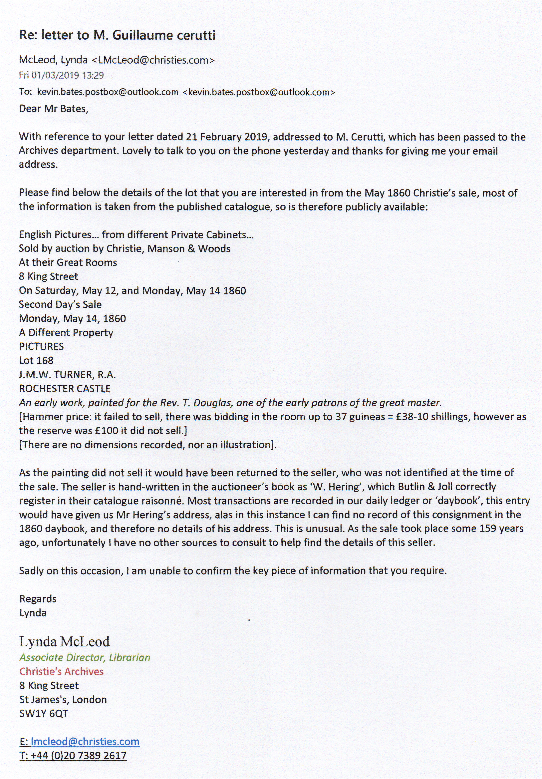
- Christie's
e-mail Provides basic information and a firm link to Hering.
Christie's state that lot 168 appeared in 'A Different Property'. That
heading does not appear in the catalogue in the context of lot 168 and
must therefore be quoted from a document that we have not seen.(Note
that at the time that this e-mail was obtained we thought that Butlin
and Joll No. 21 was inconsistent but had not yet concluded that there
were two oils painted during the 1792 Kent tour.)
- It is reported in Graves
Art Sales - Sales of Turner's Works '1860 May 14 Christies' Graves
shows the seller as Thomas Ball, the lot as 168 and also states that the
picture was painted for Rev. (T) Douglas. (Rev. James Douglas). It can
be seen from Christie's e-mail that the seller was 'W Hering' not
'Thomas Ball'. Thomas Ball did have properties in this sale, lots 99 to
122 in the first day of the sale. This picture, at lot 168, appeared in
the second day's sale under a general heading of 'Pictures'. However,
the catalogue does not specifically say that the start of the second
day's sale was a different property and Graves' assumption was tenable
by reference to the catalogue alone.
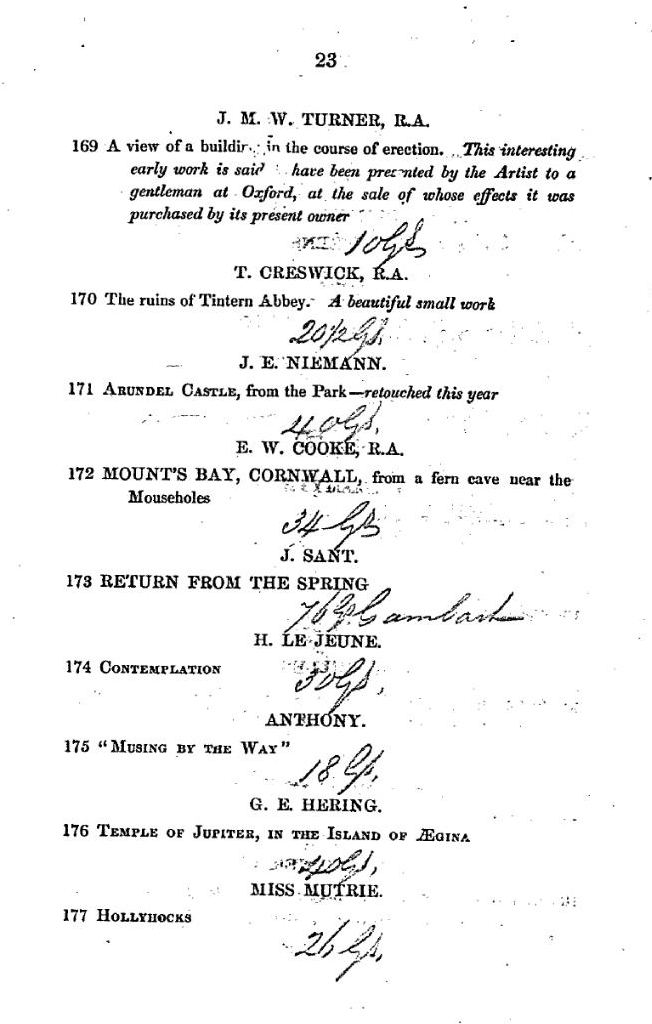
However, the interesting point here and one which does not emerge
from the e-mail is that for
lot 169
on page 23 the catalogue compiler has given some important detail
of the appearance of the picture ("building in the course of
erection"); whereas for
lot 168
on page 22 he says only 'Rochester Castle' - it seems fair to
assume therefore that there is no more in that picture than Rochester
Castle, no storm, no boats, no fishermen - nothing else. (Lot 169 was
not found in Graves)
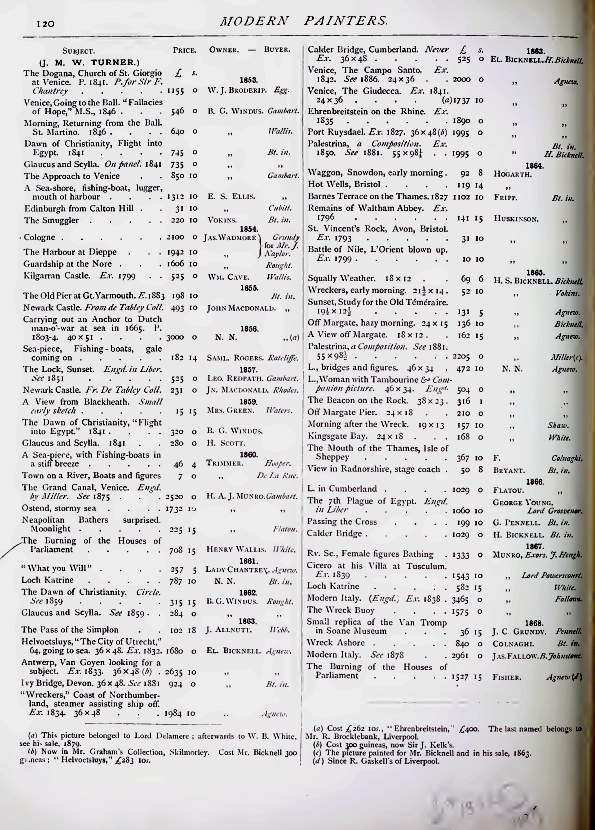
- 'Rochester Castle and the Adjacent Grounds' does not appear in
Redford. Redford page 120 shows only
two sales of oils in 1860, Trimmer's 'A
Sea-piece with Fishing-boats in a stiff breeze' (Butlin and Joll
cat. 533)(lot 42) and 'Town on a River, Boats and figures' (lot
47).Trimmer's sale was
17th
March 1860, before Hering's sale.
Hering's ownership ended some time
between 1862, the date of Archer's article, and 1872 when it was auctioned
at Christie's probably by May and Co.
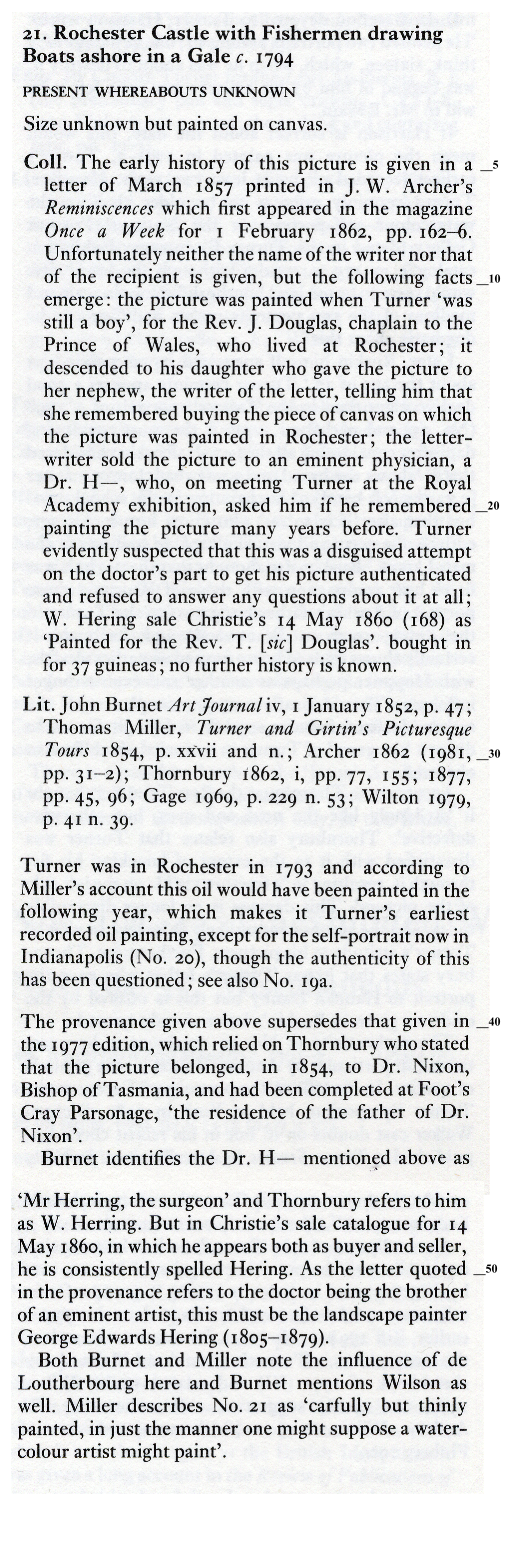
Butlin and Joll No. 21, line 25
refers to the Christie's catalogue entry.
Line 48 states, '...in Christie's sale catalogue for 14th May 1860,
in which he appears as both buyer and seller...' as W Hering.
- Christie's
e-mail does not say that Hering appears as both buyer and seller;
just seller; but does say that the picture was bought in.
- Butlin and Joll: In their entry at cat. 21,
- They state the provenance of this picture, JMW Turner's
first picture, 'Rochester Castle and the Adjacent Ground'
(painted for the Douglas family). However they give the title as,
'Rochester Castle with Fishermen Drawing Boats Ashore In A Gale of
Wind'.
- They ignore Thornbury's evidence (upon which they had
originally relied) and in doing so completely missed Miller's
inference that there were two pictures painted on this tour, first
at Rochester and second at Foots Cray. In their original provenance
they had put 'Rochester Castle with Fishermen Drawing Boats Ashore
In A Gale of Wind' in the possession of Rev. Robert Nixon followed
by his son but Rev. Nixon's picture was exhibited twice,
photographed and auctioned several times and is, 'The
Country Waggon, Snowdon - Early Morning', now lost but last
seen at auction in April 1920.
- They describe and take the title from a picture described
by Miller in a footnote which does not credibly match the other
evidence about Turner's first oil. The full extract, main text and
footnote is: (the main text is in one paragraph - we have split
out the reference to the footnote)
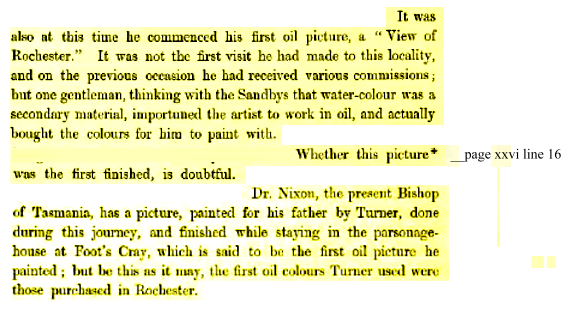

Miller appears to be implying that Nixon's picture was the
first oil. However, that cannot be so because the paints (and
canvas) were purchased in Rochester. Furthermore, it is well
documented that Nixon's picture, which Nixon recorded as Turner's
first oil, was, 'The Country Waggon, Snowdon - Early Morning'.
Miller does not say that he has seen the footnote picture.
Others, notably Thornbury, refer to, "one who has seen it";
an oblique reference to Miller. Miller also says that he doubts that
the footnote picture is Turner's first oil a caveat which seems to
have been overlooked by Thornbury, Wilton and Butlin and Joll.
Miller published this description of the footnote picture in
1854, six years before Hering's picture (originally in the
possession of Rev. James Douglas and his daughter) was auctioned.
However, Miller's description is unlikely to refer to Douglas's
picture for the following reasons:
- There are three contemporaneous descriptions of actual
sightings of 'Rochester Castle and the adjacent Ground' and they
contain no mention of wind, fishermen or boats.
- (i) The Nephew's letter (1857) very specifically states "Rochester
Castle and the adjacent Ground".
- (ii) Christie's catalogue of 12 May 1860 very specifically
states "Rochester Castle" - again no mention of storm
or boats, and
- (iii) 29th June 1872 similarly no description beyond
'Rochester Castle'.
Without any doubt Hering's picture, 'Rochester Castle and the
adjacent Ground' was Turner's first oil as described in the Nephew's
letter.
Butlin and Joll's entry for 'Rochester
Castle with Fishermen Drawing Boats Ashore In A Gale of Wind')
is without doubt intended to refer to Miller's footnote picture.
Miller's evidence combined with Finberg's dates definitely suggests that
there were two oils painted during this tour prior to the 1793 Royal
Academy Exhibition. As shown above, these two were:
- 'Rochester Castle and the adjacent Ground', [corroborated by the
Nephew's Letter and two auction catalogues; Christies 12 May 1860 lot
168; Christies 29th June 1872 lot 9] (Douglas'and Hering's picture)
- 'The Country Waggon, Snowdon - Early Morning' [corroborated by two
exhibitions; Hobart Town 1845 No. 39; Hobart Town 1858 No. 157, at least
one newspaper report; The Hobart Town Daily Mercury, 22nd June 1858, one
auction; Christies 9th July 1864 lot 151 and The Art Journal 1864 page
267] (Nixon's picture)
So what of 'Rochester
Castle with Fishermen Drawing Boats Ashore In A Gale of Wind'?
Two things are evident from the discussion so far:
- Miller knew that there were two pictures (1.Douglas/Hering, 2.Nixon)
but did not specify a title for Nixon's Picture
- Someone had seen a picture of 'Fishermen Drawing Boats Ashore In A
Gale of Wind'. Miller described this picture in his footnote.
In modern times (the 1960's onwards) and before the discovery of the
Nephew's letter, Butlin and Joll and Wilton originally followed the same
logic and treated Miller's footnote as Nixon's picture:
- Wilton, 'Turner: His Art and Life' page 255, picture P21.
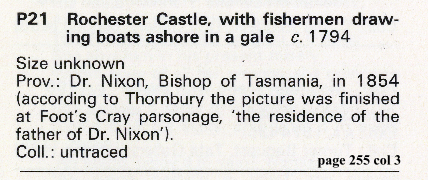
As shown above, evidence from Hobart Town Exhibitions and Christies
auction of 9th July 1864 show that Nixon was in possession of 'The Country
Waggon, Snowdon - Early Morning'. However, the combined evidence of the
Hobart Town Exhibitions and Christies auction of 9th July 1864 shows that
Nixon was in possession of two, and only two, J.M.W. Turner oil paintings.
The second of Nixon's oils, lot 152 at Christies on 9th July 1864, almost
matched Miller's description:
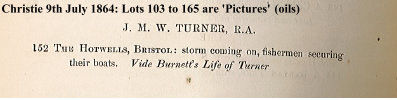
Examination of 'Vide Burnett's Life of Turner' shows
this picture to be 'The rising squall, hot wells, from St. Vincent's rock,
Bristol', Turner's first exhibited oil; Royal Academy, 1793.
A question therefore arises as to whether Miller, knowing that the first
oil was a painting of Rochester and, being informed of a picture of
'Fishermen Drawing Boats Ashore In A Gale of Wind', mistakenly put
together the two pieces of information to create his footnote.
That question cannot be answered unless 'Rochester Castle and the
Adjacent Ground' is found.
Miller's account was written in 1854; 'Rochester Castle and the
adjacent Ground' was with Hering (at 38 Mortimer St. Cavendish Sq. )
several years before 1857 and auctioned a Christie's in 1860.
The picture described in the extract, 'Rochester Castle with
Fishermen Drawing Boats Ashore In A Gale of Wind', (if it was not 'The
Rising Squall') had been left with Rev. Robert Nixon in 1792. Rev Robert
Nixon died in 1837. Nixon had two sons. Part of his collection is well
documented in the possession of his second son, Rev. Dr. Francis Russell
Nixon, Bishop of Tasmania. 'Rochester Castle with Fishermen Drawing Boats
Ashore In A Gale of Wind' does not appear in the Bishop's collection and
the inference is that it was bequeathed to Rev. Robert Nixon's first son,
George Russell Nixon. From 1840 George lived abroad, in 1851 he was back
in the UK living in Bristol but by 1852 he was resident in Switzerland and
still there in 1854 when Miller wrote his description. George emigrated to
Australia in 1861 and there is no record found showing any part of a
collection there in the possession of George; if he had pictures they were
sold before his emigration.
Christie's
Sale Catalogue 12th & 14th May 1860 Does not give much
indication as to whether Dr. Hering had just one consignment in the sale
or more. The first two sections of the second day appear to be
miscellaneous properties and are not presented in alphabetical order by
artist's names. Lot 169 mentioned above may have belonged to Hering. Lots
168, 169 and nearby, 165 to 169 form a short alphabetic sequence and could
be Hering's pictures but this line of enquiry is outside the scope of our
present investigation and must be left for the future.
Christie's
Sale Catalogue 29th June & 1st July 1872 Shows Lot 91
('Rochester Castle') in the same property as Lot 90 which was the property
of May and Co. It appears to have sold in that sale but
this is where we currently lose track of it.
Approximate Timeline for 'Rochester Castle and the Adjacent Ground
':
1792 Painted at Rochester and given to the Douglas family
1800 Douglas Family in
possession of the picture
1820 to 1835 (approx)
Margaret
Martha Whiteman Tucker (neé Douglas) in possession of the
picture and gave it to her nephew
1840 Nephew was in possession of the picture and sold it to
W. Hering
1845 W. Hering owned the picture and discussed it with Turner
1854 Miller wrote about it.
1857 Nephew's letter to Hering confirms that it is Turner
1860 14th May, lot 168, picture put up for auction by Hering but
returned to him bought in
1862 Archer published in 'Once A Week' states that Hering has the
picture
1872 The picture was auctioned on 29th June; probably by May and Co. (asco
33331) so Hering must have sold it between 1862 and 1872.
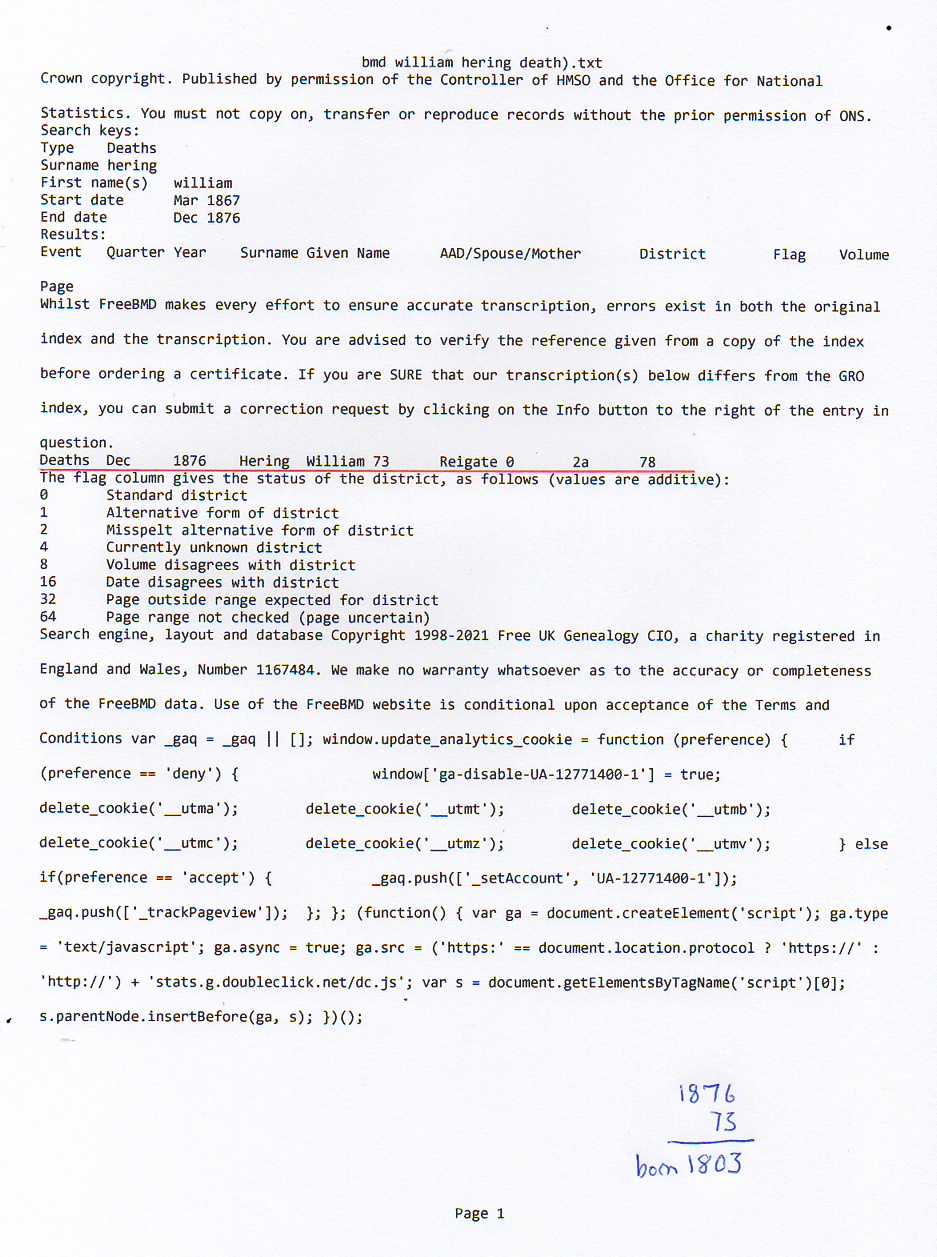
1876 William Hering died in Reigate, Surrey age 73 [Registration
record].