JMW TURNER
A J FINBERG
The Life Of JMW Turner
Our copy is the 1961 reprint of the 1939 publication
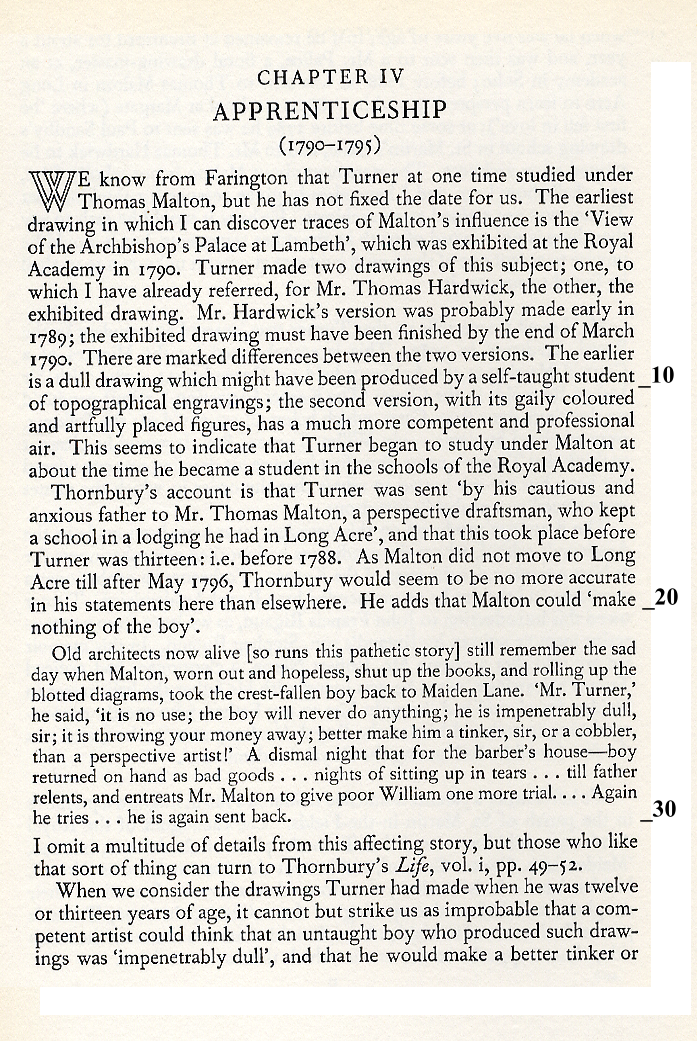
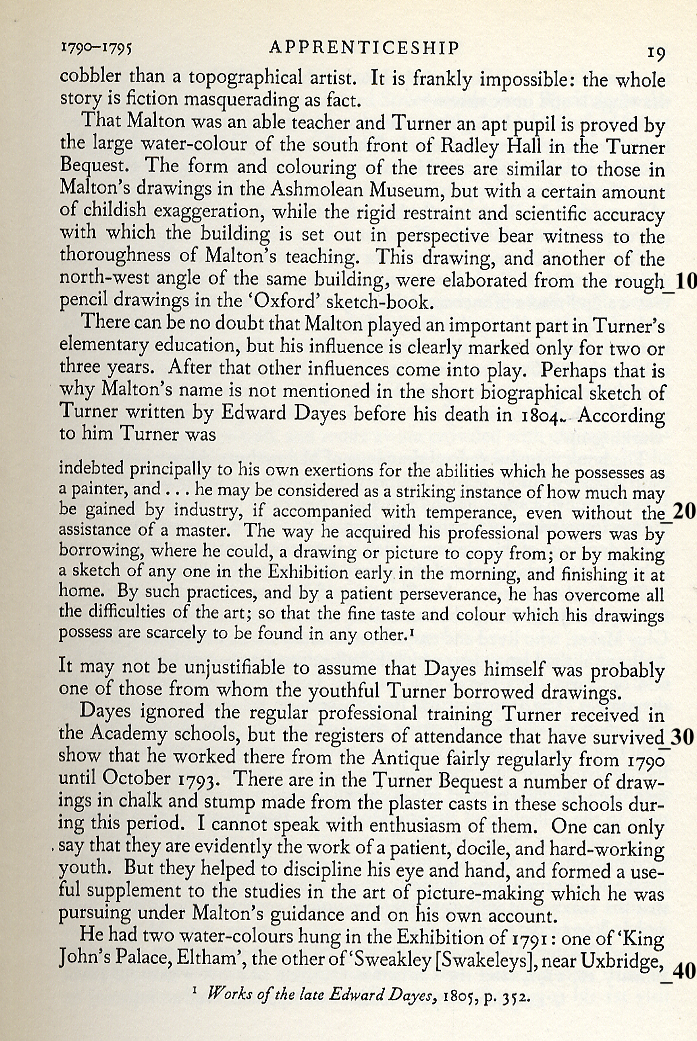
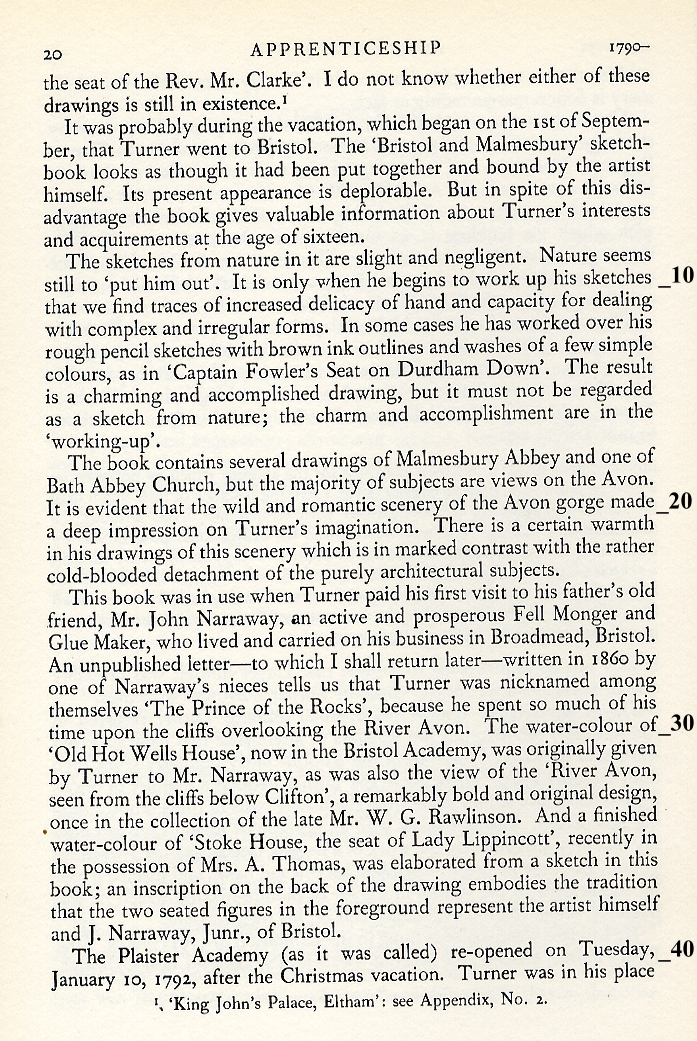
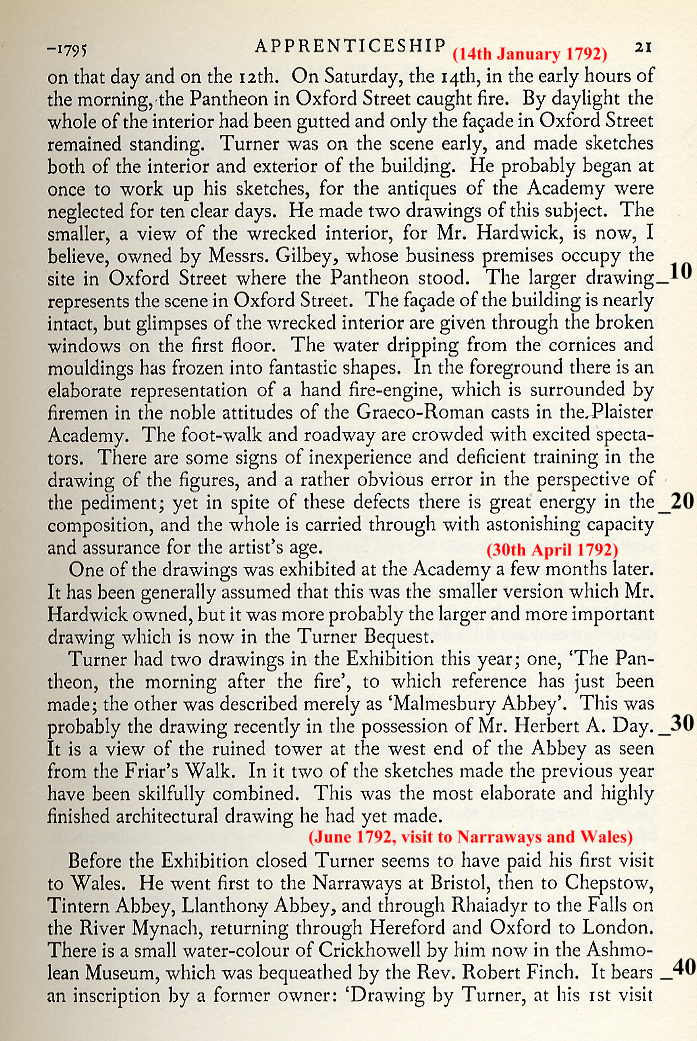
Date References 1791 to 1793 from Chapter IV
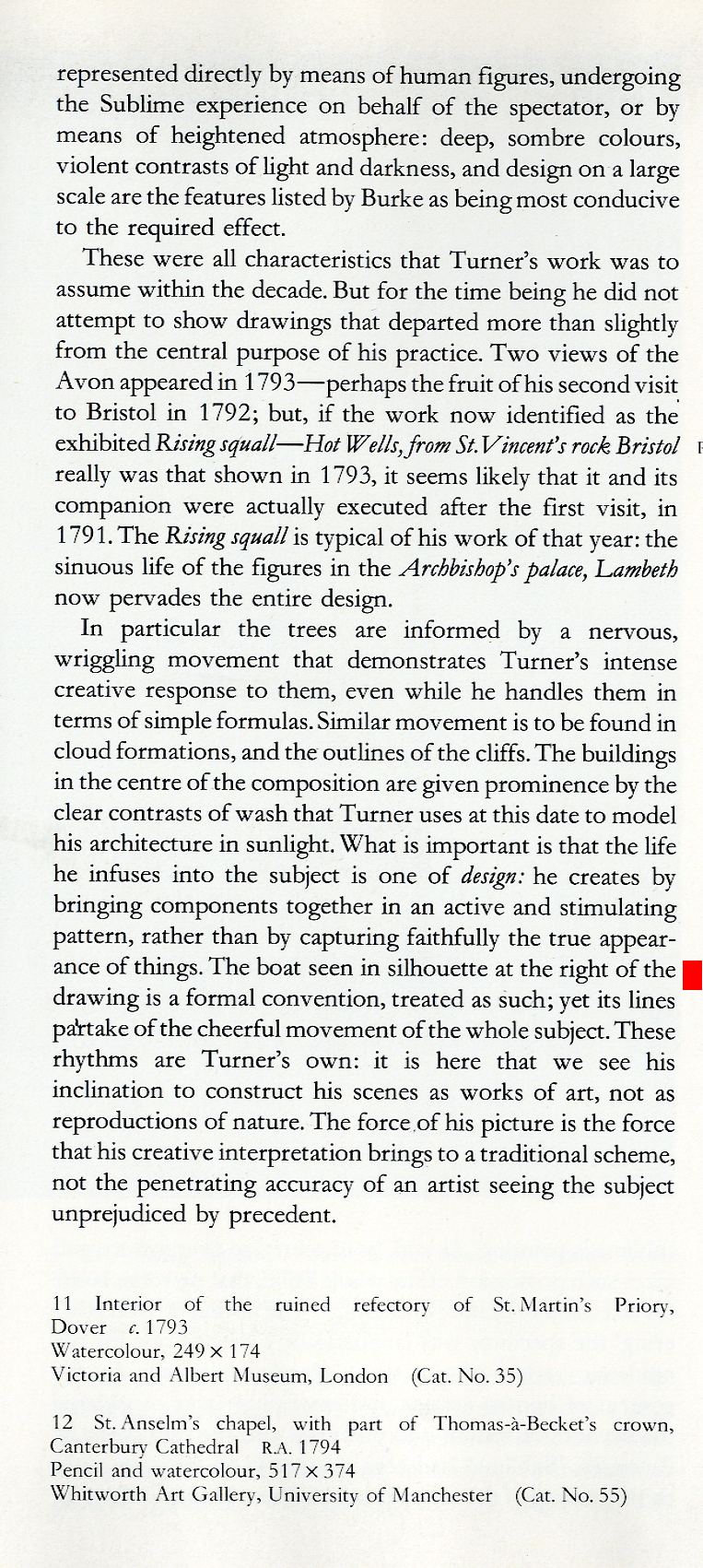
This page shows date references from chapter IV of Finberg's 'The Life Of JMW Turner'. Direct references to Finberg's text are shown in upright type. Our commentary is shown in italics factual in normal size, speculative in reduced size. Unfinished research is shown in red.
1791 September 1st; The start of the holiday during which the Narraway
Visit took place and during which the Bristol and Malmesbury Sketchbook
was drawn. [page 20, line 3].
The Bristol and Malmesbury Sketchbook was drawn at this time and
during this visit or soon after, he completed 'Malmesbury Abbey' which was
exhibited in 1792; several Malmesbury Abbey sketches appear in The Bristol
and Malmesbury Sketchbook.
This is the earliest date around which Turner (aged 16y 4m) painted
the small oval self portrait (NPG-MW06422). The later date around May-June
1792 would put Turner at age 17y 1m which, from the appearance of the
portrait seems less likely.
1791 October (part of); the inference is that JMW Turner was back in
London. [there is no direct reference to October 1791 in Finberg's text
but in his discussion of 1792 he gives the timing of the Academy's
school's autumn closure; page 22, line 11.]
Back in London he could have completed any unfinished aspects of
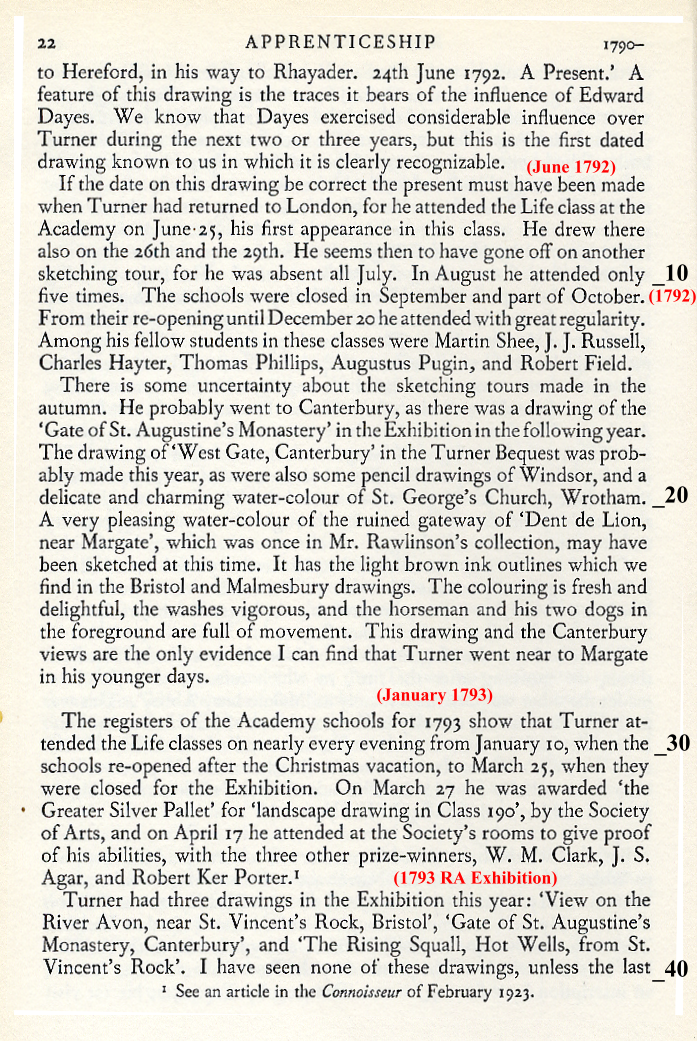
his intended 1792 exhibit, 'Malmesbury Abbey'. (A
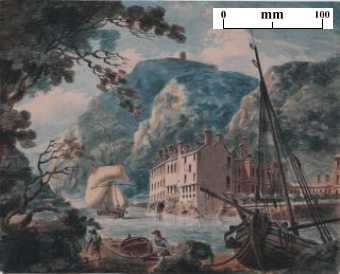
question arose as to whether he had already painted the 'Old Hotwells
House' watercolour now Courtauld D2007.DS.42 and had started a similar
view (Bristol K816) possibly intending this as 'View on the river Avon,
near St. Vincent's rock, Bristol'. There could be good reasons why he
delayed exhibiting the latter, he may have used up his resources framing
and glazing the Pantheon fire watercolour or that arrangements for two
exhibits only had already been arranged but it appears far more likely
that these two watercolours were produced at the Narraways in May1792
before the exhibition closed - see below)
1792 January 10th; (Tuesday); JMW Turner was 'in his place' at Plaister Academy [page 20, line 40]
1792 January 12th; JMW Turner attended the Academy. [page 21, line 1]
1792 January 14th; Pantheon fire. [page 21, line 1].
Finberg's text shows that Turner
considered this an important event. The way in which Turner signed this
work - possible departure from previous works - to be investigated.
1792 March/April; The opening of the Royal Academy Exhibition and Turner's exhibits [page 21, line 27] [Malmesbury Abbey] [The Pantheon, The Morning After The Fire ]
1792 April 30th, the opening of the 1792 RA Exhibition. The last day of the exhibition was June 9th.
1792 Before the exhibition closed - Turner's first visit to Wales (via
the Narraways). [page 21, line 35]
The 1792 Exhibition closed on 9th June. This would place Turner at
the Narraways around May 1792. He was definitely back in London by June
24th; six or seven weeks to complete the tour. If
Courtauld
D2007.DS.42, was painted then and remained with the Narraways it
should be consistent with that timing. Turner did incorporate imagination
and mixed scenery in his views but his architectural drawing was more
explicit; it is therefore reasonable to expect accuracy in the angles of
lighting and placement of architectural features on the buildings. In
D2007.DS.42 Hotwells House is sunlit from the West, the southern flank
wall is out of direct sunshine. It is therefore afternoon. Shadows suggest
an a solar altitude angle of at least 30º which, together with it
being afternoon would suggest somewhat close to summer. This is consistent
with a visit during May (and not the previous October
- see note above).
Wilton suggests: [JMW
Turner - His Art and Life page 30 line 10], "Two views of the
Avon appeared in 1793 - perhaps the fruit of his second visit to Bristol
in 1792" Wilton is referring to the 1793 exhibits but he, Wilton, was
unaware that 'The Rising Squall' was an oil.
There were however the two similar watercolours, Courtauld
D2007.DS.42 (the smaller, remained with the Narraways) and Bristol K816
(the larger) remained with Turner and was quite probably
the 1793 exhibit -but it was not 'The Rising Squall') . So,
although Wilton was misled as to the precise nature (oil or watercolour)
and titles involved, this timing which is found in here in Finberg is
extremely likely. 'Both watercolours are the scene on a sunny afternoon;
and this scene does not remotely resemble any of the sketches in the
Bristol and Malmesbury Sketchbook.
Furthermore, Tate D00389 and D00391, both of which do have precursor
sketches in Bristol and Malmesbury (D00074 and D00075 respectively), would
fit neatly into this visit probably executed just before Courtauld
D2007.DS.42 and Bristol K816 making the order of production:
...
D00389 which JMWT had sketched on his earlier vist
D00391 including rocks from his previous visit
(D00388, D00392, D00390, and possibly others, may also feature here)
D2007.DS.42 (left with the Narraways)
K816 (exhibited 1793)
This is the later of the two visits during which Turner may have
painted the small oval self portrait. However, the appearance of the
portrait suggests that the earlier date of September 1791 is the more
likely.
Then he went on to Wales.
...
1792 June 24th. This date shown on [(Finberg) page 22, line 1] is inscribed on a drawing made during the above visit to Wales. Finberg indicates that the only fact that can be assumed is that the drawing was made before this date when it appears to have been given as a present.
1792 June 25th; JMW Turner attended life class at the Academy on June 25th 26th & 29th [page 22 line 8]
1792 July; JMW Turner was absent (from the Academy) all of July.
Finberg's text states, 'he seems to have gone off on another sketching
tour.[page 22 line 10]
[Note to try to resolve which 'absence'
represents the Kent Tour - see below] This is the first of two 1792
absences from London during which JMW Turner may have completed the Kent
Tour which comprised of a visit to Canterbury for the painting of two
views of 'Gate of St. Augustine's Monastery, Canterbury', one of which was
the RA exhibit of 1793, then returning through Rochester where canvas was
purchased, the oil 'Rochester Castle and the Adjacent Ground' was painted
for the Rev. James Douglas, and through Foots Cray where 'Rochester Castle
with Fishermen Drawing Boats Ashore In A Gale of Wind' started in
Rochester, was completed and given or sold to Rev. Robert Nixon.
Finberg [page 22, line 15] notes that 'There is some uncertainty
about the sketching tours made in the autumn.' and 'he probably went to
Canterbury', but it is not clear whether Finberg meant to include this
July tour in his uncertainty.
1792 August; Turner attended the Academy 5 times during August but
Finberg does not give the dates. [page 22, line 10]
These five attendances at the Academy indicate that Turner was in
London and, because there were so few attendances, that he was working on
something else. If he had become preoccupied with oil painting during the
Kent tour this is the first of two possible times that he may have painted
'Self Portrait Age 16' and 'The rising squall, hot wells, from St.
Vincent's rock, Bristol', the latter being exhibited at the RA in 1793.
Finberg describes, but does not give a precise date for, the painting
of 'Self Portrait Age 16' [page 27, line 14].
1792 September; The Academy schools were closed (until mid October) [page 22, line 11]
As mentioned above Finberg's text notes that 'There is some uncertainty
about the sketching tours made in the autumn.' and 'he probably went to
Canterbury' [page 22, line 15]. July, above, would more likely be regarded
as summer and Finberg's comments would apply to this period; all of
September and 'part of' October.
[Note to try to resolve which 'absence'
represents the Kent Tour - see above] This is the second of two
1792 absences from London during which JMW Turner may have completed the
Kent Tour which comprised of a visit to Canterbury for the painting of two
views of 'Gate of St. Augustine's Monastery, Canterbury', one of which was
the RA exhibit of 1793, then returning through Rochester where canvas was
purchased, the oil 'Rochester Castle and the Adjacent Ground' was painted
for the Rev. James Douglas, and through Foots Cray where 'Rochester Castle
with Fishermen Drawing Boats Ashore In A Gale of Wind' started in
Rochester, was completed and given or sold to Rev. Robert Nixon.
This is the more likely timing because a) the foliage and lighting on
the two Canterbury watercolors (if indeed Yale B1975.4.1964 is the 1793
exhibit) is more autumnal than summer and b) at this latter part of 1792
Turner would have had in mind his exhibits for 1793; he already had 'View
on the river Avon, near St. Vincent's rock, Bristol', the outward trip to
Canterbury gave him material for 'Gate of St. Augustine's Monastery,
Canterbury', in watercolour (because he had not yet experimented in oil on
canvas) and the exhibit was likely ready before the excursion into oils at
Rochester, then the oil paintings in Rochester and Foots Cray 'inspired'
the idea of a third exhibit for 1793 in oil. This however does not explain
the painting of 'Self Portrait Age 16' and for this there is pertinent
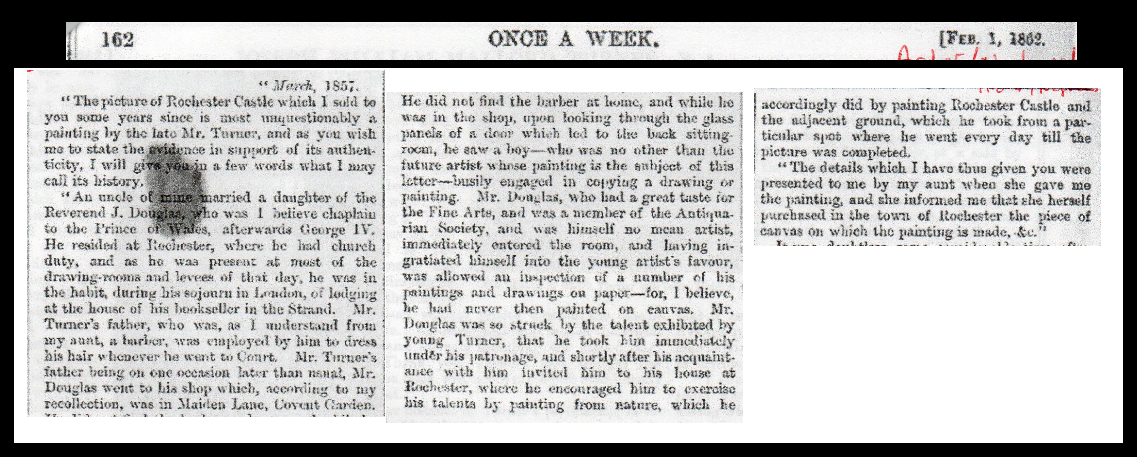
information in the 'Nephew's Letter'
where it is said that James Douglas's daughter bought the canvas -
suggesting maybe that the portrait was for her. [Margaret
Martha Whiteman Douglas]
1792 September; Finberg appears to suggest a visit to Margate during this tour but is not definite about it. [page 22, line 27]
1792 September; Upon Turner's return to London, continuing his
experiments in oils and with the 1793 exhibition in mind he painted 'The
rising squall, hot wells, from St. Vincent's rock, Bristol'. The title of
this painting strongly suggests a continuation of the theme of the Rev.
Nixon's 'Rochester Castle with Fishermen Drawing Boats Ashore In A Gale of
Wind'.
However, at around the same time he
painted 'Self Portrait Age 16'
As mentioned above: Finberg describes, but does not give a precise
date for, the painting of 'Self Portrait Age 16' [page 27, line 14].
1792 October; From 'part way' through October Finberg records 'regular academy attendance' until dec 20th when the schools closed (for Christmas). [page 22 line 13]
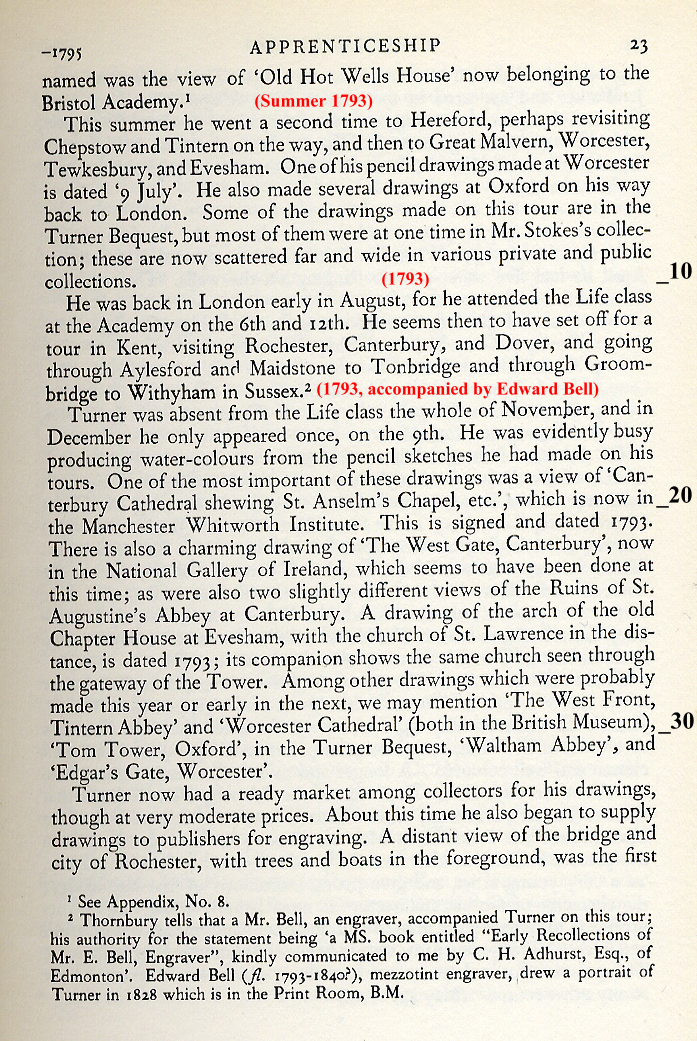
1793 January - January 10th to March 25th, regular attendance at the Academy [page 22, line 29]
1793 The Royal Academy Exhibition was open from 29th April to 8th June.
1793 April; Finberg describes the 1793 exhibits as drawings [page 22,
line 37].
His reference to 'Old Hotwells House'
could be Courtauld Institute: D2007.DS.42 'The Avon Gorge at Bristol with
the Old Hotwells House' or Bristol Museum: K816, 'Avon Gorge and Bristol
Hotwell', because both watercolours were in Bristol Museum at that time.
However, by 1939, when Finberg published, the curator at Bristol had
probably already (mistakenly) identified K816 as 'The rising squall, hot
wells, from St. Vincent's rock, Bristol'. (so Finberg got the information
from Bristol, (not the other way around - Bristol from Finberg) thus the
Bristol attribution was made between 1925 (the purchase) and 1939
(Finberg's publication)
However, at the time of writing, we cannot be sure. It could be the
curator's mistaken identification that gives rise to Finberg's comment; on
the other hand it could be Finberg's comment that caused the curator to
investigate further and mistakenly conclude that K816 was The rising
squall, hot wells, from St. Vincent's rock, Bristol'.
1793 Summer; [page 23]
1793 August; Turner was at the academy 6th and 12th august [page 23, line 12]
1793 August; after 12th aug; Kent (Finberg does not say definitely. His footnote gives Thornbury's reference, but this would have been the second Kent Tour accompanied by E Bell and the start of the Walker commission. E. Bell met Turner just before this tour so this has implications for the timing of the 'Bell Sunset')
The two self portraits are discussed on page 27, lines 1 to 23. It clearly did not occur to Finberg to mention that the 'oil' portrait indicated that Turner was using oils and canvas during 1792 and thus to question or comment on what other oils there may have been at that time.