

centre left right right

Squall from St Vincent's Rock, Bristol
Data Sheet

In these notes 'left' and 'right' refer to the assemblage viewed facing the painted surface of the canvas.

Oil on Canvas
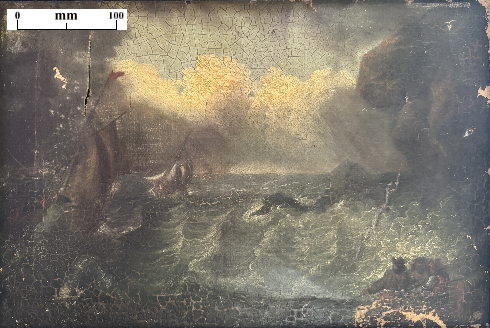
Dimensions: w.490mm x h.340mm (19¼"x 13½")

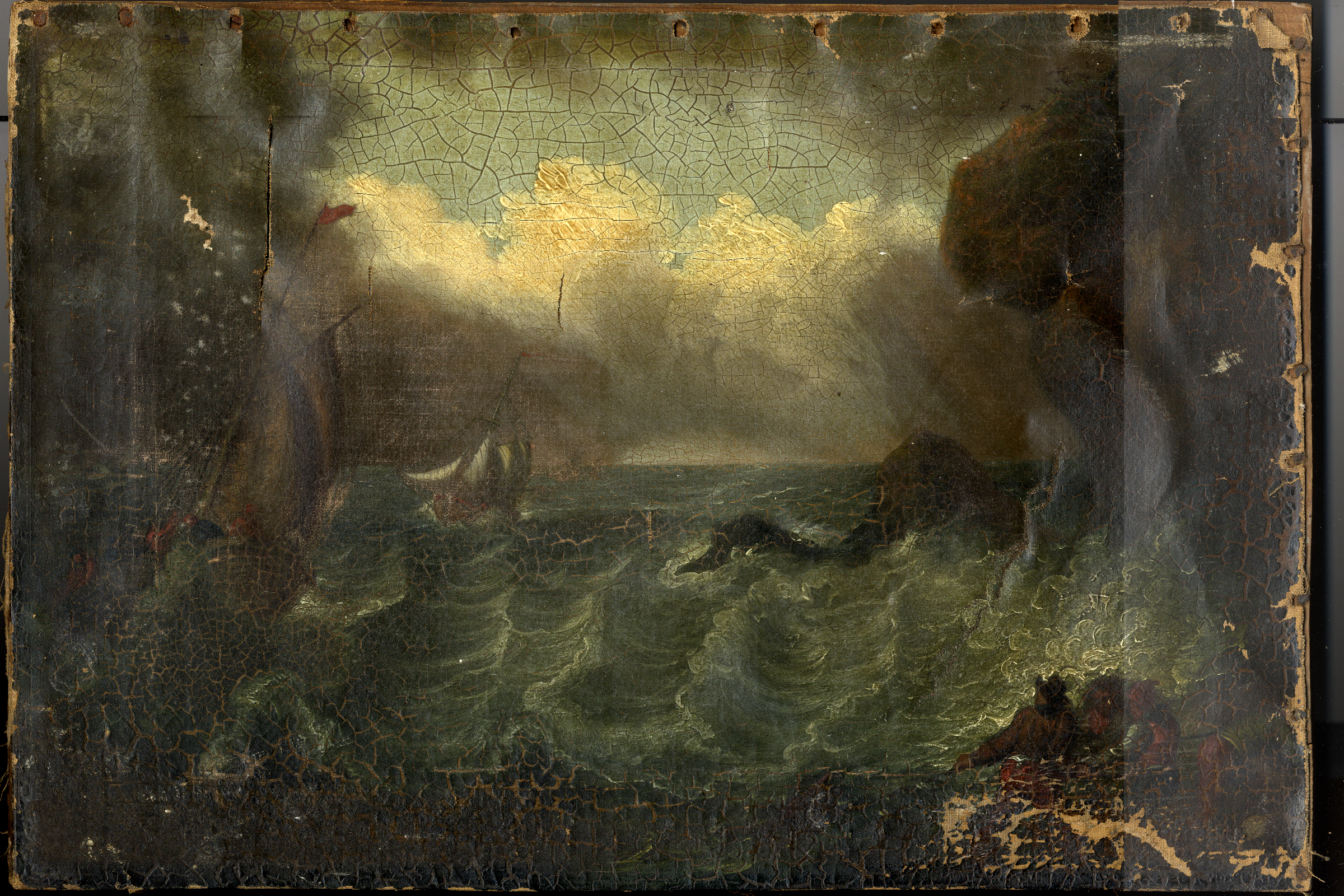
Stormy coastal scene. On the right a rock outcrop with a dominant overhanging rock, a small dome rock just beyond and smaller rocks breaking the water surface. In the foreground, three figures are visible and possibly a fourth. The paint is damaged. However, the figures are dressed in heavy clothing with hats and are possibly in a boat.
On the left are two boats one ahead of the other. The painting is worn and dirty here. On the nearest boat there is at least one figure at the front and possibly another two; one to the right, in the boat, the other to the left on what is possibly the quayside.

Created December 2021 Updated June 2025; jmw_turner/0work_squall_at_st_vincents_rock_bristol_06.htm

{short description of image}

Dimensions

Size Now: w.490mm x h.340mm (19¼"x 13½")
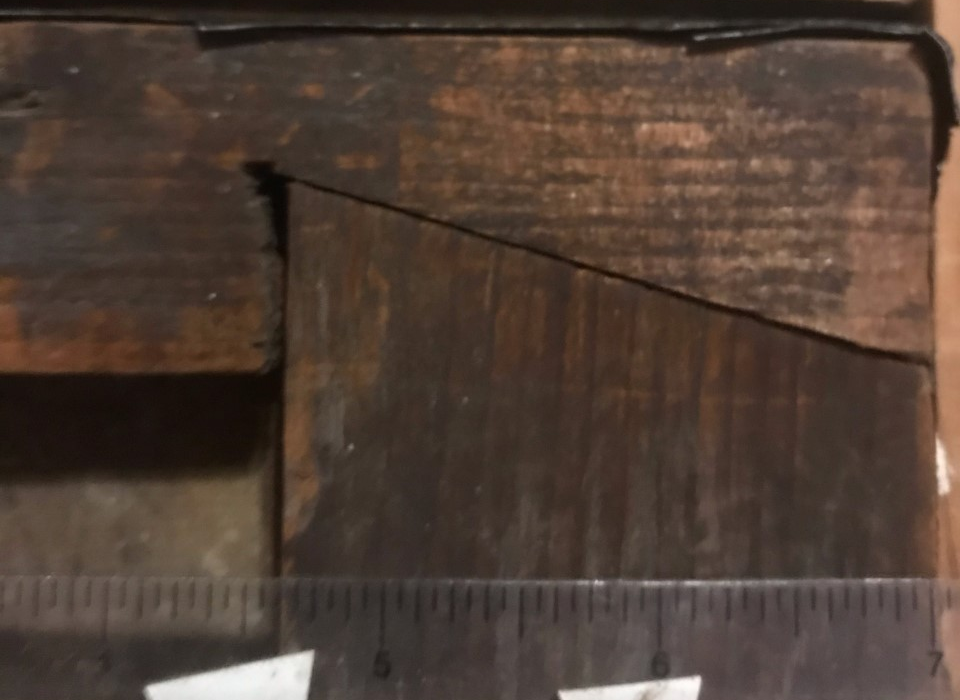
Reduction in size by sawing through canvas and stretcher on top and righthand edges. Reattachment was by tacks driven through the edges of the canvas and into the face of the stretcher. These attachments had clearly failed many years ago.

Original Size: w.503mm x h.365mm (19¾"x 14½")
Calculated on the assuption that the stretcher members were originally all of equal width.

Date

Age: by visual inspection; late 18th C, to early 19th C. ( c.1800 )

Signature and Inscriptions

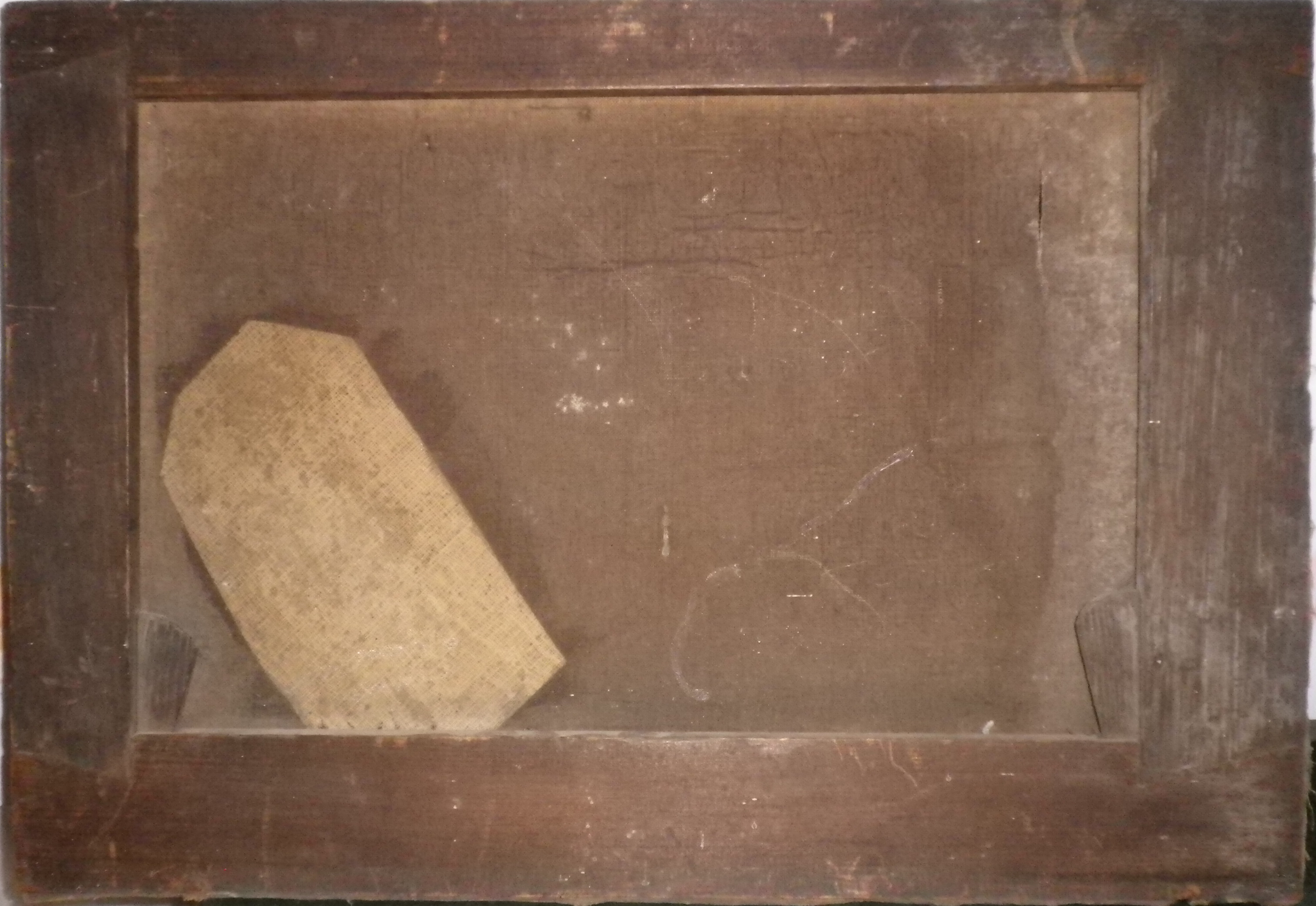
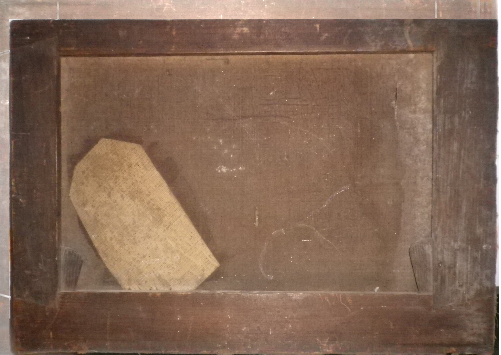
There are no visible signatures or inscription on the painted surface. There are no inscriptions or labels on the back.

Frame

Frame: There was no frame with the picture when purchased.

Paint and Varnish

Painted surface is damaged and there is extensive craquelure.

The paint has not been analysed. Colours are predominantly browns in the darker areas, light blue in the clear part of the sky, heavily textured white on the clouds and grey/blue on the water. There are red highlights on pennants and fishermen.

The picture appears to have been only lightly varnished but without cleaning it is difficult to be sure - in certain lights, notably sunlight, the surface appears reflective, in paler lighting and in photographs the surface appears to be matt.

{short description of image}

{short description of image}

Canvas

This image shows the original dimensions with the lighter parts representing the missing sections:

{short description of image}

The picture is painted on a canvas with approximately 18 threads per cm.

  • There are no signs of removal from the stretcher on the bottom or left edges which suggests that the canvas was attached to this stretcher before painting.
  • Intact edges appear to have been cut freehand by knife.
  • The canvas has not been relined

When the picture was purchased, top and right edges of the canvas (which had been cut as mentioned above) were detached from the stretcher and the canvas itself was crumpled. Canvas-Front

{short description of image}

{short description of image}

Warp and Weft Determination

This examination was undertaken on 19th August 2022 for possible comparisons with the Rochester Canvas.

It was determined that the warp fibres were parallel to the edges of the picture and the weft ran across the horizontal.

{short description of image}

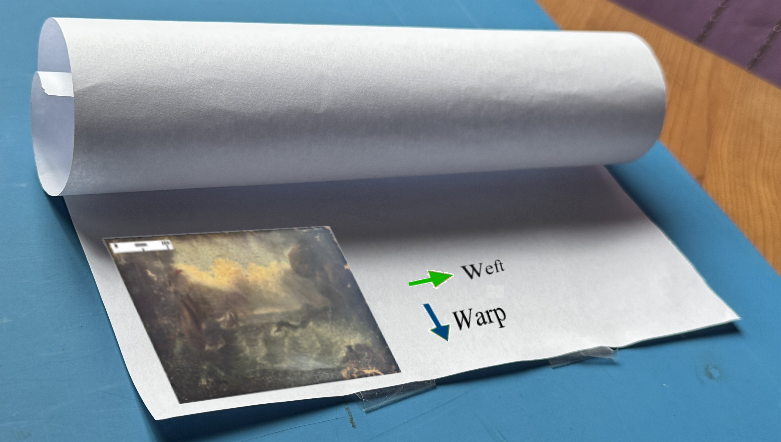
There is much contradictory information on the internet so just to be certain: in this section references to the warp are references to the warp threads that run parallel to the edges of the roll of material.

{short description of image}


This diagram illustrates the relationship between the roll of canvas and the picture 'Squall from St. Vincent's Rock, Bristol'.
Another picture on canvas taken from left or right would exhibit similar patterns in the weft
and if taken from above or below similar patterns would be found in the warp.

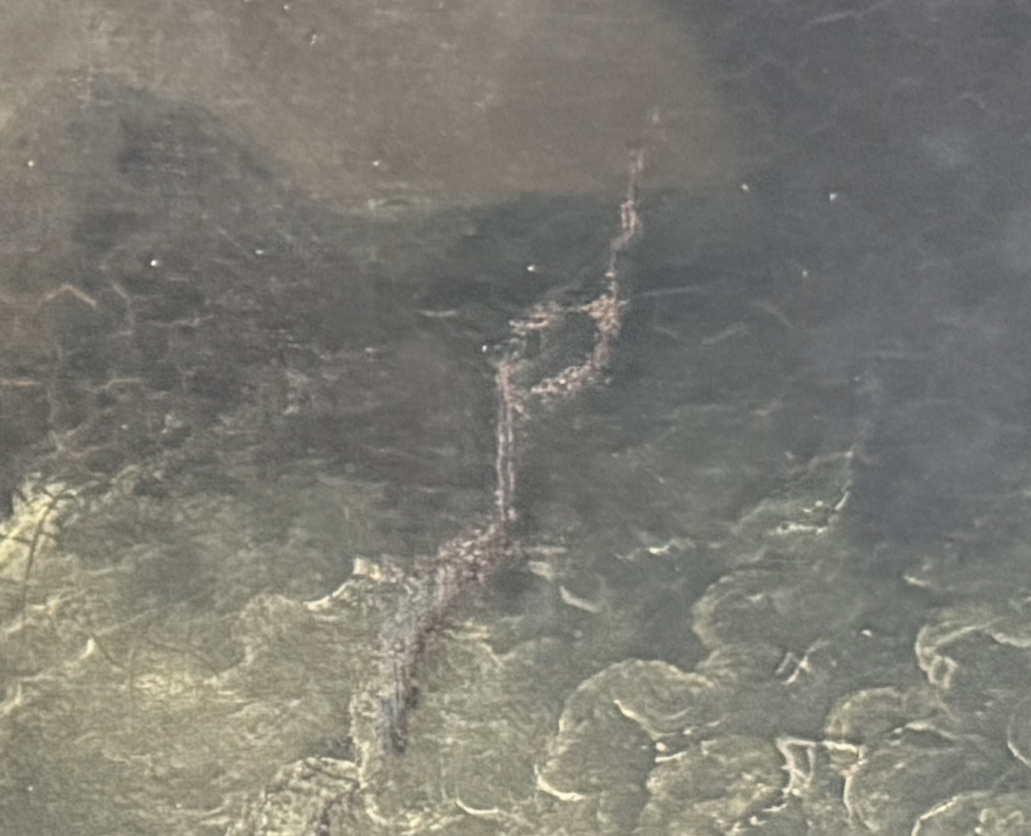
Warp threads are under tension during the manufacturing process and are made of stronger materials than the weft threads. It follows that 'natural' tearing of the fibres, under stretching, will result in breaking of the weft fibres rather than the warp fibres. One such tear in the canvas was examined and it appeared that the broken fibres were indeed the weft fibres. There is a little uncertainty because the canvas is very fine and difficult to observe without disturbing it destructively. However, the uncertainty is small; the weft could be seen weaving above and below the warp fibres and the warp fibres were intact along the area examined.

{short description of image}

{short description of image}

Canvas Damage

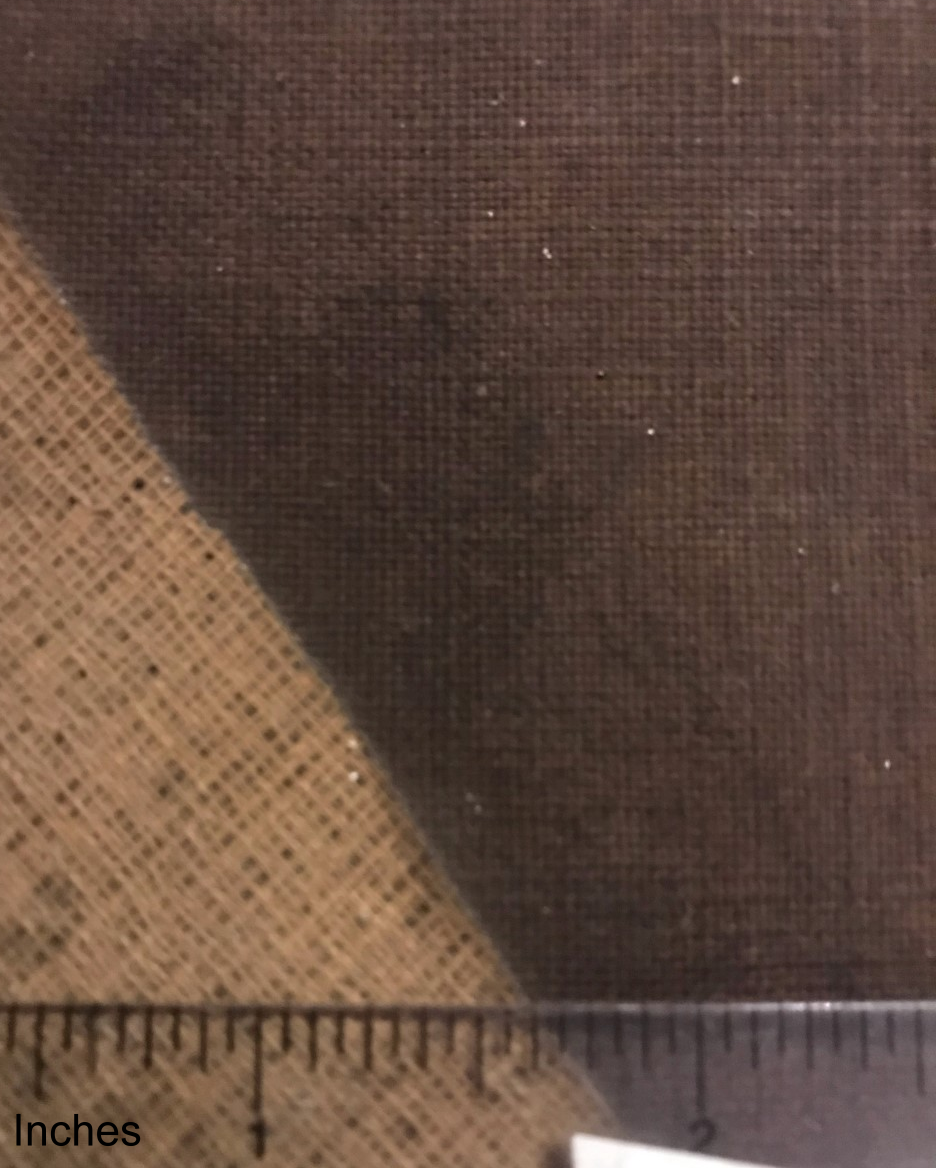
There is a repair which has been made with a rectangular patch of canvas with corners clipped off; its size roughly 180mm x 100mm. It is not the same canvas as the painting, it is later and the weave is different and wider (around 12 threads per cm). A loose corner peeled back slightly revealed that the dark colour of the painting canvas continued under the patch. It is a late, rather than early, repair. Even so, the repair does not appear to be recent. Both painting canvas and repair canvas are slightly lighter in colour beneath the stretcher timbers. The damage appears to have been penetration by a sharp pointed object with consequent tearing.

{short description of image}

{short description of image}

Other damage includes three areas of torn canvas and several depressions and folds. The paint surface is damaged and there are missing patches particularly bottom right and near top left. Self adhesive cloth tape has been applied to the two severed edges; thus 5mm of (very damaged) canvas is lost. If restoration work is undertaken the tape can be trimmed back or removed. Meanwhile the painting is protected from further damage.

{short description of image}

Canvas Repair Patch

The repair patch is quite different and a looser weave. The illustration below shows a section of canvas near the repair patch and illustrates repeating patterns and the difference between the two canvasses.

{short description of image}

{short description of image}

{short description of image}

Stretcher

The stretcher is of peculiar construction with corner joints cut to permit stretching in both directions with the insertion of only one key. Apart from the destruction by reduction of size mentioned above the stretcher is in good condition.

 ...

Members have rectangular cross section and two keys are intact. It appears to be made from a softwood, possibly pine but grains differ between members which indicates that this stretcher may have been repaired prior to canvas being attached. It is possible that it was a secondhand stretcher; in any case it appears to be 'home made' and of a non-commercial nature. However, it is extremely well made, the peculiar corner joints are cut accurately and the keys are finished with unusual curved ends. The images are not to scale - click to enlarge them.

{short description of image}

{short description of image}

Nails and Edges

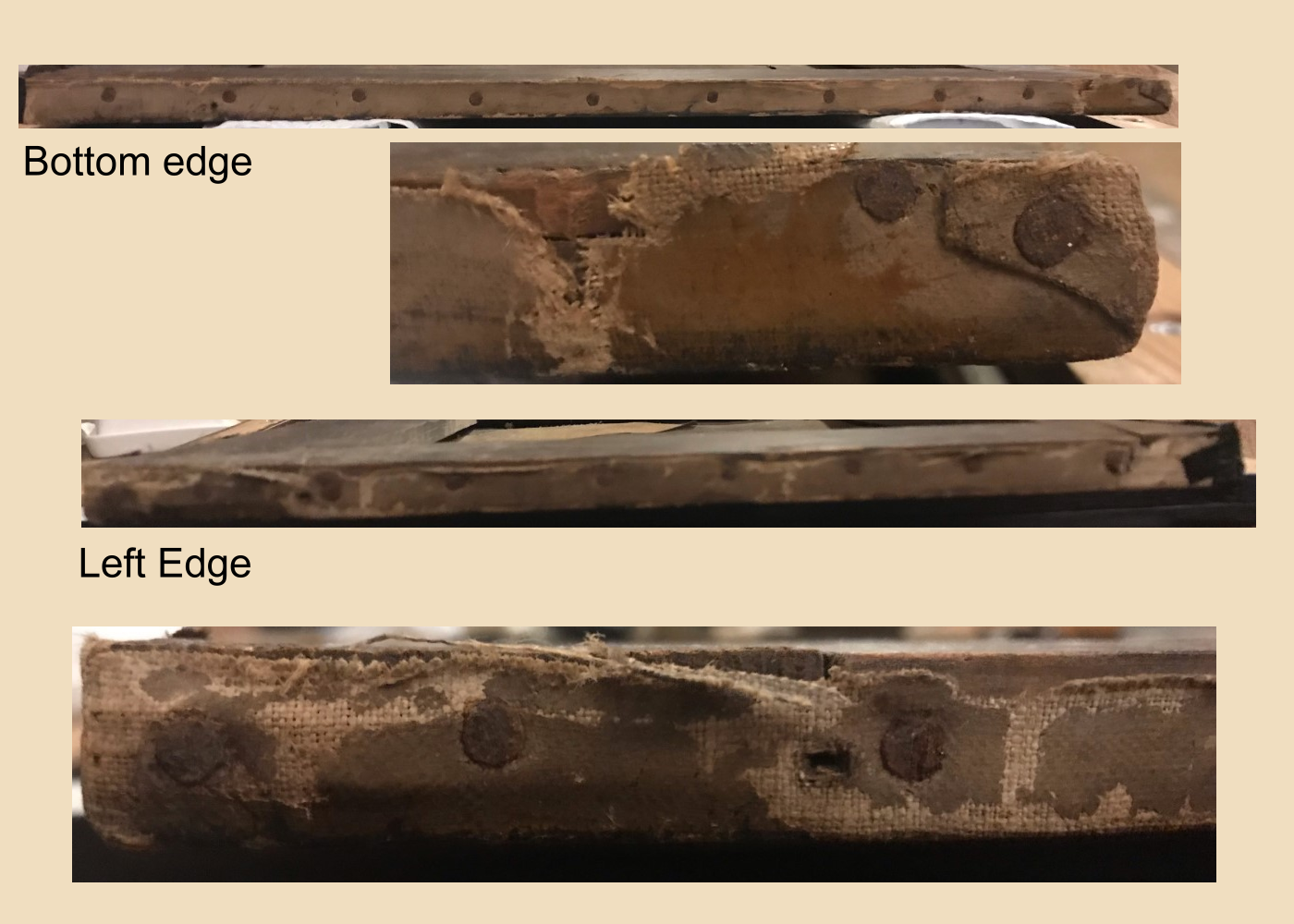
Nails: The bottom and left edges of the picture appear to be secured to the stretcher by original nails. The nails are not evenly placed and are not consistently placed in the centre of stretcher members. Images of the two 'original' edges are shown below. The rectangular hole on the close up of the left edge is unexplained - it is not the result of a key being pressed in too far.

Nails are placed only along the edges. The canvas is not wrapped around the stretcher.

Stretcher Cross Section Examination 19th August 2022

Edges in contact with the canvas were examined, on 19th August 2022, by touch. I pressed quite firmly on the canvas pushing it firmly against the stretcher. There was no indication of any 'lip' or raised or shaped contour on the stretcher members. Clearly the two sides examined were the intact sides. Some fibrous material between the stretcher and canvas was detected. I extracted some samples with folded paper. These were later used for pollen analysis but results were indeterminate.

{short description of image}

Pollen

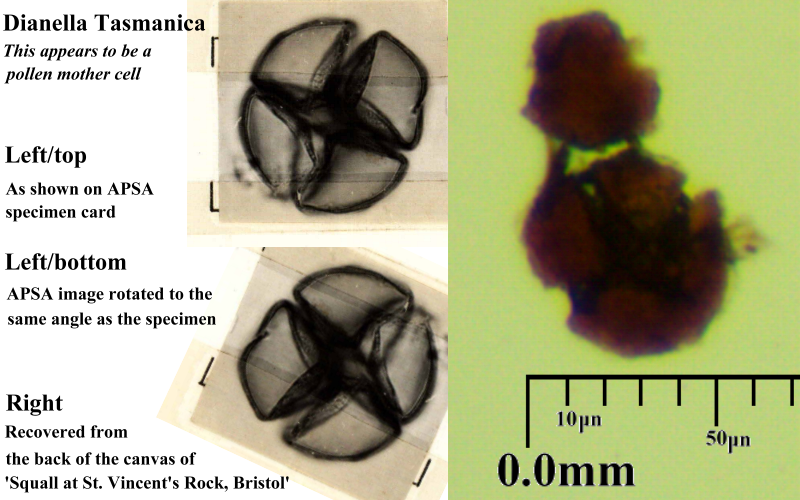
Pollens were found on the picture canvas underneath the repair canvas. Note that the specimens were taken after peeling back a small area of repair canvas and cannot therefore be present as a result of later contamination.

Dianella Tasmanica was first described around 1860 by Joseph Dalton Hooker. For this pollen to be present on this canvas, underneath the repair, the unrepaired canvas must have been in the area around Tasmania. On the image below there are two Dianella Tasmanica mother cells; the lower cell is in the same period of maurity as the diagram from the APSA pollen database.

Microscopic analysis for pollens and other surface contaminants
Tasmania Flora - Hooker
Pollen Speciment Found Under the Repair Canvas

{short description of image}

{short description of image}

Purchase of 'Squall at St Vincent's Rock, Bristol' by the present owner

{short description of image}

The picture was purchased in the afternoon of 11th August 2018 at a Saturday morning casual vintage market in Hadleigh, Suffolk. The lady vendor had bought the picture at a car boot sale from a person who said it came from 'an attic' during a 'house clearance'. All attempts to locate the vendor and car boot sale have failed.

{short description of image}

However, amongst other less likely scenarios, a possible location of the 'attic' has been discovered. The last recorded owner of 'The rising squall, hot wells, from St. Vincent's rock, Bristol' (exh. RA 1793) was picture dealer, Joseph Hogarth, who died at Paxton House, West Drayton in 1879. He owned both Paxton House and a semi-detached property known then as '2 Orchard Villas' which occupied the same plot of land. Paxton House itself has been demolished but '2 Orchard Villas' later became '1 Orchard Villas' then '113 Station Road' and finally '147 Station Road'. It is still standing and was sold 19th July 2017. Planning applications by the new owner suggest that some house clearance activity took place around July 2018; the same time as the picture emerged.

{short description of image}

{short description of image}

Notes on Missing Signature and Inscription

{short description of image}

If this painting is 'The rising squall, hot wells, from St. Vincent's rock, Bristol' then two inscriptions are missing:

  • The signature which should be 'Wm Turner'. The right lower corner of the painting is damaged and a signature here would probably have been destroyed. At the lower left the paint is intact; but very dirty so it is possible that a signature would emerge here. On the hulls of the boats is another place Turner may have put a signature. It is possible that Turner painted his rock complex as a kind of 'idée fixe' and left it at that.
  • At auction at Christies in 1864 a stencil mark would be made on the stretcher. There is no sign of any stencil. Other auctioneers seem to have sometimes drawn their mark on the frame. No record of Christies marking frames has yet been found but this is possible.

{short description of image}

The lack of these marks creates uncertainty. Although a picture of this size would not be out of place at RA 1793, Turner's exhibits were generally bigger. His watercolours of the period were sometimes painted in pairs; a small version and a large version. This painting could be the small version of a larger exhibited oil.

The stretcher itself is innovative. This painting could have been painted during the tour of 1792 at the same time as 'Rochester Castle' and 'The Country Waggon'. Rev. James Douglas was an engineer and artist; this could be a stretcher made by him at a time when stretcher makers were experimenting with 'expanding' keyed joints.

{short description of image}

{short description of image}

{short description of image}

{short description of image}

{short description of image}