Pollen Specimen Data USN000-003 1

  December 2023

{short description of image}
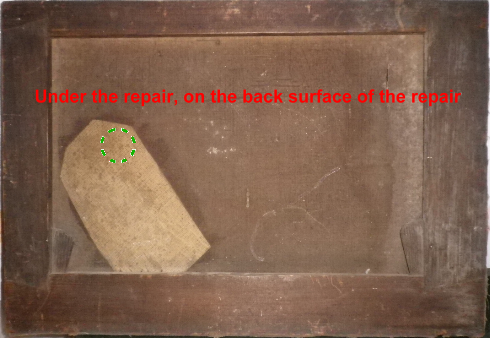
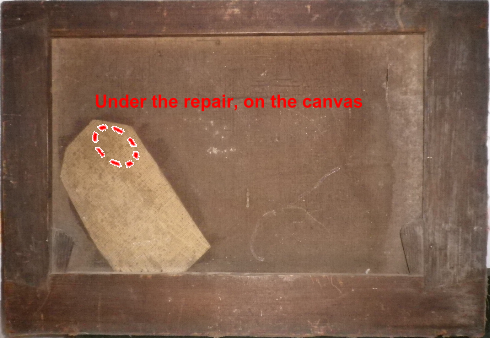
Location of specimen USN000-003
{short description of image}
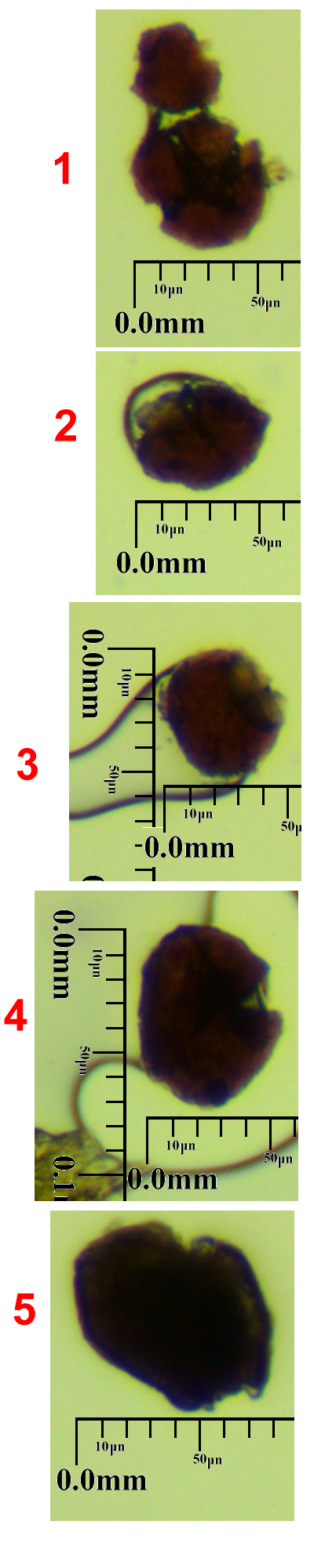
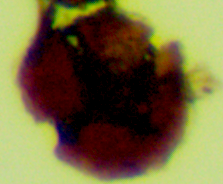
Image of specimen USN000-003; size approx. 50 microns.

Unique Specimen Number 000-003 (USN)

From 'Squall at St. Vincent's Rock, Bristol'

Extraction

This specimen was extracted, using clear sticky tape, from the back of the painted canvas underneath the repair. It was found at T-TAPE0009-lens010-1075x430y.

The specimens on these (T_TAPE) slides are not stained. USN000-003 is dusky-red in colour but otherwise opaque. It shows a clear tedrad structure and appears to be a polar view with the four segments detached at the 'top' but fused lower down. There is little discernable structure in the 'lower' dark areas. Its overall size was about 50 microns in diameter.

 1
V:40:20:40:580:20:H:56:616:28:616:56

 Pollen Specimen Data USN000-003 1

Comparisons

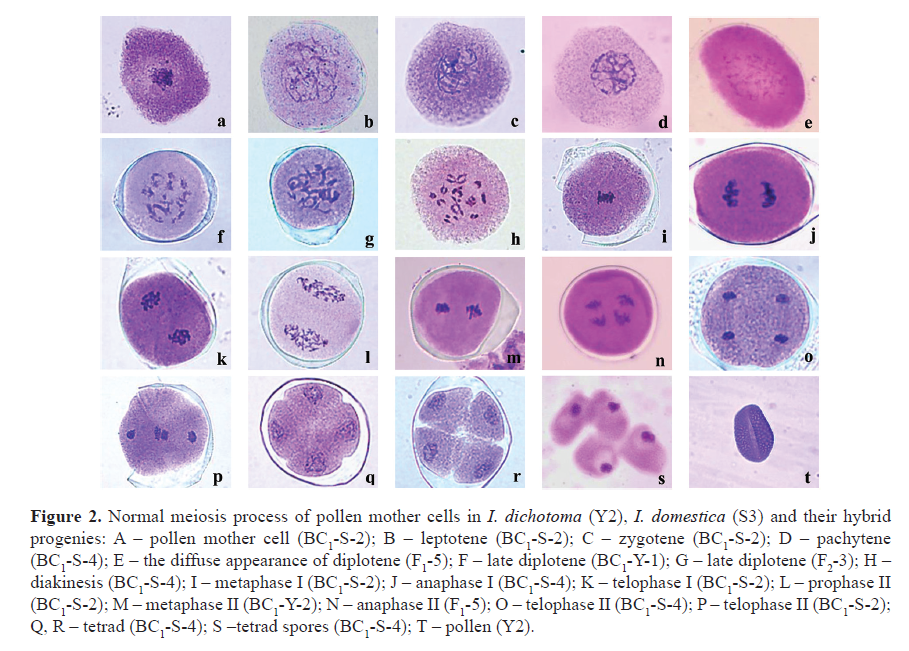
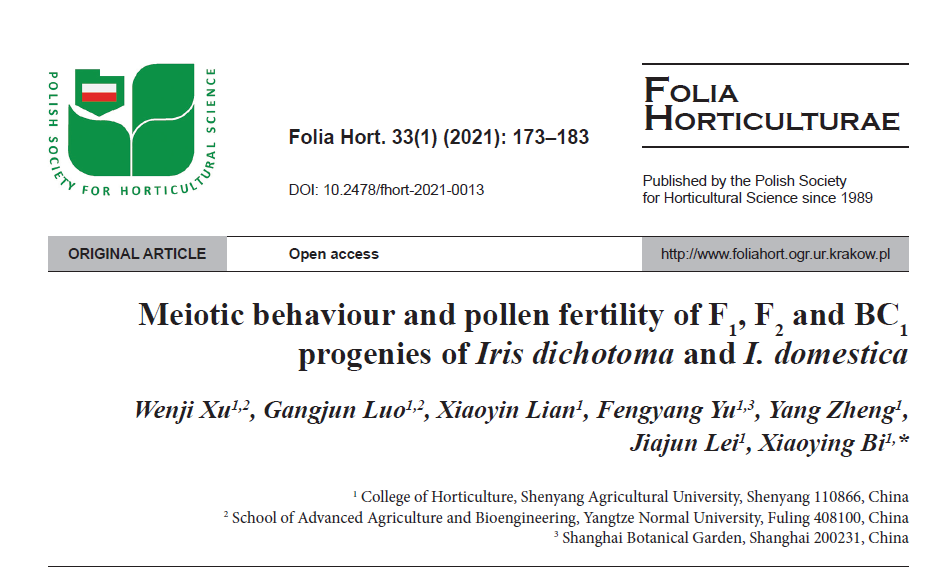
By comparison with online articles and with particular reference to a paper from the Polish Society for Horticultural Science, specimen USN000-003 was identified as a 'pollen mother cell'.

The links in that paper have not been maintained so relevant extracts are shown here. (left) The illustrations in Figure 2 show a tetrad at 'r' sufficiently similar to identify USN000-003 as a 'mother cell'.

 2
V:40:20:620:20:H:56:616:28:616:56

 Pollen Specimen Data USN000-003 1

{short description of image}
Nos. 3, 4 and 5 were taken from the repair canvas

Search for Similar Specimens

A search of the slides was made for additional specimens. No identical specimens were found. However, other specimens of similar size and colour were present. A selection of these are illustrated. (left) As shown above, USN000-003 (1 on the illustration) was located under the repair canvas at T-TAPE0009-lens010-1075x430y . Locations of the other illustrated specimens were:

  • 2; T-TAPE0009-lens010-1080x445y
  • 3; T-TAPE0009-lens010-1050x416y
  • 4, T-TAPE0012-lens010-0989x438y
  • 5, T-TAPE0011-lens010-0955x385y

Tape 9 was taken from the painted canvas. Tapes 11 and 12 were taken from the repair canvas around the same place.

The presence of this pollen underneath the repair canvas suggests that exposure to it occured before the repair. Similar mother cells were found in other locations and one particularly convincing specimen was found on tape 16 from the top of the repair canvas. If these specimens are Dianella Tasmanica the suggestion is that the repair was made in Tasmania (not London, by Joseph Hogarth, as previously thought).

 3
V:40:20:620:20:H:56:616:28:616:56

 Pollen Specimen Data USN000-003 1

APSA catalogue entry for Dianella Tasmanica

Species, Dianella Tasmanica

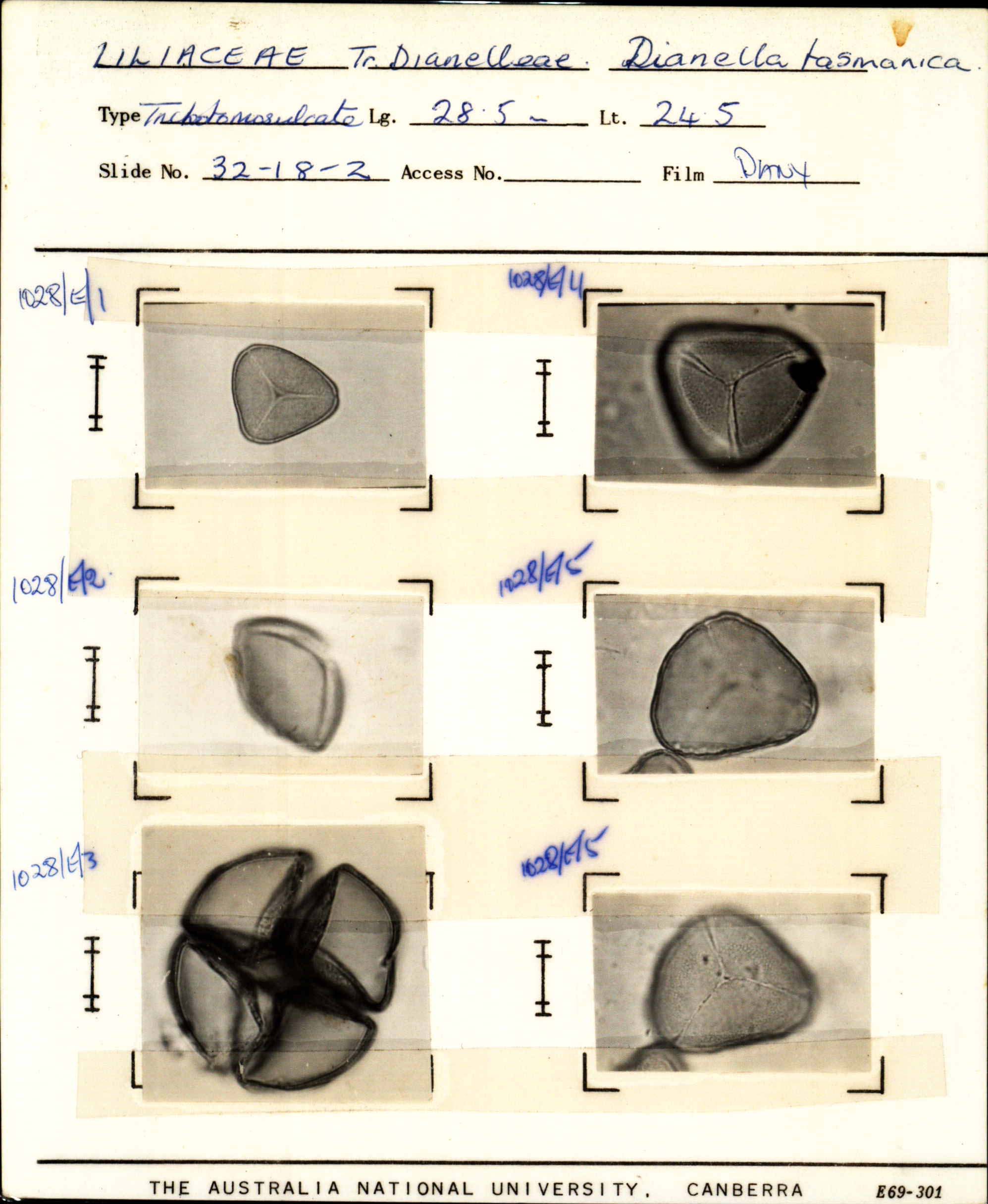
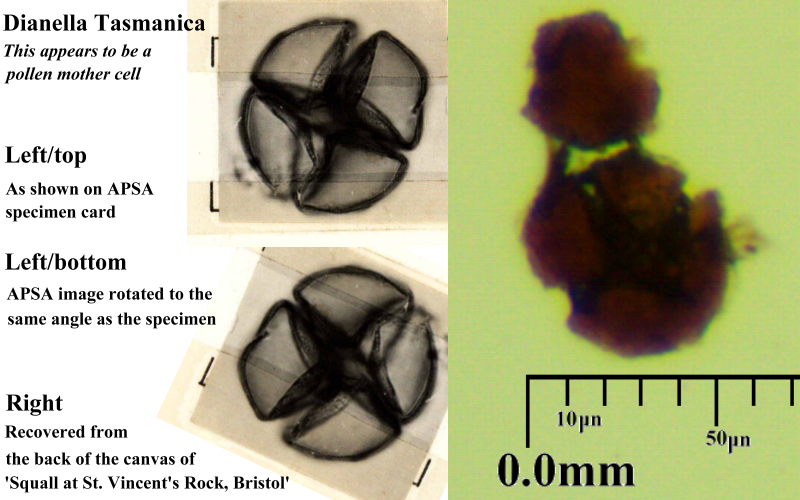
Comparisons were made with images from APSA, OREME and image searches on Google. A matching record was found on an APSA card entry:, No. 5 on the illustration. (left)

Recorded pollen size on the card is written as 28.5 x 24.5 (microns). The mothercell, No. 5, is clearly bigger than the pollen; twice the width of No. 1. The size on the APSA record is consistent with the size of the sample.

{short description of image}
The cell above the sample on the photograph appears to be similar in texture but smaller; possibly a tetrad spore but at this time uncertain. The apparent 'join' between it and the sample is probably an air bubble created by the taping process.

A living specimen of the plant has been purchased with a view to studying its pollen when it flowers at which time this note will be continued.

 4
V:40:20:620:20:H:56:616:28:616:56

 Pollen Specimen Data USN000-003 1

 5
V:40:20:620:20:H:56:616:28:616:56

 Pollen Specimen Data USN000-003 1

 END
V:40:20:620:20:H:56:616:28:616:56