References from which it is ascertained that 'The Rising Squall, hot wells, from St. Vincent's rock, Bristol'' is an oil
Pivotal to the identification of 'The rising squall, hot wells, from St. Vincent's rock, Bristol' as an oil, is a Christie's auction of 9th July 1864. [1864 auctions]. Lots 151 and 152 in that auction were recorded by Christie's as the property of 'Hogarth', from the collection of 'Dr Nixon', 'Bishop of Tasmania'. Both were bought in. The catalogue for that sale contains a section headed 'Pictures' from Lots 103 to 165; this heading indicates oil paintings (exceptions: there are two described as 'in water-colours). Lots 151 and 152 were therefore oil paintings. [lot 152 discussion]
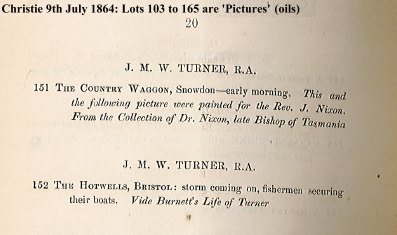
Rev Dr. Francis Russell Nixon, Lord Bishop of
Tasmania, served in Tasmania from 1843 to 1862. He had
five
works by JMW Turner in his collection which were inherited from his
father, Rev. Robert Nixon, wrongly recorded as 'J. Nixon' in the
catalogue, one of JMW Turner's early patrons; two of these works were oils
and three were watercolour-drawings. The Bishop exhibited these five works
in 1845 and the two oils in 1858 in the Hobart Town 'Legislative Council
Chamber'. On both occasions he exhibited the two oils as, 'View of
Snowdon, North Wales' (which became lot 151 in the 9th July 1864 sale) and
'Landscape' (which, being the other oil, must be lot 152). The description
given by Christies at lot 152 matches only one JMW Turner title namely,
'The rising squall, hot wells, from St. Vincent's rock, Bristol' which is
thus identified as an oil. The identification of Lot 152 stems from the
reference, 'Vide Burnett's Life Of Turner'. Although around this time
there was a collecter of JMW Turner's work called 'George Burnett' he did
not write such a book. 'Burnett in the catalogue appears to be a
mis-spelling of John 'Burnet'. This was confirmed by e-mails with the
British Library. The British Library found no trace of 'Burnett's 'Life of
Turner'' and offered the following explanation:

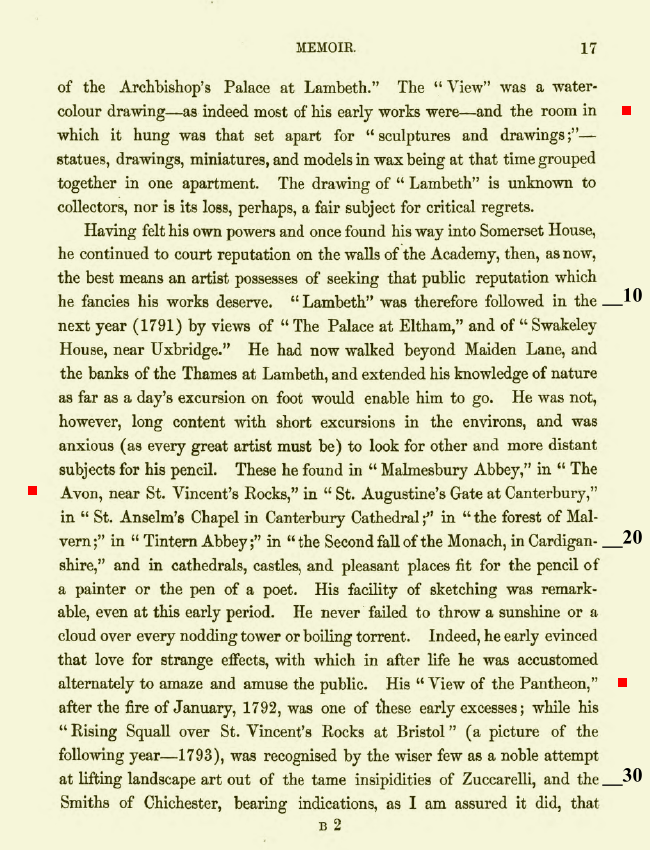
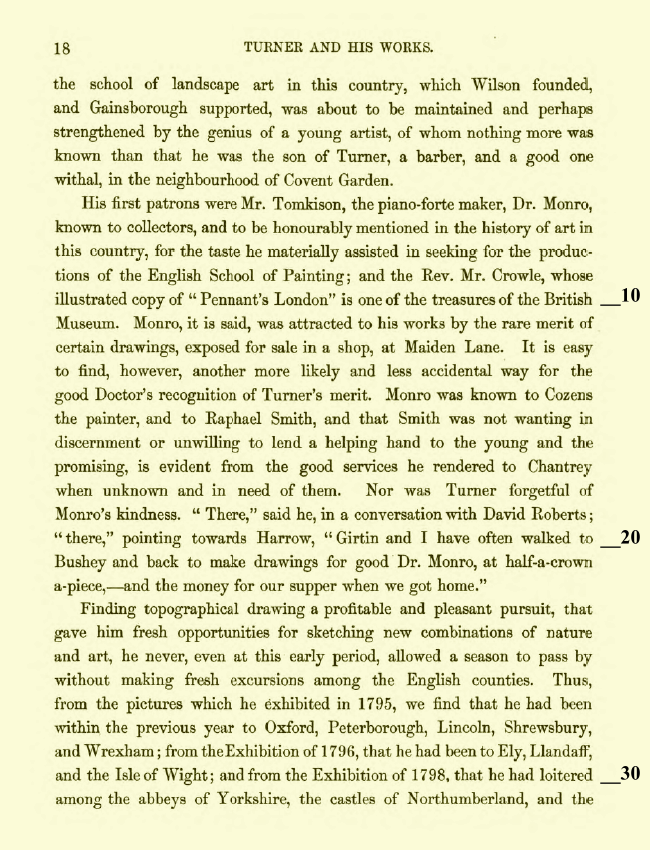
John Burnet 'Turner and his works' (1852) and its preface, 'Memoir' by Peter Cunningham contains two references that relate to the catalogue entry. In the 'Memoir' on page 17 and in a 'Catalogue of Works' on page 109. The reference on page 109 (No. 8) is the only mention of 'Hotwells' in the volume and therefore must be the reference referred to in the catalogue.
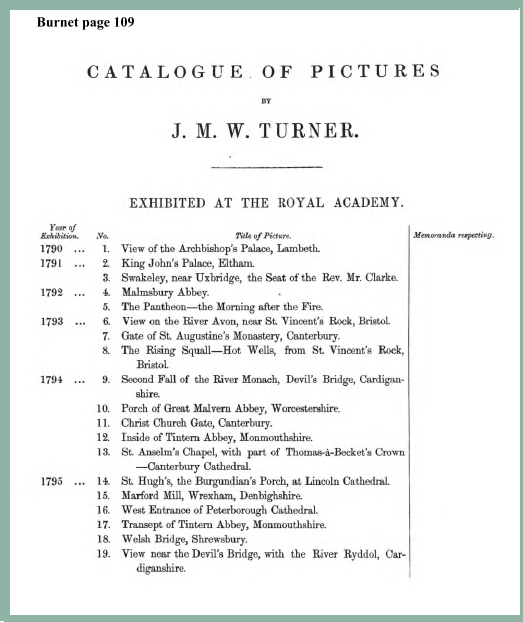
Burnet's book was revised and reprinted in 1859 but both passages were identical. Page 109 (No. 8) is silent as to whether 'The rising squall, hot wells, from St. Vincent's rock, Bristol' is an oil or a watercolour but the entry on page 17 (& p18, top) strongly suggests that 'Rising Squall over St. Vincent's Rocks at Bristol' as Cunningham calls it, is an oil exhibited in 1793. (below second left arrow, page 17). Cunningham calls it a 'picture' (which at that time was synonymous with 'oil painting') and compares JMW Turner's work with Gainsborough which can only be a reference to an oil. (Elsewhere, Cunningham used the word 'picture' more generally but here it does seem that he was intending the more technical meaning.)
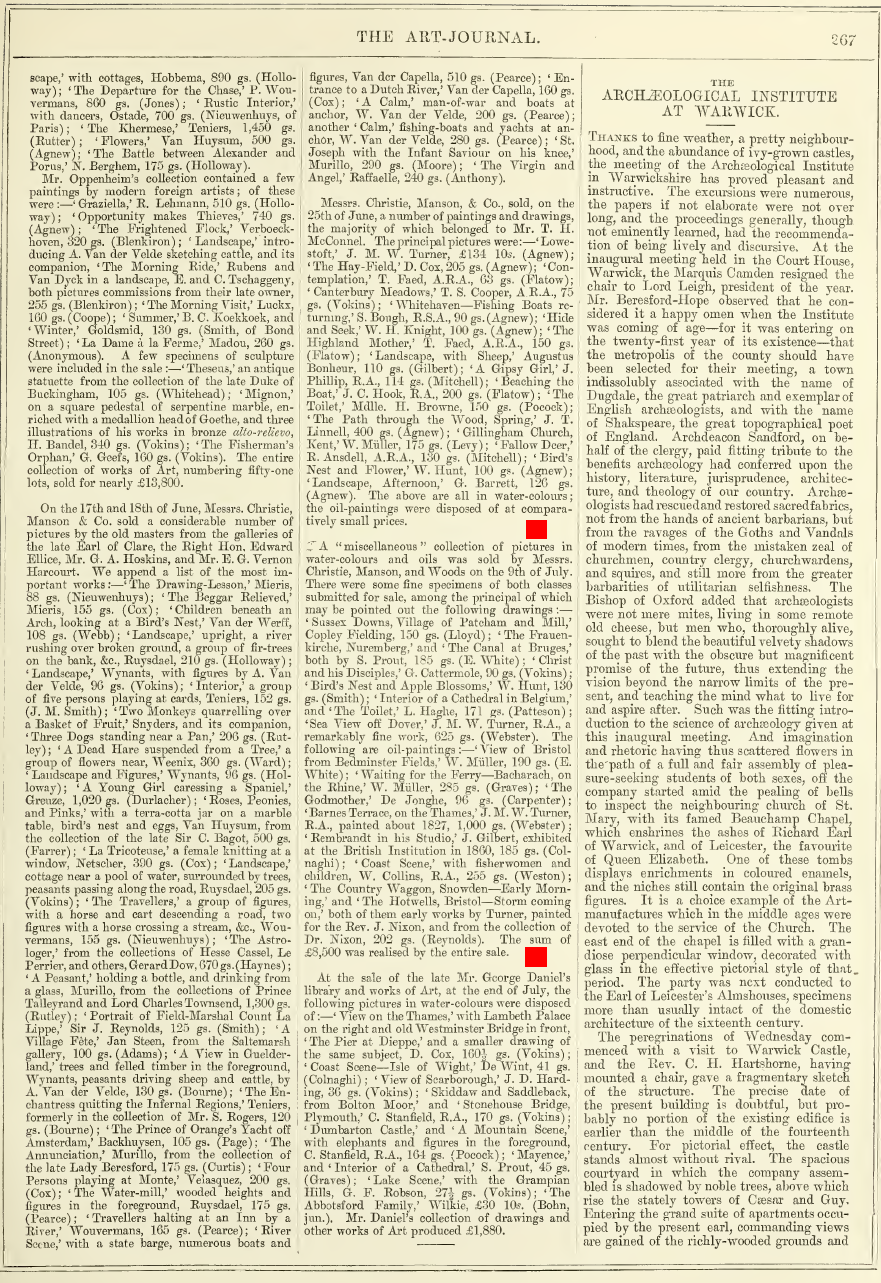
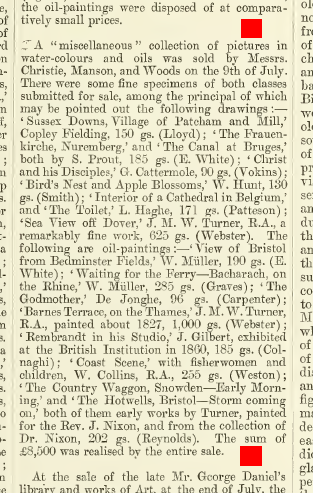
This sale was also recorded in 'The Art Journal' and later in George Redford's 'Art Sales'.
In 'The Art Journal' as 'The Hotwells, Bristol - storm coming on' it was specifically said to be an oil painting
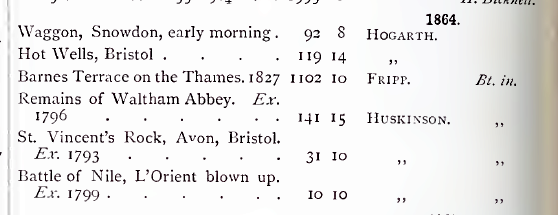
whilst in Redford it appeared in volume 2 page 120 amongst the oils generally as 'Hot Wells, Bristol'. However, in the same section is recorded the appearance of 'Remains of Waltham Abbey, exhibited 1796' which was a watercolour-drawing so Redford is somewhat unreliable. The reference to 'St Vincent's Rock, Avon, Bristol, Ex 1793' is, it would appear, No. 6 in Burnet's List above and also probably a watercolour-drawing.
References as to whether 'The rising squall, hot wells, from St. Vincent's rock, Bristol' is an oil or a watercolour appear from around 1845. These references do exhibit some uncertainty with Thornbury being inconclusive and the first Redgrave publication lacking specificity. However, the second and third Redgrave publications state categorically that 'The Rising Squall' is an oil exhibited in 1793. Certainty that it is an oil is provided by the two Hobart Town exhibition catalogues, the Christies sale catalogue of 9th July 1864 and its 1864 Art Journal entry.
1845 Hobart Town
Exhibition Catalogue
Evidence that 'The Rising Squall' was an oil; the picture was
exhibited as 'Landscape' (No 33 on page 4) in the section reserved for
oils (watercolours start on page 7). It was in the posession of Rev. Dr.
Francis Russell Nixon, Bishop of Tasmania.
1852 Peter
Cunningham, 'Memoire' published 1852
Evidence that 'The Rising Squall' was an oil exhibited in 1793.
Cunningham does not say that this was JMW Turner's first
exhibited oil.
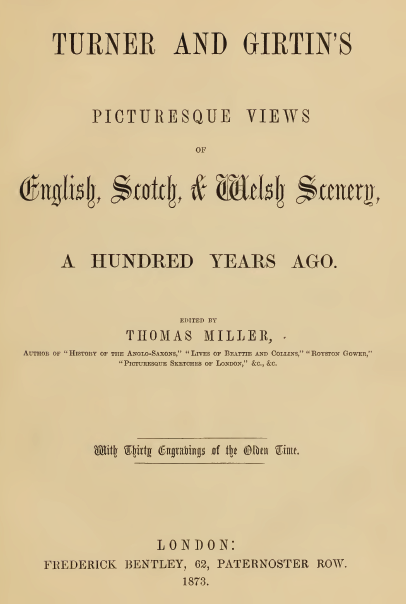
1854 Miller, 'Turner and
Girtin's Picturesque Views, Sixty Years Since' [reprint:
1873]
Miller does not mention JMW Turner's 'The Rising Squall' at all.
However, he mentions other early oils which supports the proposition that
Turner started painting in oil at around the time of the 1793 RA
exhibition.
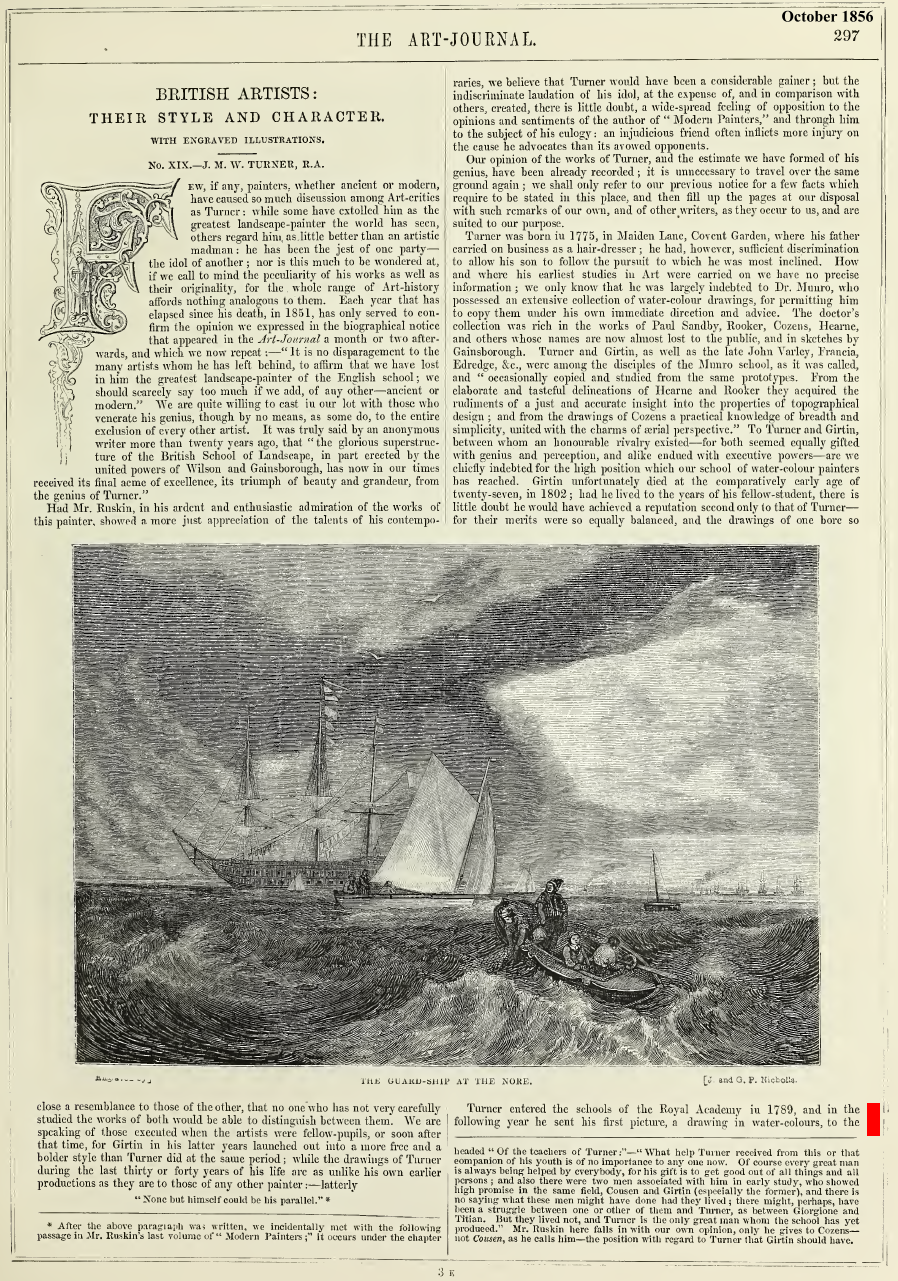
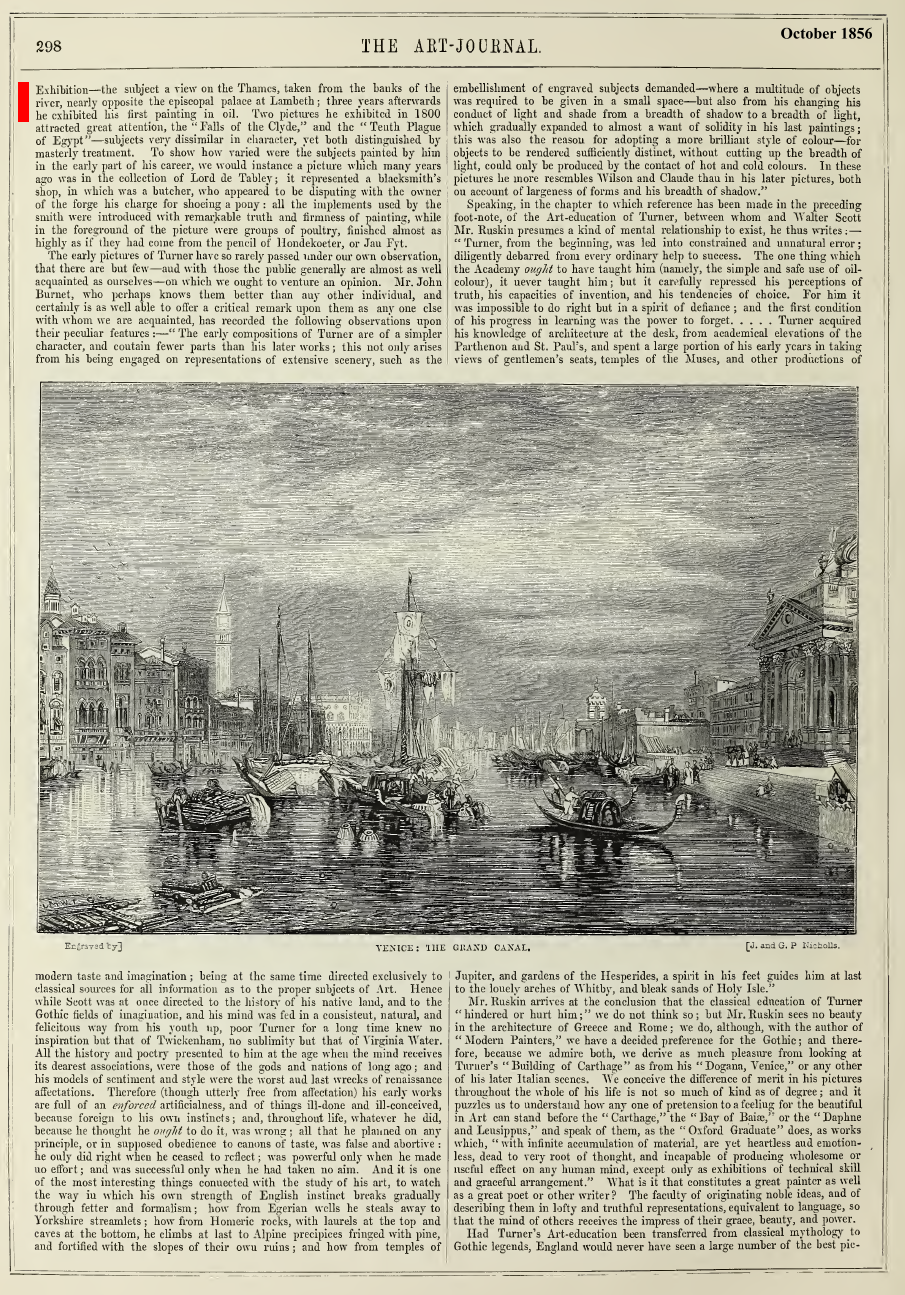
1856
The Art Journal pp297 &298
Evidence that JMW Turner's first oil exhibit was in 1793 is published
in the Art Journal but it does not name the picture:
1858 Hobart Town Exhibition
Catalogue
Evidence that 'The Rising Squall' is an oil; a similar review to that
of the 1945 exhibition with 'The Rising Squall' exhibited as 'Landscape'
on page 8, No. 133 marked 'O'. In this catalogue oils are marked with an
'O' and watercolours with a 'W'.
1862 Thornbury, 'The
Life of JMW Turner RA' [revised 1877; reprint 1897(posth.)]
Inconclusive, Thornbury exhibits many contradictions. He never
describes 'The Rising Squall' as a watercolour-drawing and at the
beginning of his chapter entitled, "Turner's Art Life" he
describes 'The Rising Squall, Hotwells' as one of JMW Turner's "earliest
pictures" apparently indicating an oil. However, Thornbury
continues by so conflating the terminology that he cannot be relied upon
as evidence in this matter.
1864
The Art Journal
Evidence that 'The Rising Squall' is an oil. In the section which
begins "The following are oil-paintings..." then, "The
Hotwells, Bristol - Storm coming on"
1866 Richard and Samuel
Redgrave, 'A Century of Painters' Vol II [reprint 1890(posth.)]
Evidence about 'The Rising Squall' is found in vol. II. There seems
to be some uncertainty as to whether 'The Rising Squall' was an oil or
watercolour because 1866, vol. II, page 96 describes 'The Rising Squall'
as a 'work' of 1793. 'Moonlight' is described as the first exhibited oil
but analysis shows that this claim is unsustainable.
1874 Samuel Redgrave,
'A Dictionary of Artists' [reprint 1878(posth.)]
Evidence that 'The Rising Squall' is an oil exhibited in 1793. States
categorically, "in 1793 he exhibited, in oil, 'The Rising Squall'."
[1874 p416, col. 1, line 20]
1892
Gilbert R Redgrave, 'A History Of Water-Colour Painting In England'
[reprint 1905]
Evidence that 'The Rising Squall' is an oil exhibited in 1793. "Even
at this time he was working much in oil. As early as 1793 he exhibited
The Rising Squall and in 1796 a subject-picture entitled Fishermen
at Sea." [page 58]