Andrew Wilton
JMW Turner His Art and Life
Poplar Books 1979
DRAFT NOTES - Wilton adds very little to the presentation material. He was working in pre-internet times in a situation where gathering evidence in respect of the 1793 exhibits was an almost impossible task.
Detailed Analysis of Works of Interest
Wilton
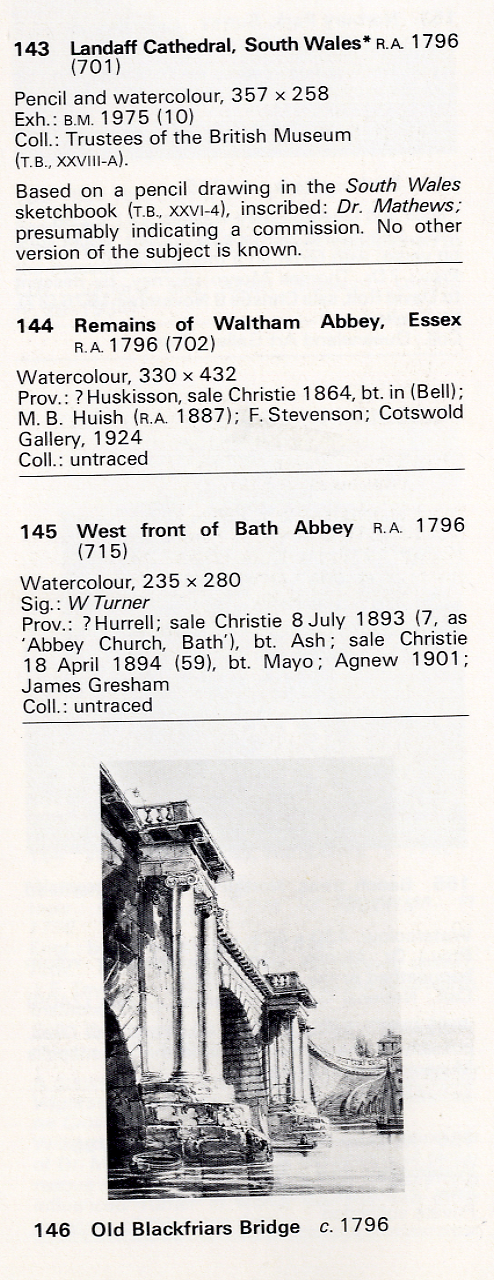
page 315, No. 144
The entry for Remains
of Waltham Abbey, Essex
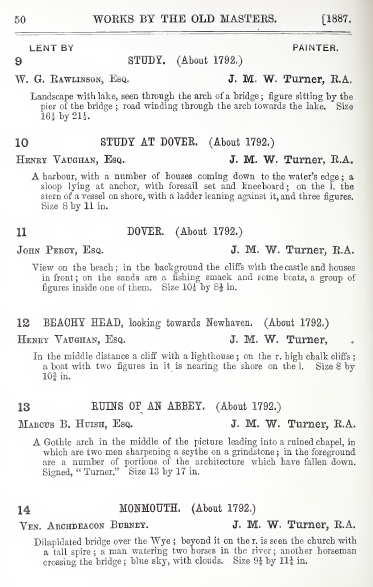
Wilton quotes the size: 330mm x 432 (13" x 17") (h x w)
from the 1887 Royal
Academy Old Master Exhibition page 50 No. 13 and
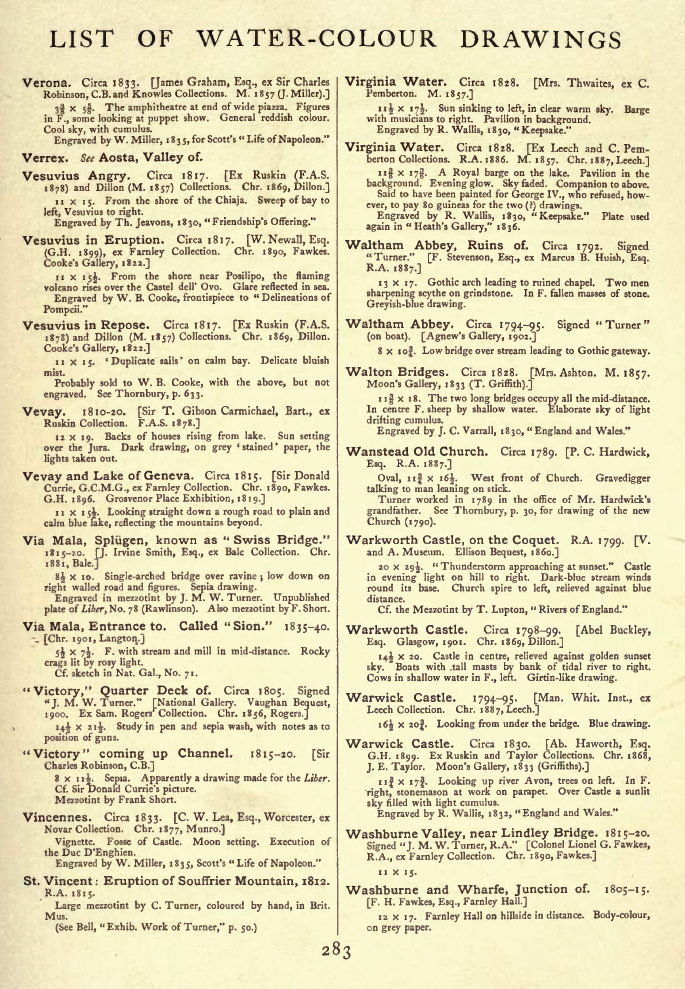
Armstrong page 283 but neither of those
catalogues claim this to be the 1796 exhibit. C.F.
Bell pages 31 & 32, No.30 definitely describes the exhibit but
(probably incorrectly) says that it is an oil. The Armstrong/RA
descriptions and the C.F. Bell description do not match. C.F.Bell does not
quote a size; Armstrong/RA places the work in 1792. C.F. Bell quotes the
Huskinson/Huskisson
sale of 27th April 1864 (bought in)but Armstrong/RA do not.
Wilton does not mention this mismatch or how he comes to assume that
the two clips of provenance relate to the same work.
This is important to us because the bought in items referred to above
include 'View on the river Avon, near St. Vincent's rock, Bristol', which
appears to be the Bristol Watercolour.
DRAFT notes below this point are just a rough
run-through of points that need to be included
Wilton
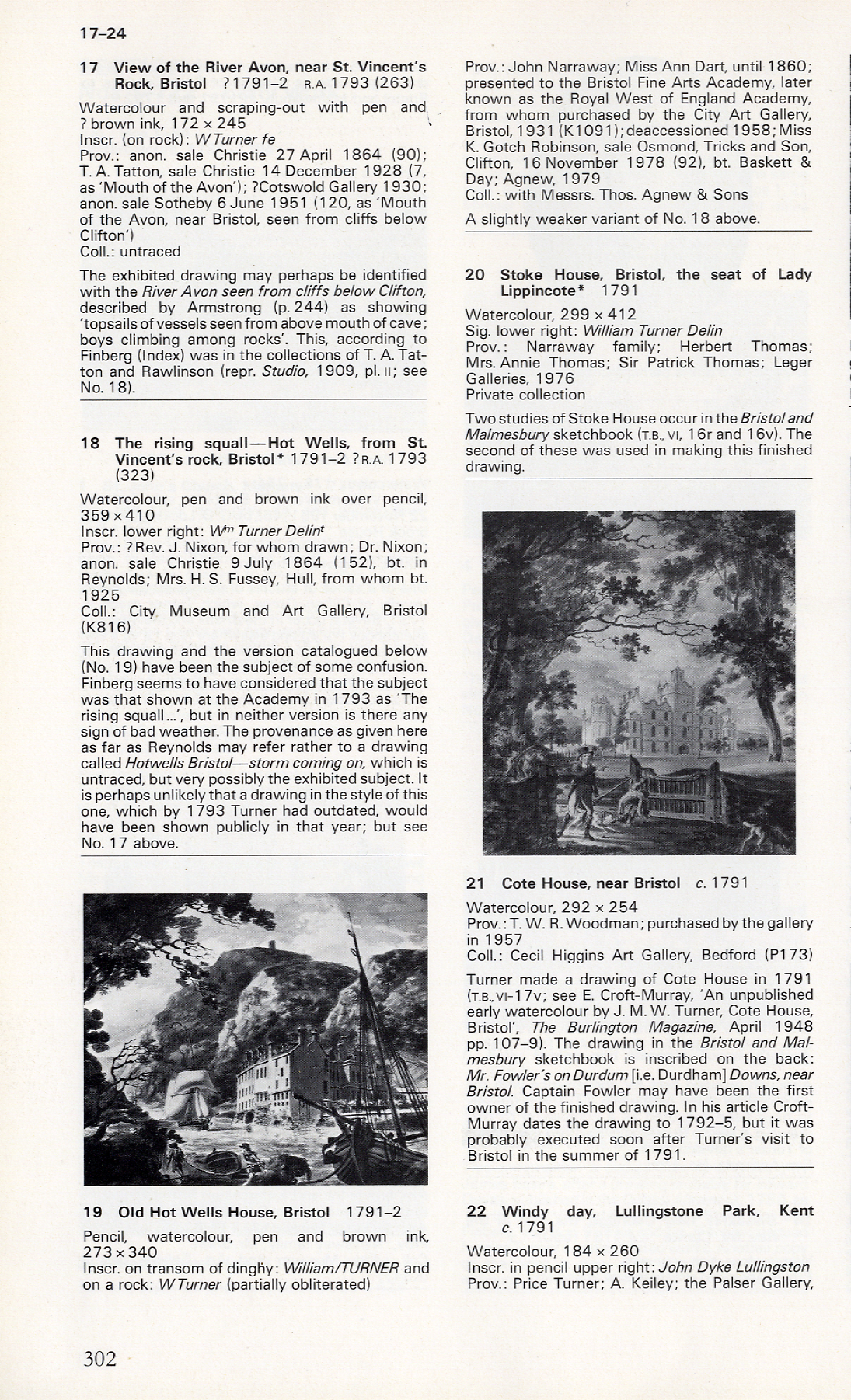
page 302, Nos. 17, 18 & 19
In contrast to the commentary on page 30 this set of entries contains
all the somewhat confused elements that emerged from the two historic
mistakes in respect of these pictures.
View on the river Avon, near St. Vincent's rock, Bristol Wilton 17
Wilton adds to the confusion by introducing two watercolours into the
discussion which cannot possibly be the exhibit both on grounds of size.
1) River Avon Seen from cliffs below Clifton - Armstrong page 244 a
small 8¾ "x 11".
2) 'Mouth of the Avon' Lot 7 omitted from
Christies
Ledger 14th Dec 1928, no catalogues, Wilton size: 6¾" x 9½"
Possible alternative name 'Mouth of the Avon near Bristol, seen from
cliffs below Clifton
The two names, being similar, seem to refer to one picture but it must be two because Armstrong and Wilton quote different sizes. There is an additional evidential mismatch in the names: The mouth of the Avon is some 6 or 7 miles north of Clifton and to see it (the mouth) from Clifton one would need to be quite high on the cliff and north of St. Vincent's Rock. Turner actually drew a map of the area so he knew this. His exhibit was a view on the Avon - not 'of' the Avon and it was near St. Vincent's Rock, not 7 miles north.
The only part of Wilton's provenance that bears any resemblance to reality is the Sales Catalogue of 27th April 1864 which he did not note was the Huskinson (known as Huskisson) sale and just put it down as anonymous and does not state that it was bought in - Wilton's catalogue No. 144 does show the seller as Huskisson and does show 'bought in' but does not show the date. It is possible that Wilton was not aware that these were one and the same sale.
'The rising squall, hot wells, from St. Vincent's rock, Bristol' Wilton 18
Wilton noticed that the provenance was accurate only to the 9th July 1864 and Reynolds. Wilton did not know about the historic mistakes. He does say that the Bristol Watercolour cannot be the exhibit. How did he not notice that the Bristol Watercolour was/is, at least, 'a' 'View on the river Avon, near St. Vincent's rock, Bristol '? (if not the identifying it with the exhibit). Or perhaps he did... Wilton ends his entry with a reference to No 17 which could be a roundabout way of saying that the Bristol Watercolour is No.17 but if so why not note it in the No 17 text?
The onward provenance which does relate to the Bristol Watercolour is slightly different to that provided by the museum. Wilton mentions Finberg but without citation and I cannot find this. Finberg probably just copied C.F. Bell. Wilton conflates Hannah Stark Fussey (1893-1921)with the as yet unidentified 'Hull' and fails to mention Rev. John George Patton who sold the Bristol Watercolour to Bristol Museum and Art Gallery in 1925.
Wilton
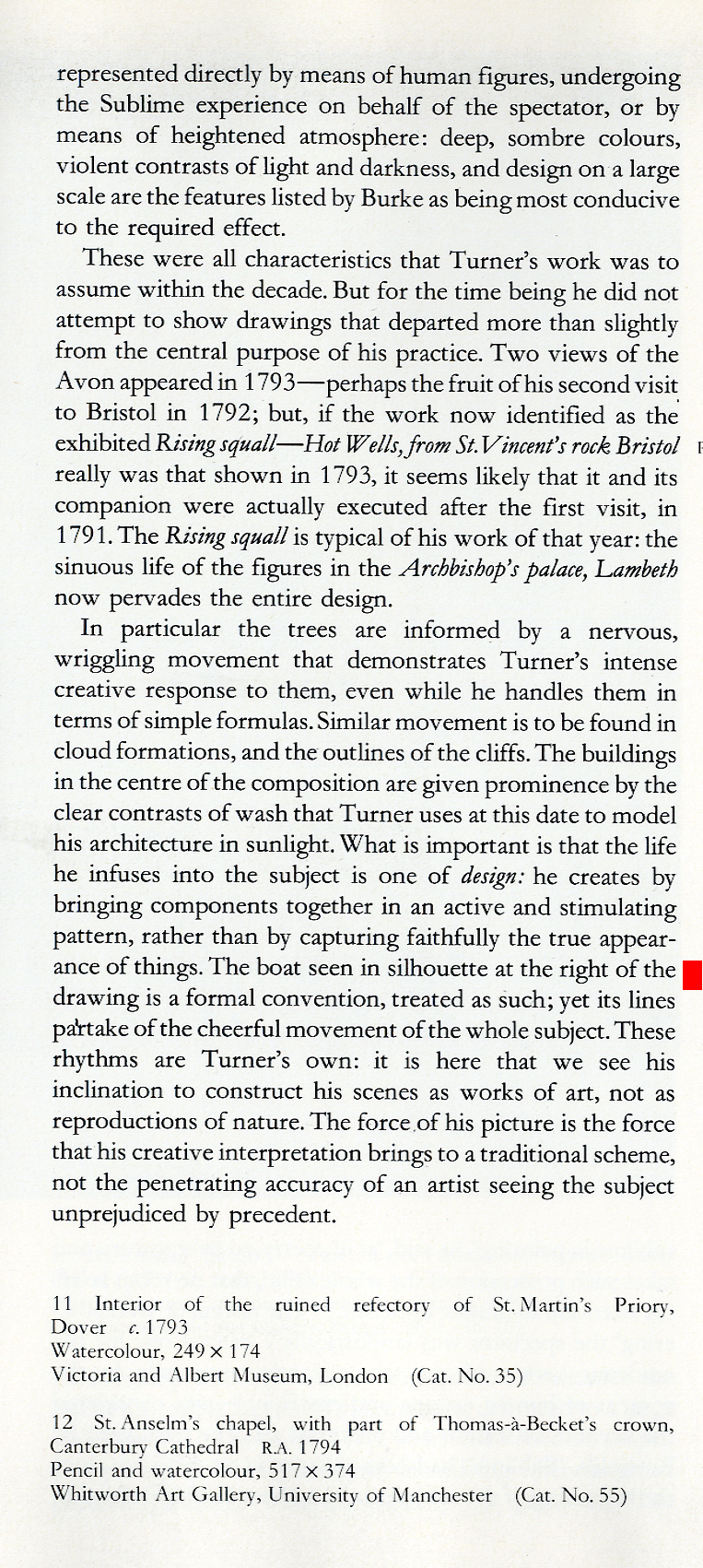
page 30 'The rising squall, hot wells, from St. Vincent's rock,
Bristol'
Wilton's commentary on page 30 clearly shows that he has reason to
doubt that the Bristol Watercolour is 'The rising squall, hot wells, from
St. Vincent's rock, Bristol' but he does not seem to offer an alternative.
(He is right of course!) However, his claim that the 'boat on the right'
is seen in silhouette is extraordinary and clearly points to him having
examined only a very poor photographic reproduction which is shown in his
plate on page 28 (we have not scanned this). Thus the whole of his
commentary is rendered unreliable being based on a poor photograph. What
is even more extraordinary is how, in the light of his catalogue entries
17 and 18 on page 302, the page 30 commentary passed editorial scrutiny.
Wilton
page 60 'Battle of the Nile, at 10 o'clock when the L'Orient blew
up, from the station of the gun boats between the battery and castle of
Aboukir'
Wilton has little to say except that the picture is lost.