
JMW Turner's Two 'St. Vincent's Rock' Exhibits of 1793
Chapter IV: Loss and Misidentification of 'The Rising Squall' and 'View on the River Avon: How the Bristol Watercolour became Identified as 'The Rising Squall'
JMW Turner's Two 'St. Vincent's Rock' Exhibits of 1793
Chapter IV: Loss and Misidentification of 'The
Rising Squall' and 'View on the River Avon: How the Bristol Watercolour
became Identified as 'The Rising Squall'
Loss and Misidentification of 'The Rising Squall'
and 'View on the River Avon
How mistakes obliterated the identity of 'The Rising Squall'
How the Bristol Watercolour became Identified as 'The Rising Squall'
December 2020
1. The Bristol Watercolour
currently known as 'Avon Gorge and Bristol Hotwell' (Bristol
Museum: K816)
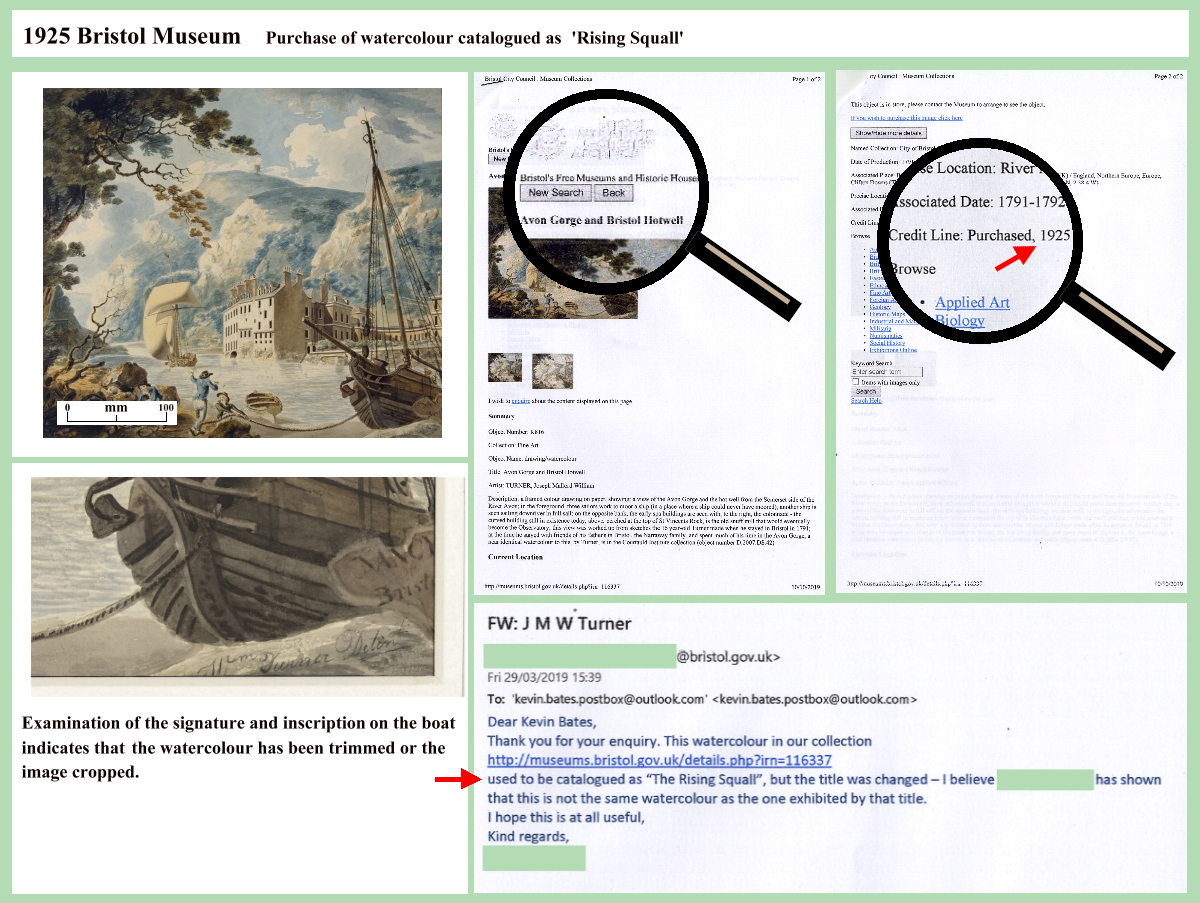
We have used the term 'The Bristol Watercolour' to refer to K816 now in the possession of the Bristol Museum and Art Gallery.
In 1925 Bristol Museum and Art Gallery purchased a JMW Turner watercolour drawing (The Bristol Watercolour) from the Rev. John George Patton (c.1864-1948) a Congregational Church minister appointed (in 1929) to Christ Church, Swanland, E.Yorkshire. Patton sold this watercolour as 'Hotwell House'. It is still in the possession of Bristol Museum and Art Gallery.
Some time after its purchase in 1925 this watercolour became known as 'The Rising Squall'. It is not clear to us when or by whom it was identified as such. Later it was discovered that it was not 'The Rising Squall' [email-not the rising squall].
2. The Courtauld Watercolour
currently known as: 'The Avon Gorge at Bristol with the Old
Hotwells House'
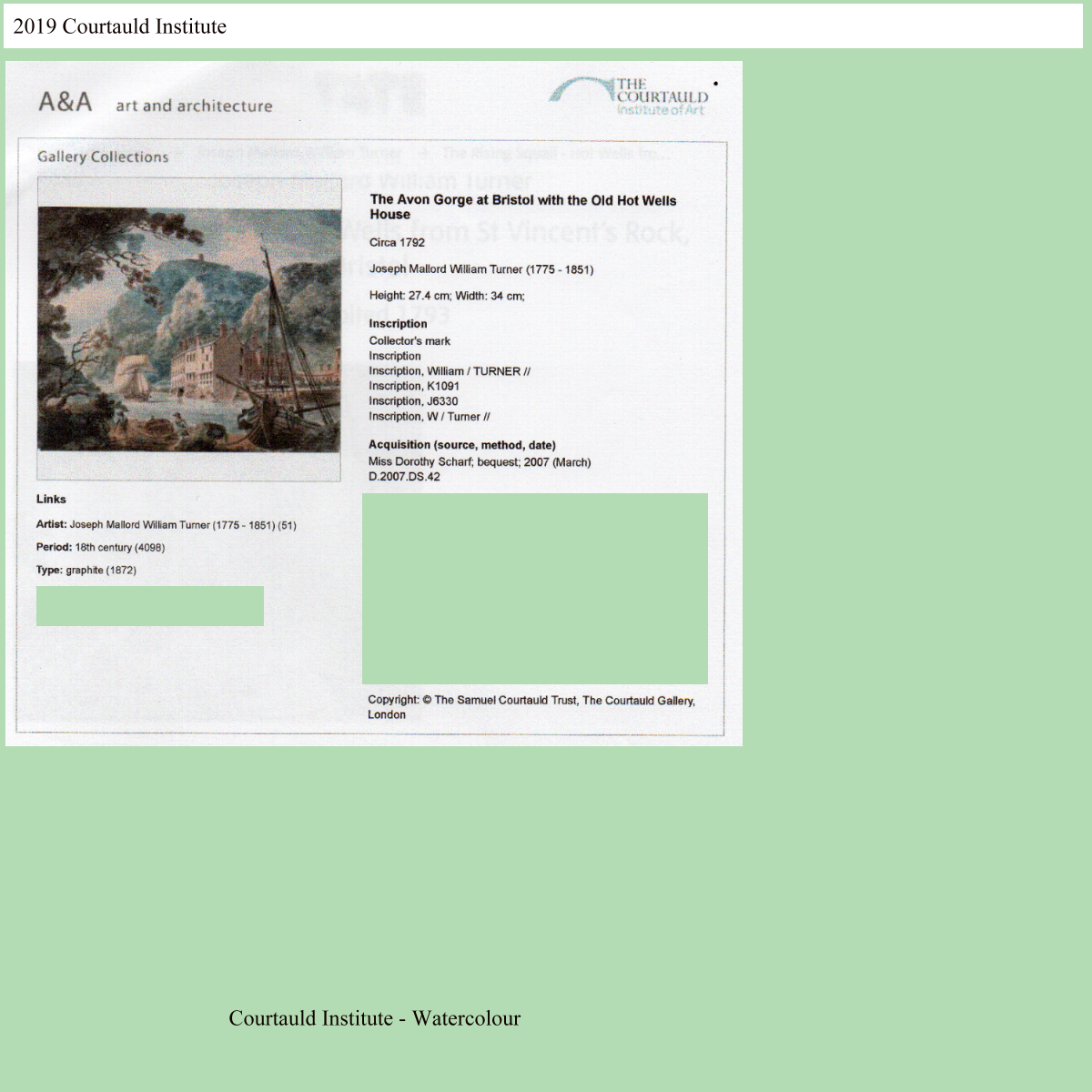
We have used the term 'The Courtauld Watercolour' to refer to a watercolour now in the possession of the Courtauld Institute, D2007.DS.42. The Courtauld Watercolour is slightly smaller than but otherwise very similar to the Bristol Watercolour.
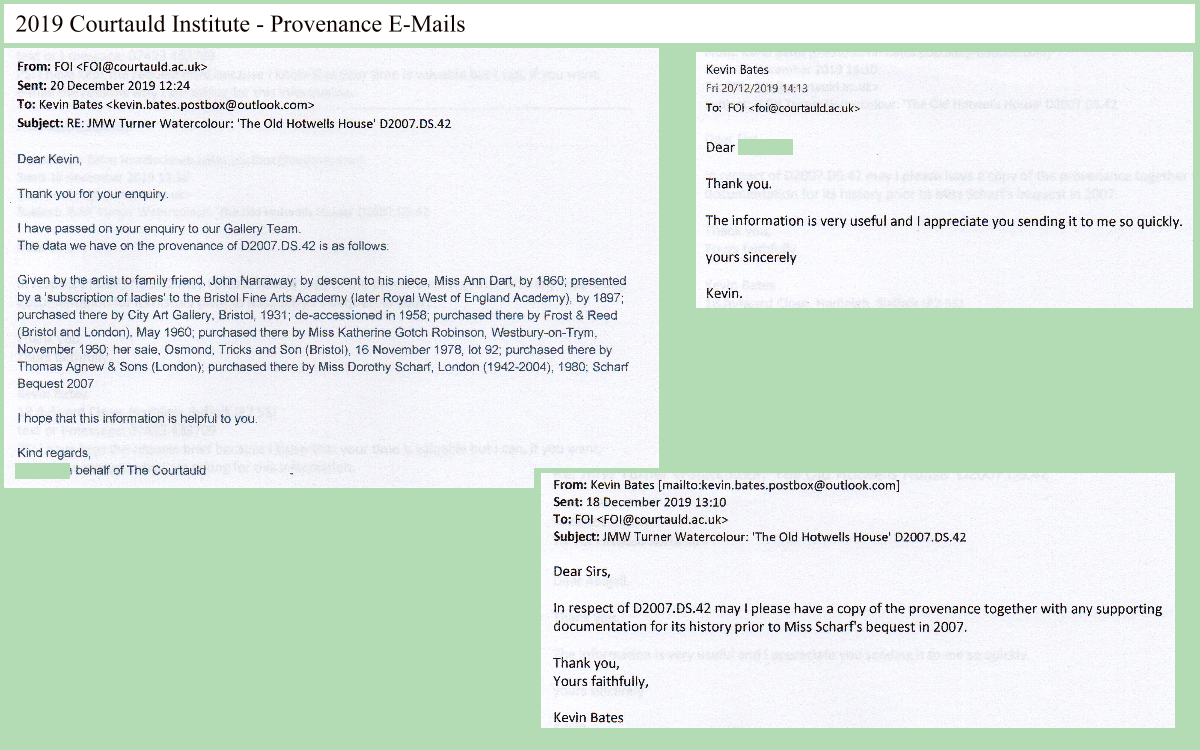
Provenance of The Courtauld Watercolour can be traced from 1792
(probably the May 1792 tour of Wales via the Narraways -
Finberg, when painted, to the
present. From 1931 to 1958 it was in the possession of Bristol Museum and
Art Gallery, so both The Courtauld Watercolour and The Bristol Watercolour
were in the same place for those 27 years.
[Provenance
of The Courtauld Watercolour] [Courtauld
Institute data sheet] [Courtauld
Institute emails] [Bristol
and Courtauld Watercolours Compared]
3. Provenance of the Bristol Watercolour (when known as 'The Rising Squall'
Provenance for the period during which the Bristol Watercolour was known as 'The Rising Squall' was supplied by Bristol Museum [email-provenance] includes exhibition history for the 1793 RA and later exhibitions:
4. The true identity of the Bristol Watercolour
We can say with certainty that it is not 'The rising squall, hot wells, from St. Vincent's rock, Bristol'.
If it is 'View on the river Avon, near St. Vincent's rock, Bristol' then it should be possible to trace it from the Leonard Huskinson (known as Huskisson) sale of 27th April 1864 through 'Hull' to the Fussey family. Even with modern technology this is difficult due to the great number of 'Hulls' on record for the years following 1864. The painting, along with others, failed to sell on 27th April 1864. It is likely or at least possible that the unsold items were bought by Thomas Woolner.[Huskinson's unsold paintings]. So we are looking for evidence to support or contradict the succession Huskinson-Woolner-Hull-[Proctor, Portas or Fussey (the family names associated with Mrs. H.S.Fussey)]
We have not established who the first owner was. There is however, a tenuous link to the Rev. Robert Nixon in as much as he definitely took possession of 'The rising squall, hot wells, from St. Vincent's rock, Bristol' after the 1793 exhibition and upon his death in 1837 bequeathed it to his second son Rev. Dr.Francis Russell Nixon (the future Bishop of Tasmania). We have exhaustively accounted for the entirety of Bishop Nixon's collection and 'View on the river Avon, near St. Vincent's rock, Bristol' is not in it.
If Rev. Robert Nixon also took possession of 'View on the river Avon, near St. Vincent's rock, Bristol' then it must have been amongst the paintings handed down to his first son, George Russell Nixon. Determination of the succession is further complicated by inconsistencies in evidence relating to the Huskinson family and in particular whether it was Leonard himself, or his father (Henry), or his brother Robert, who actually purchased the paintings in his collection.
![[email-not the rising squall]](bristol_museum_email_2019-03-29_not_the_rising_squall.BMP)
![[RA catalogue, JMW Turner's title is at No. 323]](royal_academy_catalogue_1793pp9-11.BMP)