Squall at St Vincent's Rock, Bristol
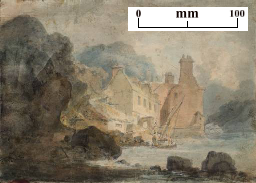
The two JMW Turner works used to identiy the location, D00074 and
D00389
Both of these works were part of the 'Turner Bequest' and there can be no doubt whatsoever that they were drawn and painted by JMW Turner. These works were not produced in isolation. D00074 was bound in the 'Bristol and Malmesbury Sketchbook', effectively a record of JMW Turner's visit to John Narraway in 1791. D00389 is a separate leaf, it is almost the same size as leaves from the 'Bristol and Malmesbury Sketchbook' but there is no evidence which proves that D00389 is a missing leaf from the sketchbook.
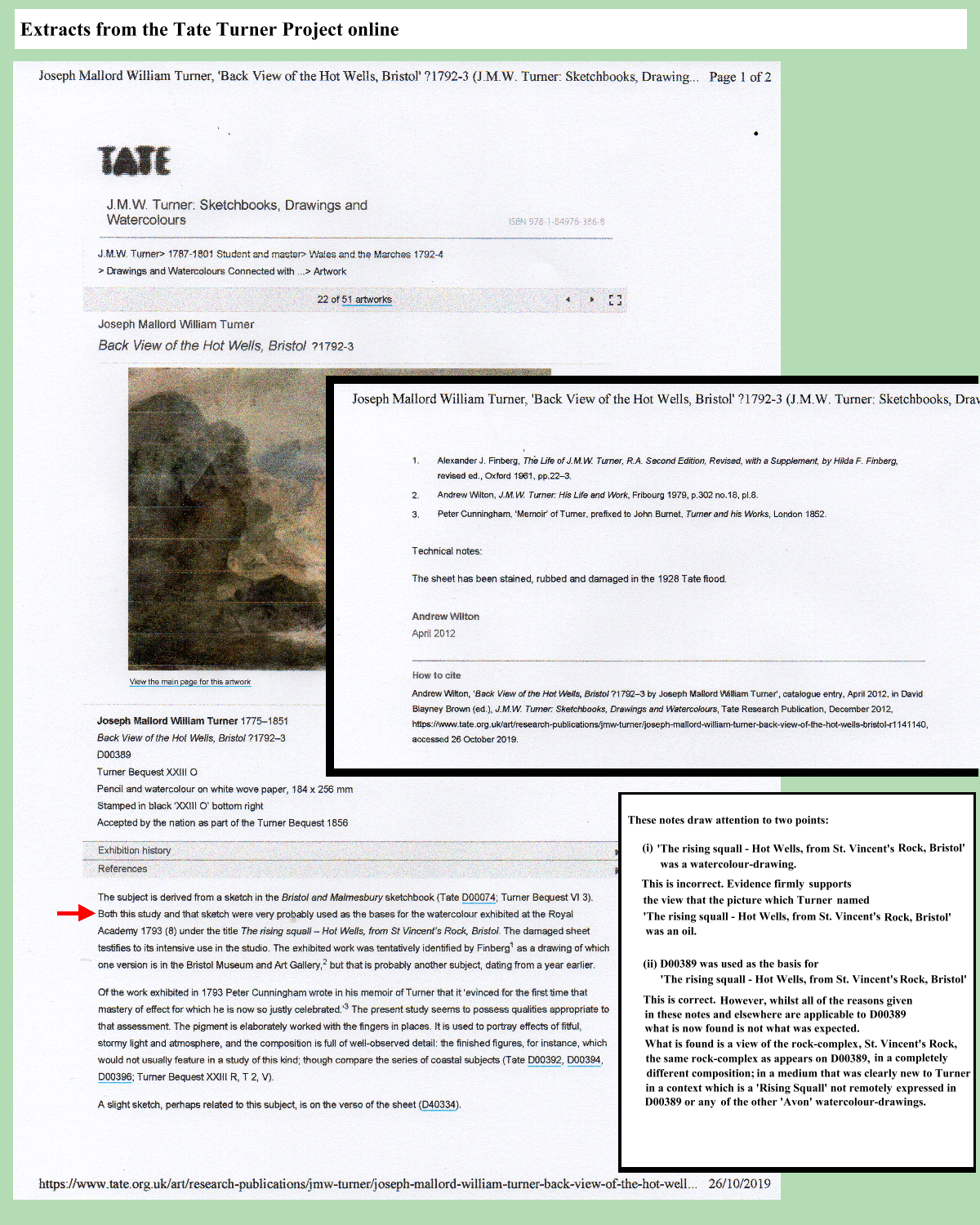
Tate Turner Project Information on D00389
The Tate Turner pages can be accessed online by searching "tate turner d00389". Extracts are reproduced here to show the state of Tate information at the time we researched it (Some Tate online pages were removed during the course of our research so we extracted rather than included direct external links).
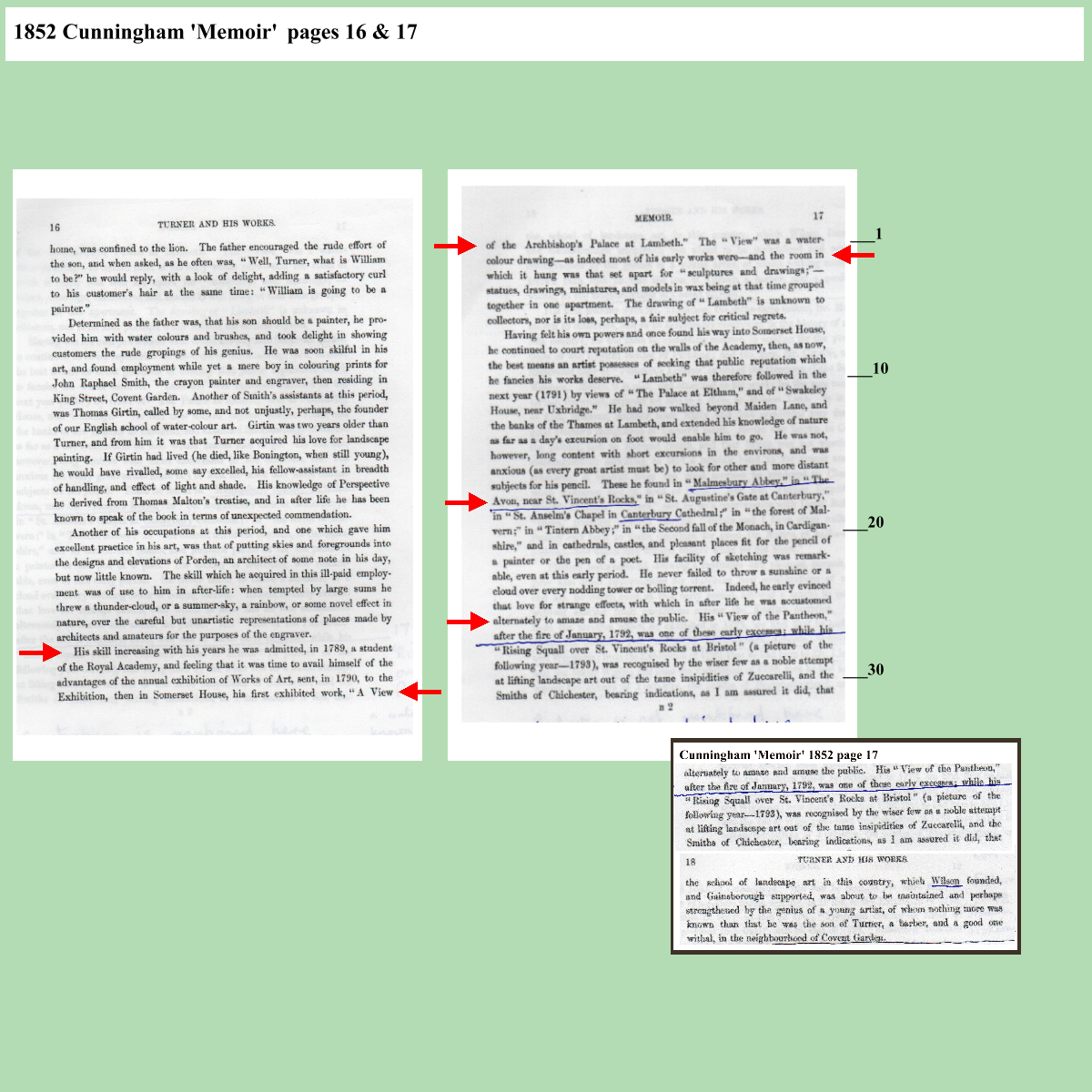
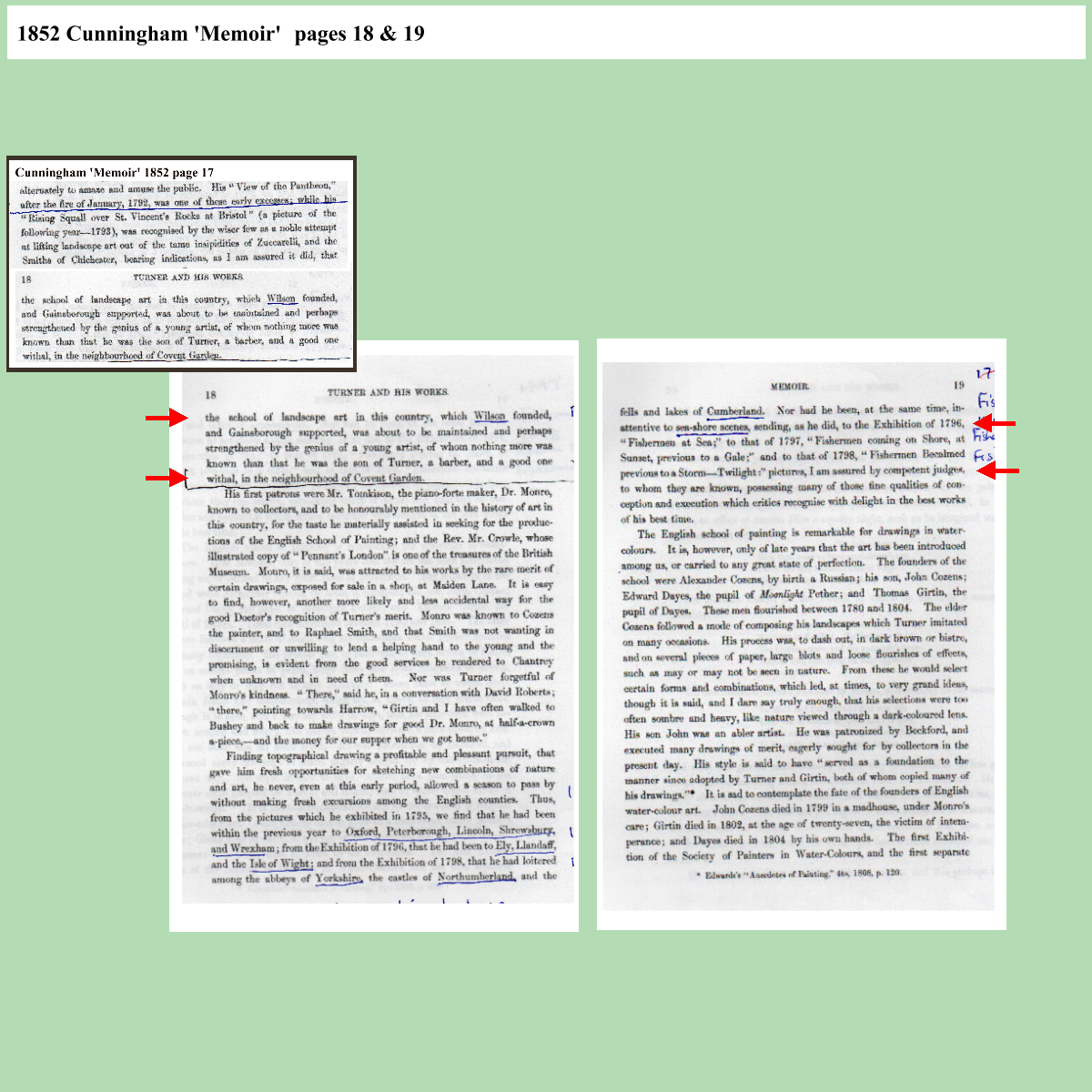
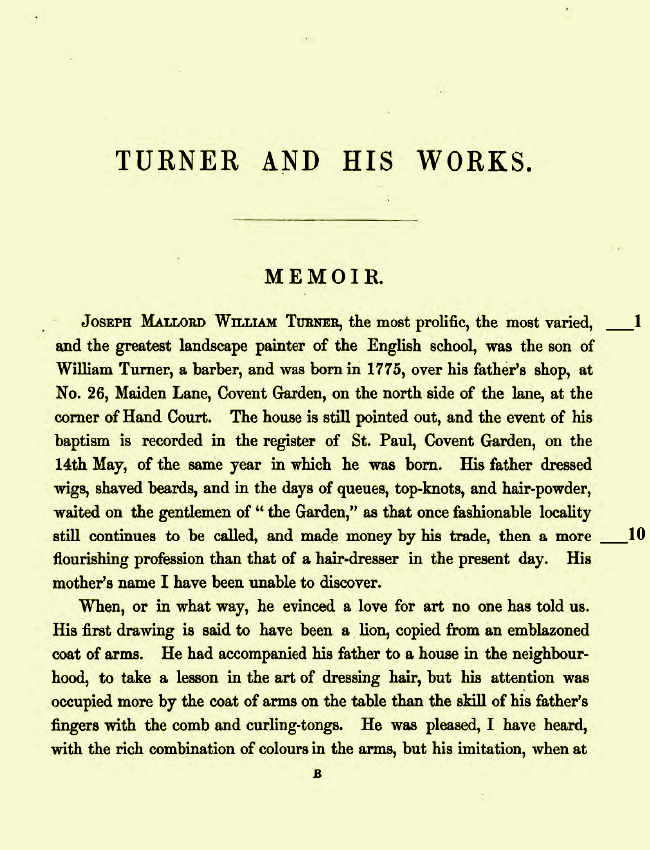
It should also be noted that the citations were not easy to follow up. For example just below the red arrow there is a reference to Cunningham. We could not find the quotation cited - Cunningham used the word 'evinced' but not in the phrase shown (Cunningham pages 16-17, 18-19; on page 17 line 24 Cunningham says 'evinced' but the context is different; likewise in the second paragraph of page 15 line 13). However, the old sources often exist in different editions (see our edition) or it may be from a more remote section of the Burnet/Cunningham work so we asked Tate curators (by e-mail) to say exactly where this citation came from and, although the administrators promised a reply, we had no response.
Note the reference to ''The rising squall, hot wells, from St. Vincent's rock, Bristol' ' and note that it is described as a watercolour. We show elsewhere in this presentation that 'The rising squall, hot wells, from St. Vincent's rock, Bristol' was an oil on canvas and that the unfounded belief that it was a watercolour drawing was due to two errors: 1) a transposition of titles error in the 1793 RA exhibition catalogue and 2) an error by C F Bell where he used second editions for his source and failed to look back at the original publication dates of the first editions. (Redgrave Sequence).
Despite these two criticisms this Tate document shows that D00389 is wholly consistent with JMW Turner's visit to Bristol in 1791 and that it was (is) a reference to the picture 'The rising squall, hot wells, from St. Vincent's rock, Bristol' exhibited at the RA in 1793. Further information is available and there are unanswered questions. However, sufficient information has been collected here to show that this is a genuine JMW Turner, that this drawing of his rock complex represents his vision of St. Vincent's Rock, that the location is Hotwells, Bristol, and that it is fairly assessed as being drawn around 1792, before the RA 1793 exhibition.
Tate Turner Project Information for D00074
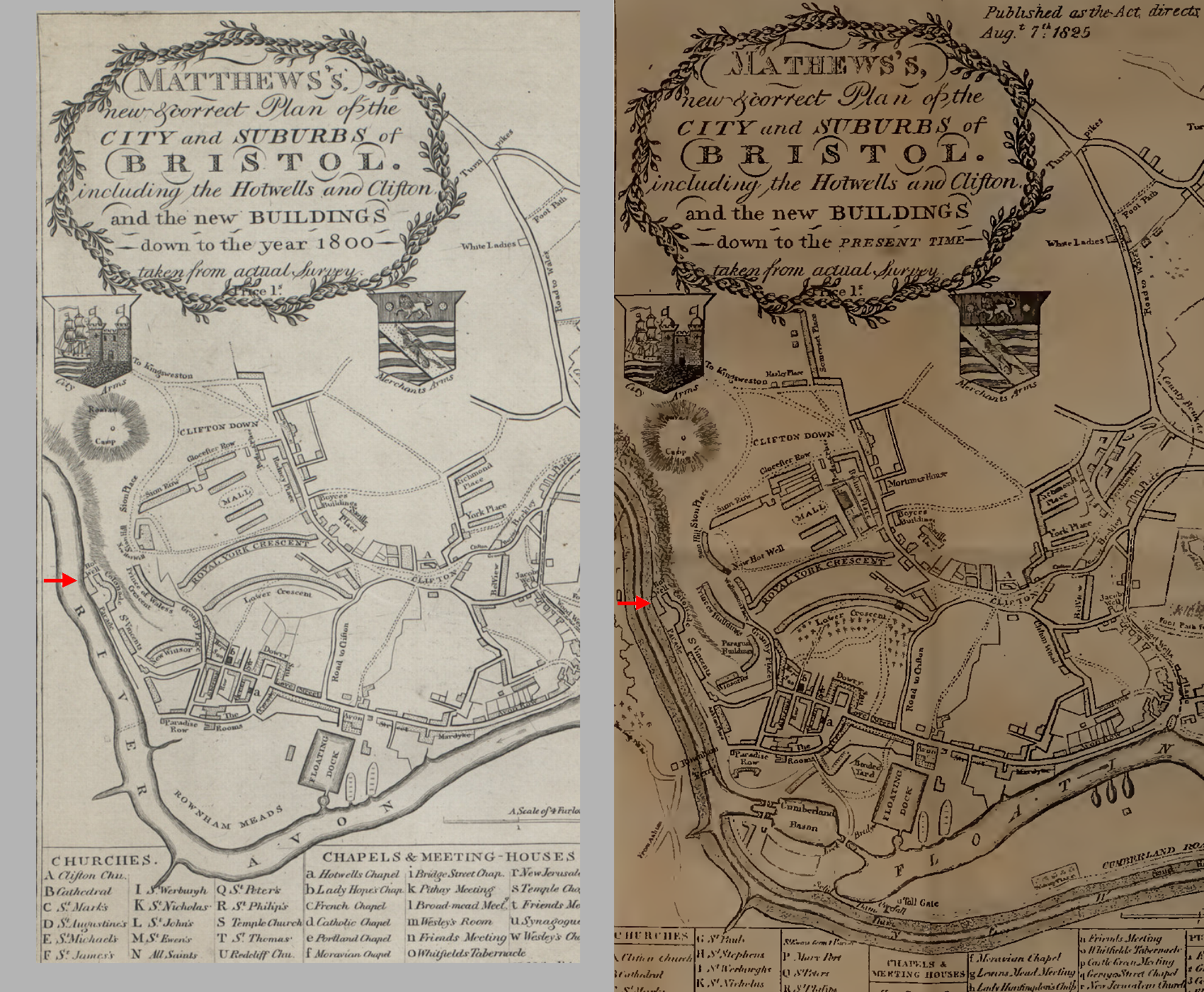
'Back View Of The Hot Wells, Bristol from the Gloucestershire side' (Bristol Map 1800-1825)
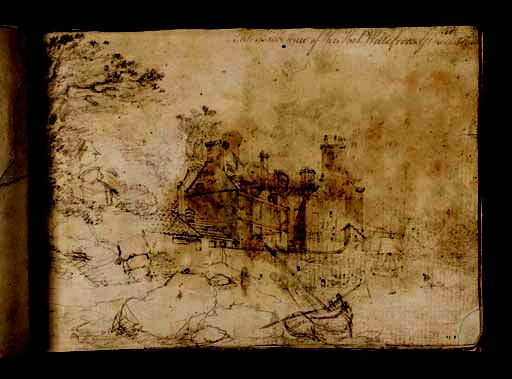
Tate D00074
The sketch is inscribed by Turner 'Back View of the Hot Wells from the Gloucestershire side'...so there is no doubt about the location. However, note that the overhanging rock and domed rock group do not appear in this sketch. As with all artist's work from nature it cannot be said definitively that this sketch proves that the rock-complex of D00389 did not exist; Turner could be drawing from the south side of the rock-complex or he could simply have omitted it altogether. It is when taken together with other evidence that this sketch supports the proposition that the rock-complex was Turner's later invention.
This page is bound in the 'Bristol and Malmesbury Sketchbook, folio 3 recto as it now stands so there is no doubt about the date, 1791. The verso is not imaged on the Tate Research site but is said to be blank except for the Turner Bequest 'stamp'. (D00074 dated by D00104)
The Tate entry for this sketch was written in keeping with the 'belief' that ‘The Rising Squall, Hot Wells, from St Vincent’s Rock, Bristol’ was the watercolour RA 1793, No.323 exhibited in the Library. The original Royal Academy Exhibition Catalogue for 1793 does show that title at exhibit 323. However, we have found through thorough examination of literary evidence that the watercolour exhibit at 323 was 'View On The River Avon, Near St. Vincent’s Rock, Bristol’. (Note the similarity of the titles.). This same examination of the literary evidence shows that ‘The Rising Squall, Hot Wells, from St Vincent’s Rock, Bristol’ was an oil exhibited at No.263 in the 'anti-room'. Quite clearly the two very similar titles were transposed in the catalogue.