CATALOGUE EVIDENCE ~O~
The discovery of JMW Turner's oil on canvas exhibited at the Royal Academy
in 1793 ~O~
CATALOGUE EVIDENCE
1793 Royal Academy Exhibition Catalogue Evidence
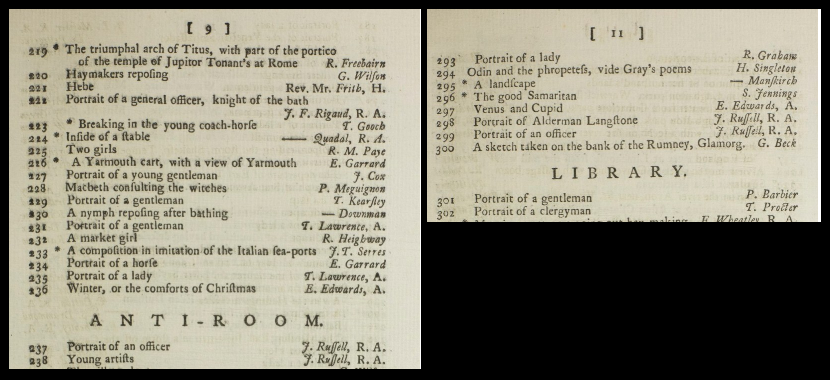
- Anti-Room and Library
Turner's exhibition numbers were 263, 316 and 323.
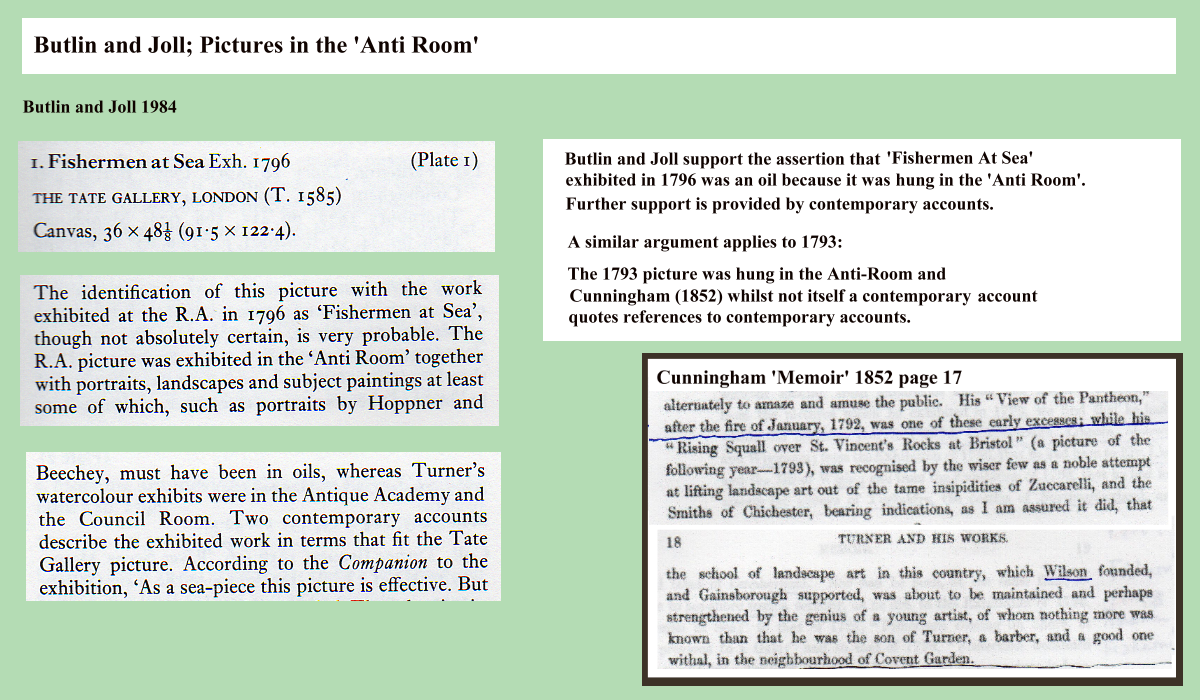
Catalogue evidence therefore supports the proposition that Turner exhibited an oil in the Anti-Room in 1793, No. 263.
Furthermore a reconstruction of the layout of the anti-room of 1793 strongly suggests that (Turner's) exhibit 263 was hung on the west wall. There are points where the evidence is incomplete and has to be filled by reasonable estimation (frame sizes, some 1793 pictures being lost, etc.) but overall the available space where No. 263 was hung would have accommodated a picture in frame of around 24" x 30".
[_NEXT_]
10_05
*[1] David Solkin's 'Art On The Line' along with many other anecdotal references establish that watercolours and oils were not displayed in the same rooms. In 1793, watercolours were hung in the Library. The Anti-Room held predominantly oils with four Russell pastils.
John Russell RA was (in 1792/1793) an influential Academician. The catalogue extract above shows four works by him hung in the Anti-Room in 1793; 237, 238, 298 and 299. Furthermore it is possible to determine the positions in which they were hung. Here are Russell's entries in the list of exhibitors in 1793 and the previous year 1792:

Another version of the 1793 catalogue is held by the Royal Academy (AND/8/196). In it there are annotations possibly by E.Bell. Against No.238, Russell, where Bell has added 'drawing'; and against the final 3 items in the anti-room (two Russells and a Beck) where Bell has added a curly bracket with the word 'crayon'. Bell was indicating that these were not oils. Russell, it can be seen, had four works in the anti-room. These were all pastels as were four of his works in 1792 hung in the same place. The curly bracket may have extended over the Beck by mistake. (In the online 1792 catalogue No. 344, T Holloway, is annotated ‘crayons’ but it is an oval picture quite different from all others. The Russell pastels are not annotated.)
In the Anderdon (1793) version, Bell has marked all three of Turner's exhibits with horizontal lines both sides but no other annotations so it may be assumed that they were not different in context from the other exhibits in their rooms and that the Turner in the anti-room was an oil and that the two in the library were watercolours. It is not possible to determine hanging positions for the Library. The online version of the catalogue has no annotations against the Turners.
In 1792 Paul Sandby drew accurate representations of hangings in the Anti-Room and Great Room.
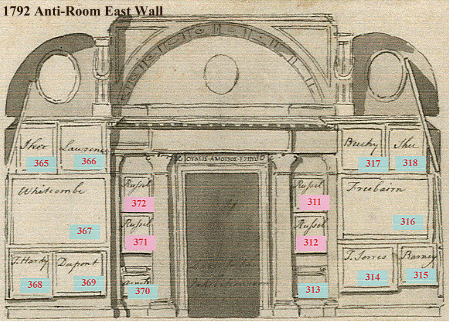
Using 1792 drawings together with the 1793 catalogue it is possible to determine hanging positions for 1793:
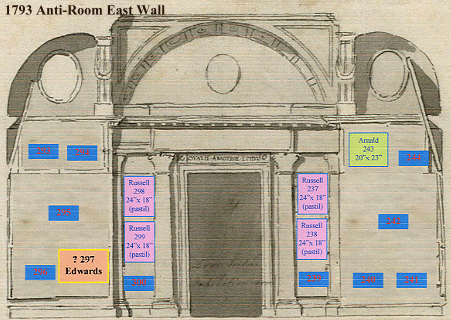
The four Russells were hung in a prominent position. The inscription reads 'door to the exhibition room'.
To discover the position and available space for Turner's exhibit 263:
From the 1793 catalogue a list of pictures in the anti-room can be extracted and by identifying as many as possible not only can their status as oils can be confirmed but also, if their sizes are known and in conjunction with Sandby's 1792 drawings, their hanging positions can be established. This exercise results in placing the Turner oil on the west wall in the south-west corner (where it will be seen by people on their way out or before going downstairs).
Sandby's 1792 drawings show a desire for symmetry which was not always achieved but was always closely approximated. Exhibit numbers ran mostly consecutively and sometimes in clusters around small groups.
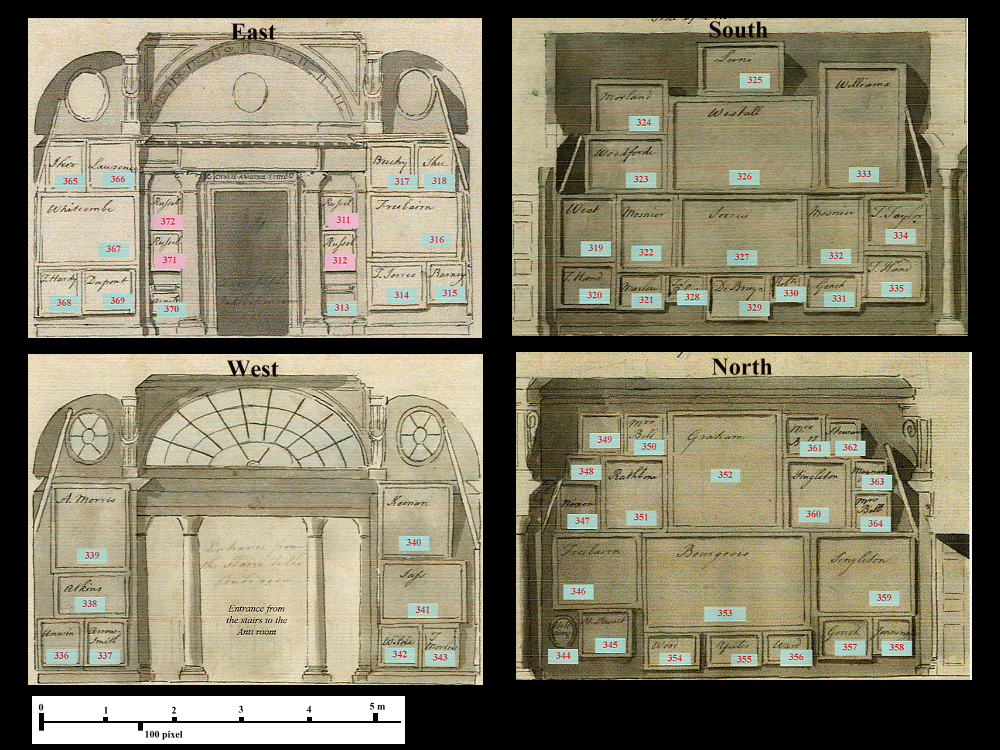
For 1793 it can be deduced from the numbering and desire for symmetry that the Russells occupy the same positions as 1792. Running the numbers around the room and, where possible, allocating space for known pictures and estimating some others from closely related works produces an approximation for 1793.
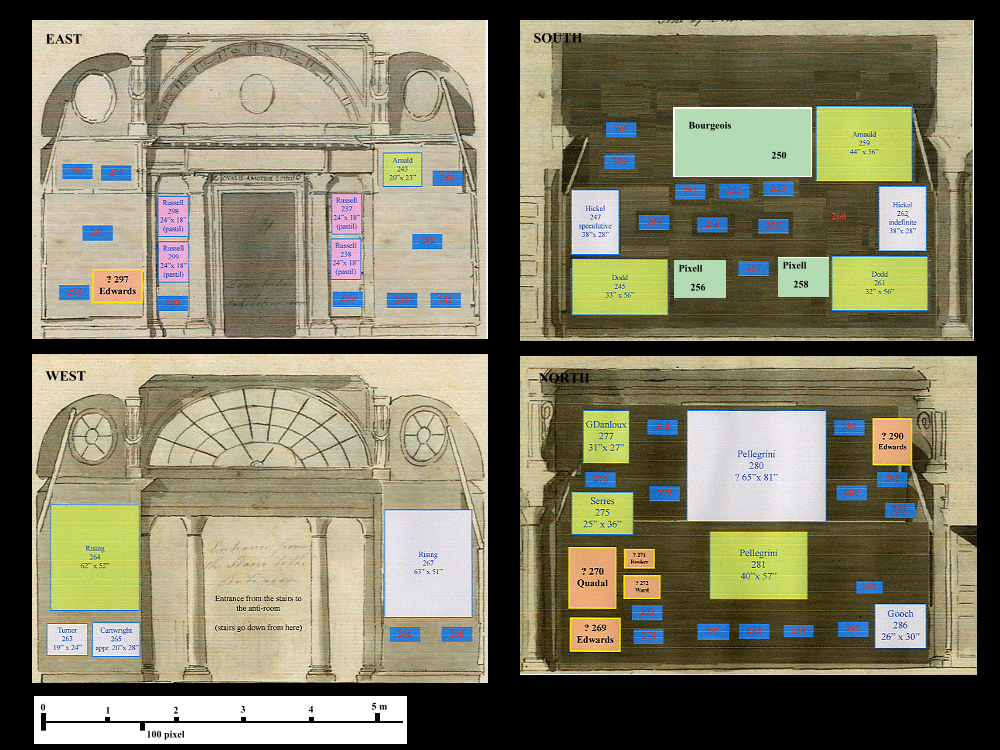
The Rising No.264 (lower left) was bigger than the Morris of 1792 and this arrangement seems to produce the most symmetrical result. There are several other possibilities - 263 and 265 above 264 for example - However, moving 263 back to the South Wall would spoil the symmetry there and of the right hand side of the west wall and of the north wall.
Footnote *[2]
10_05