
JMW Turner's Two 'St Vincent's Rock' Exhibits of 1793
Chapter I: View on the river Avon, near St. Vincent's Rock, Bristol: Evidence that it is a watercolour-drawing of 1793
JMW Turner's Two 'St Vincent's Rock' Exhibits of 1793
Chapter I: View on the river Avon, near St.
Vincent's Rock, Bristol: Evidence that it is a watercolour-drawing of 1793
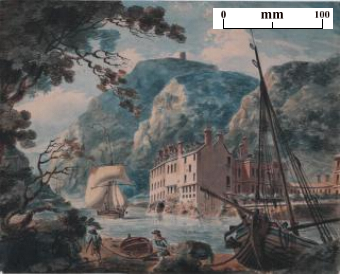
'View on the river Avon, near St. Vincent's Rock, Bristol'
Another painting by JMW Turner exhibited at the Royal Academy in 1793 and including 'St. Vincent's Rock, Bristol' in its title
Evidence that it is a watercolour-drawing of 1793
1. Only one informed source
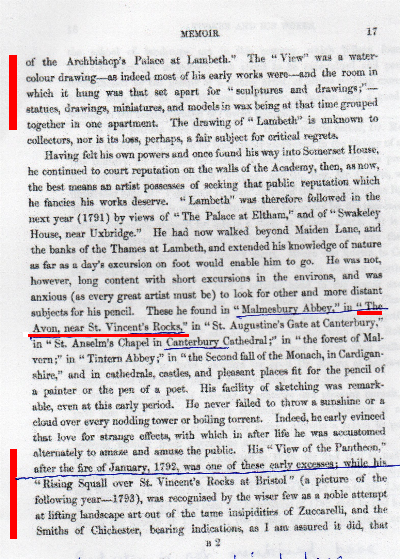
Cunningham 1852('Memoir', page 17) includes this title as 'The Avon, near St. Vincent's Rocks' amongst early exhibits that were watercolour-drawings. Although several authors mention 'View on the river Avon, near St. Vincent's Rock, Bristol', Cunningham is the only independent writer clearly not taking his information (regarding oil or watercolour) from the 1793 RA catalogue.*
2. Writers who probably consulted the 1793 exhibition catalogue
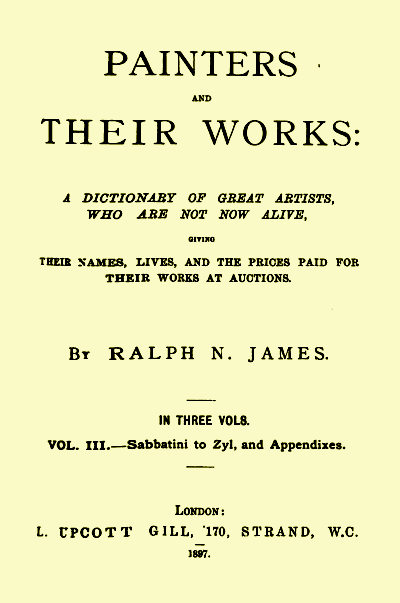
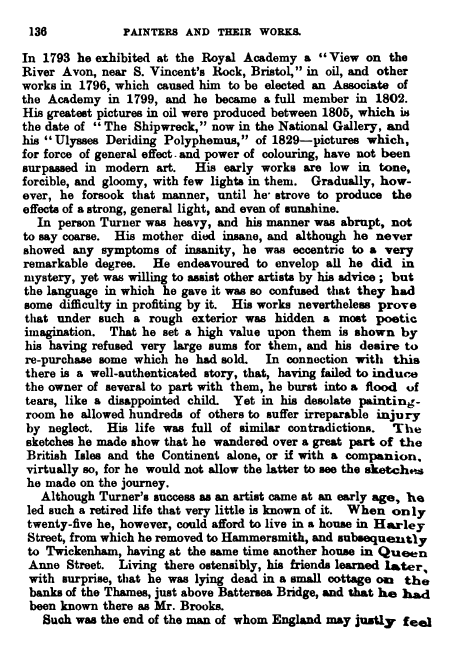
James, 1897 Vol 3 page 136 states that it is an oil within a discussion of exhibited works which suggests that RA catalogues may be the source and finding 'View on the river Avon, near St. Vincent's Rock, Bristol' in the Anti-Room James assumes that it is an oil. This is the only direct reference we have found which makes this assumption.
C.F.Bell used the 1793 RA exhibition catalogue together with the Redgrave's works as the basis for his comments but made a mistake as discussed in Chapters III & IV. He did, however, conclude that 'View on the river Avon, near St. Vincent's Rock, Bristol' was a watercolour-drawing.
Wyllie 1905 mentions it on p18 but merely as 'hung in the ante-room' but just a copy of C.F.Bell
3. Indefinite sources
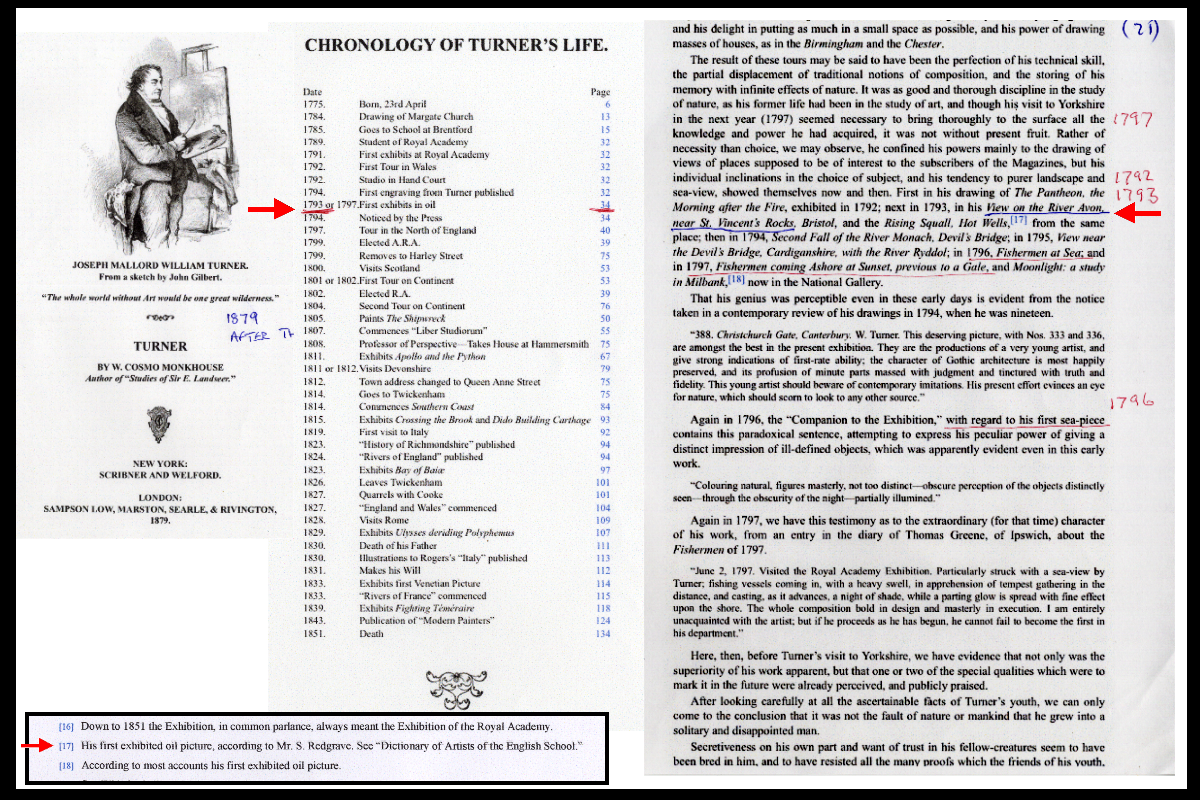
Monkhouse 1879 page 34 regarded it as a watercolour-drawing.
4. Writers who would be expected to mention this title but do not
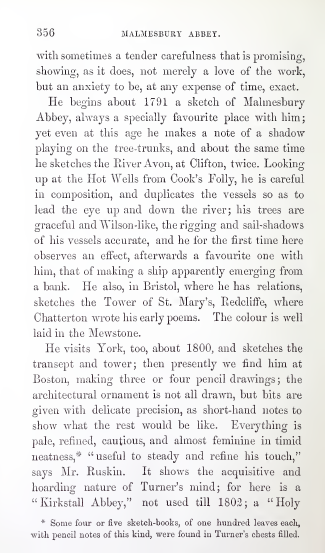
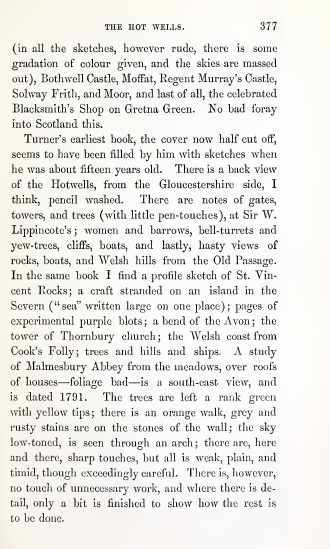
Thornbury 1862 Vol 1 page 356 refers to a view on the river Avon but 'from Cook's Folly'. It cannot be the exhibited title because the exhibited title does not include 'Cook's Folly' and the watercolour and drawing to which Thornbury refers are pages from the Bristol and Malmesbury sketchbook. Another reference to this appears on page 377. The same reference is found in Finberg 1910, 'Turner's Sketches an Drawings' where it is reproduced facing page 14.
It is possible that these writers thought that they were discussing the 1793 exhibit.
* In 1852 the Courtauld Watercolour [Image]
[data
sheet] was in the possession of John Narraway in Bristol. There is
no suggestion that this was the exhibit.
The similar and larger Bristol Watercolour which appears to be the
exhibit, and for which we seek contrary or supporting evidence, could be
the 'View on the river Avon, near St. Vincent's Rock, Bristol' in the
Christie's sale of 27th April 1864 and bought in [Huskinson's
Unsold Paintings]. It is unlikely to have been in the possession of
Leonard Huskinson
in 1852 unless it was previously owned by his father, Henry, who died in
1844. We are therefore attempting to trace previous owners. There is weak
circumstantial evidence that the original purchaser was
Rev. Robert Nixon of Foots
Cray who died in 1837. If so, this work would have either been sold or
bequeathed to his eldest son,
George
Russell Nixon. (We know definitively that it was not bequeathed to
his younger son Rev. Dr. Francis Russell Nixon, Bishop of Tasmania). In
1852 George may have been living in Switzerland (with his collection
inherited from his father).