Squall at St Vincent's Rock, Bristol
The environs of Hotwells, St. Vincent's Rock, Bristol
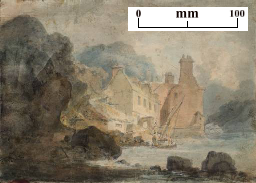
We researched the area around Hotwells from the mid 18th Century to the present day with the objective of finding the exact location of the rock complex that JMW Turner painted on D00389. The results are outlined below starting at 2019 and working backwards.
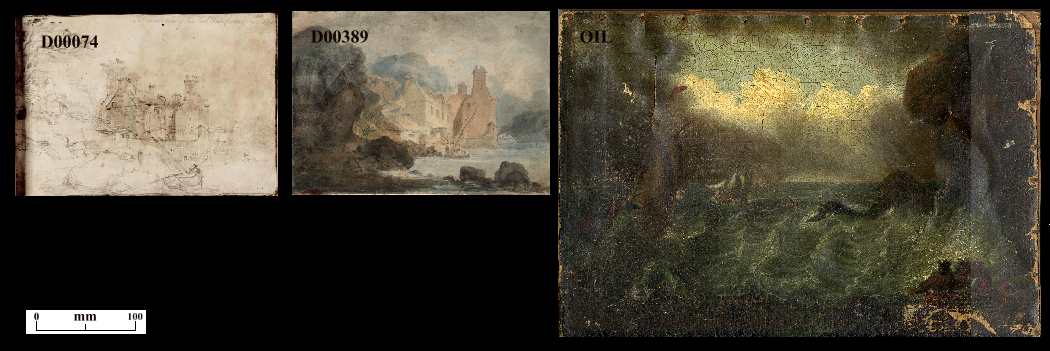
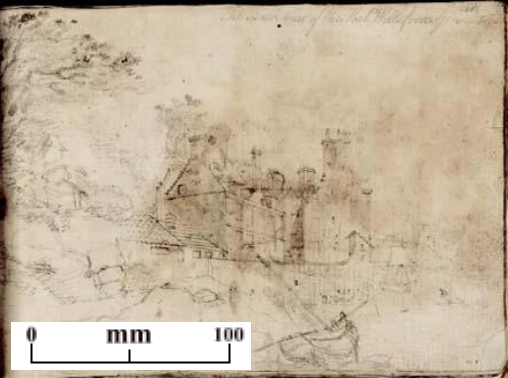
Contemporaneous drawings and one earlier etching show the Hotwells House back view much as JMW Turner sketched it in 1791 (D00074). Cliffs and other rocky structures appear in these works and there is a possible sighting of the 'dome rock'. However, none match the rock complex of JMW Turner's D00389 or the identical but reversed image of 'Squall at St. Vincent's Rock, Bristol'. (view D00074, D00389 & Squall)
Our conclusion was that the rock complex never existed. It was JMW Turner's invention.
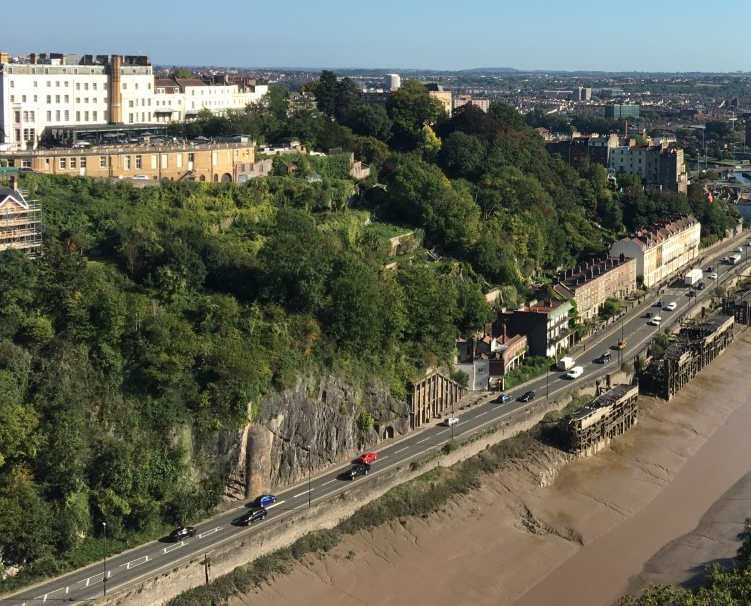
2019 Hotwells, St. Vincent's Rock;
The Colonnade Photographed from Clifton Suspension Bridge
The Colonnade (red arrow) is all that remains of the Hotwells building. The approximate position of Turner's rock complex is indicated by the blue circle.
Hotwells, St. Vincent's Rock; Before 2019
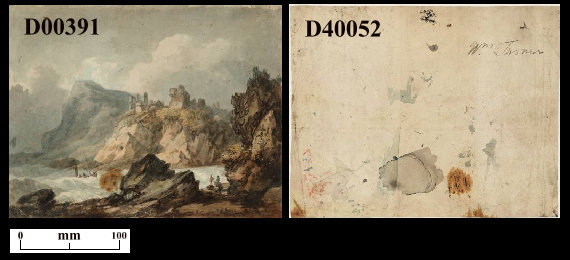
Historic images of Hotwells and St. Vincent's Rocks show no rock structures sufficiently similar to Turner's rock-complex to suggest that another artist could have painted the oil using the rocks themselves as a primary source. In one of Ibbetson's images below there is a rock resembling the dome rock and an artist sketching it! The dome rock alone appears in another Turner watercolour-drawing, D00391.
Hotwells, St. Vincent's Rock 1831
Building of the Clifton suspension bridge commenced in 1831 and many of the nearby rock structures were destroyed.
Hotwells, St. Vincent's Rock about 1826 a painting by Patrick Nasmyth
Patrick Nasmyth (1786-1831) appears to have produced oils of landscapes
around Bristol and other places notably Epping. Recorded sizes are small
(around 18" x 24") but only few examples have been found at the
time of writing (November 2019) and not St. Vincent's Rock.
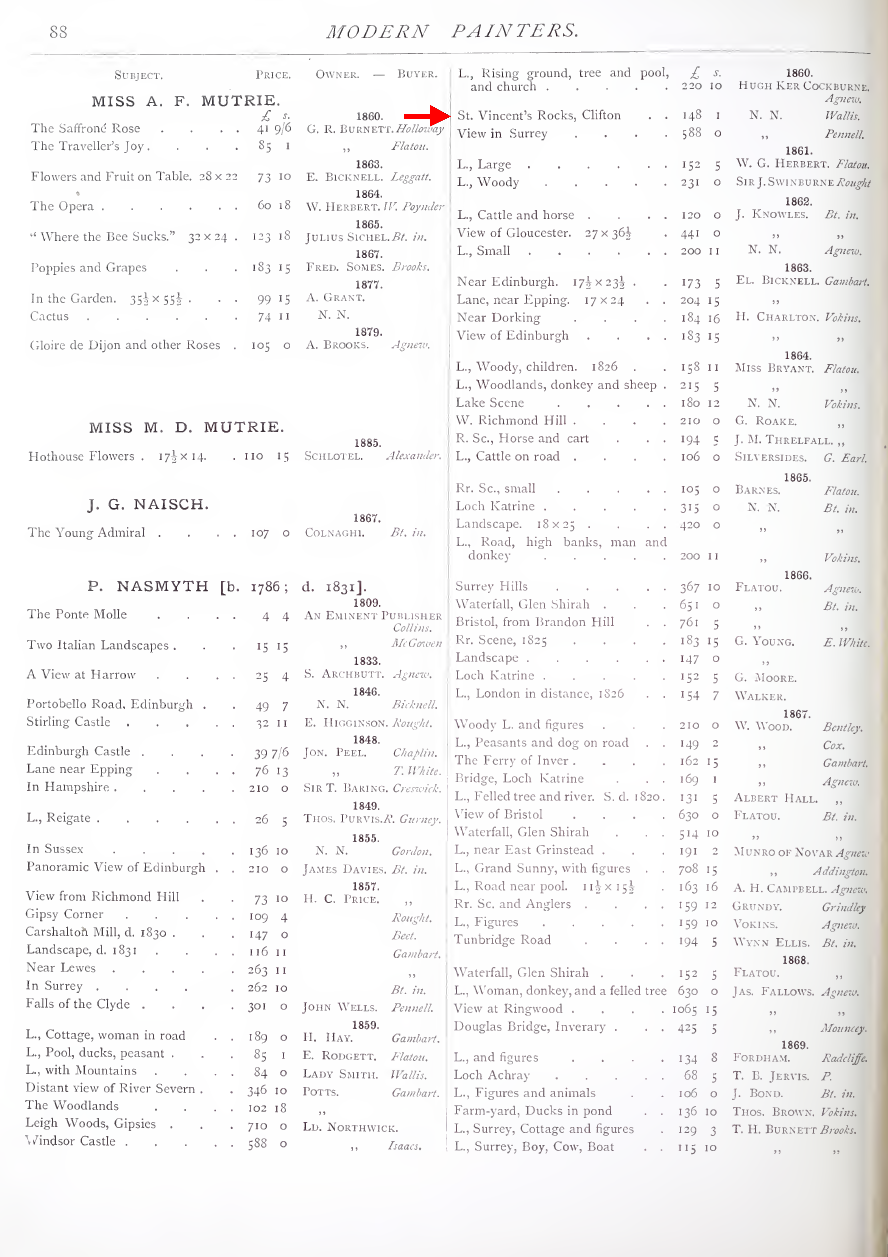
A sale of 'St. Vincent's Rocks, Clifton' by Nasmyth is recorded in
Redford Vol II page 88
and
Graves
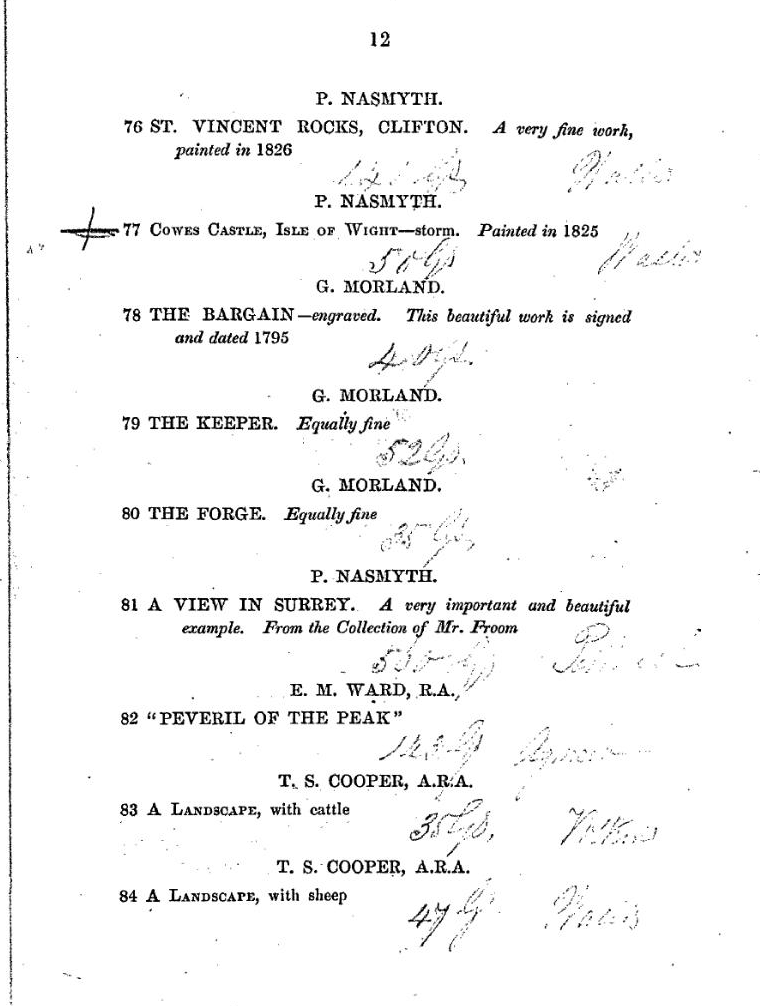
Art Sales; 141 guineas, seller N.N, buyer Wallis. The catalogue,
Christies sale 12th
May,1860
Lot 76,
states that it is a very fine work painted in 1826. No image found.
The Area Around Hotwells, St. Vincent's Rock 1804 to 1809
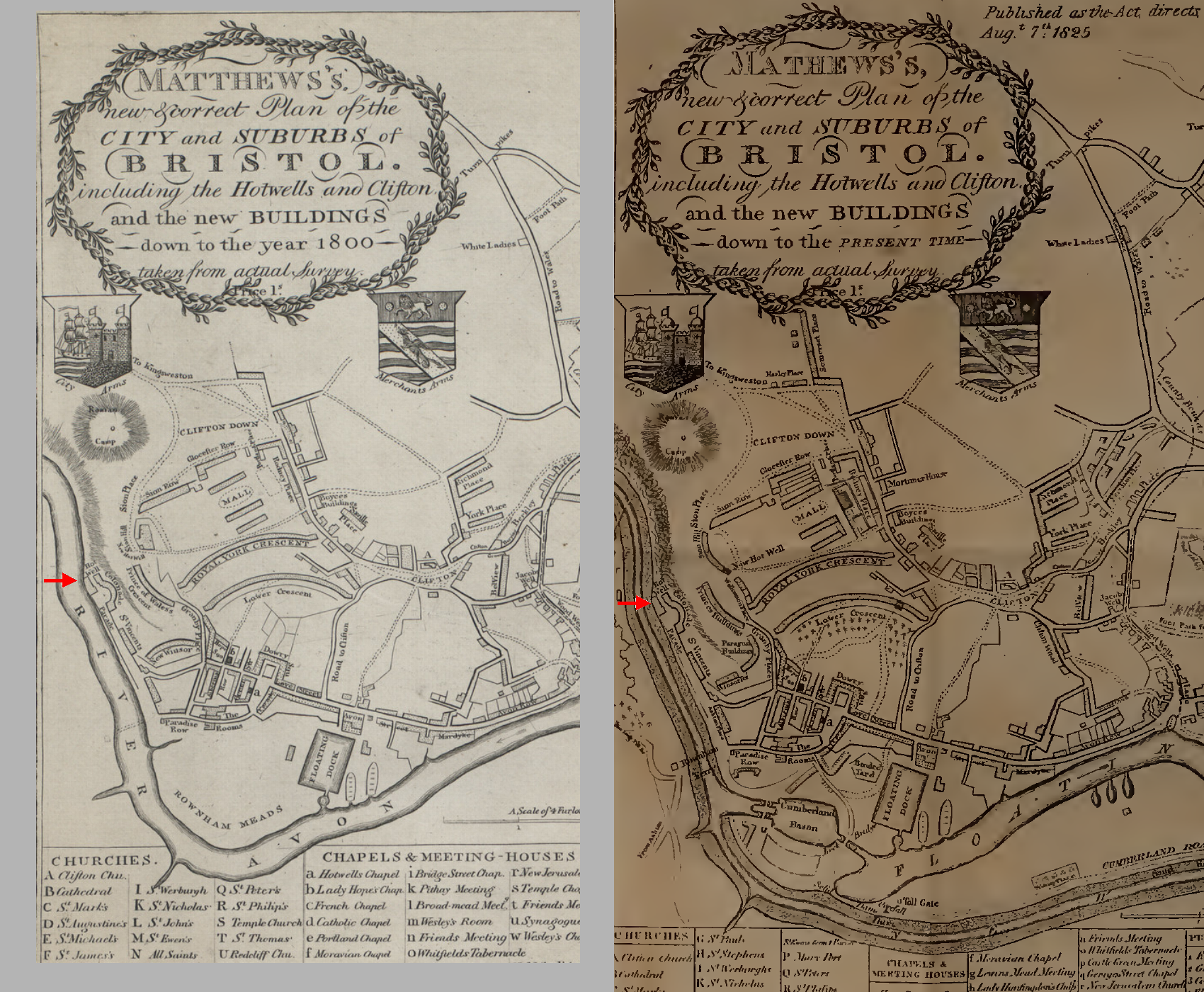
The river was diverted during this period. On the left is an 1800 map and on the right is the same area in 1825. Hotwells, the building that turner depicted on D00074 and D00389, is indicated by a red arrow and behind it the colonnade is clearly shown.
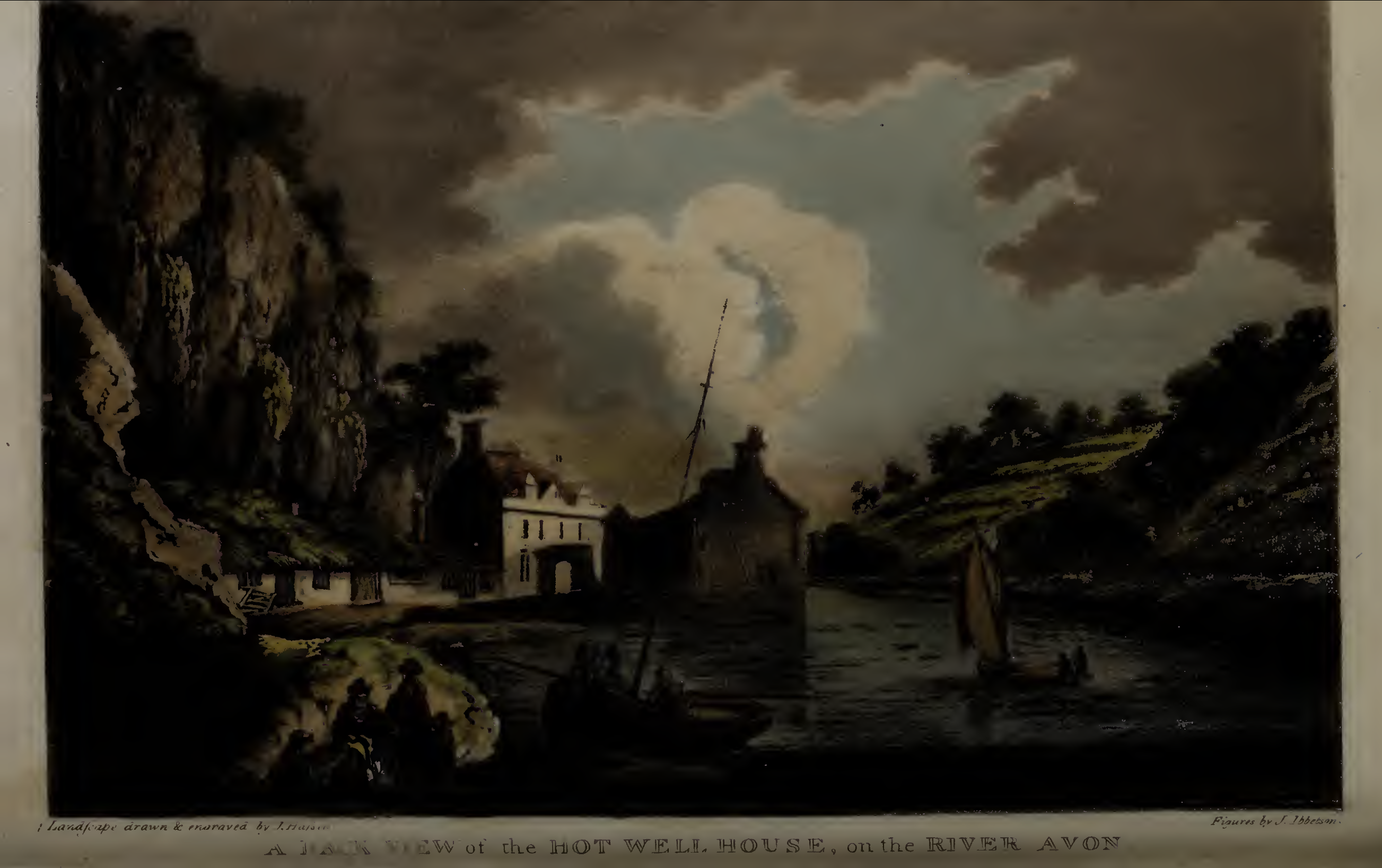
1792 Hotwells, St. Vincent's Rock; Ibbetson's drawings
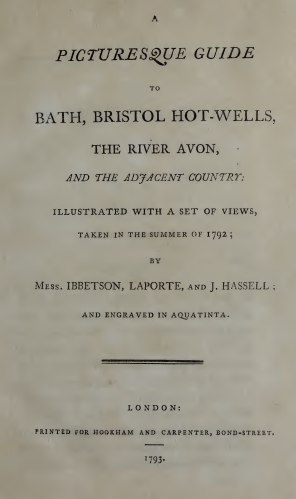
1792 Ibbetson, Laporte and J Hassell, 'A Picturesque Guide to Bath, Bristol Hot-Wells, the River Avon, and the Adjacent Country' view book extract. Ibbetson's illustrations are presented as factual information together with a descriptive text which includes scientific geological and architectural discourse. These are not romanticized images.
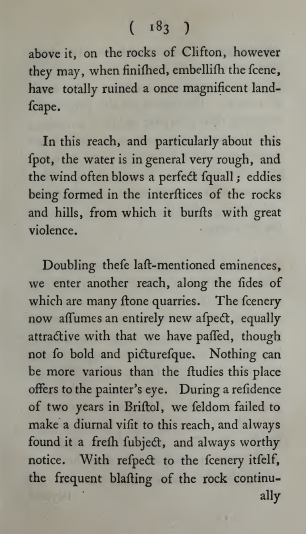
This book was published in 1793 (view publication date). The illustrations were drawn over a period of two years (see page 183) thus 1791 and 1792; precisely the time of JMW Turner's visit to John Narraway in Bristol and the drawing of JMW Turner's D00074.
This plate from page 183 is a very similar scene to D00389 shown alongside on the right. Turner's rock complex is absent from Ibbetson's plate.
The next three images show a plate called 'Saint Vincent's Rock' from page 166 followed by two details from it. D00389 is again shown alongside for comparison.
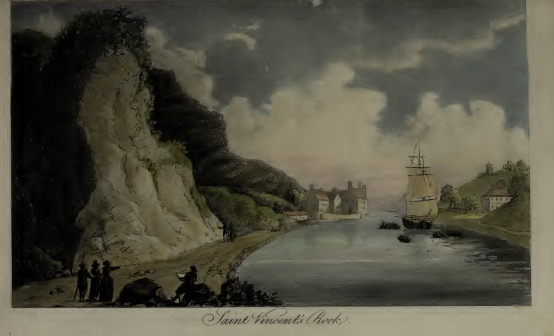
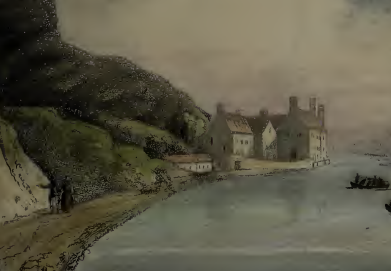
This detail again shows a scene similar to JMW Turner's sketch (D00074) and watercolour-drawing (D00389). Here there is presented a clear wide angled view of the area surrounding the Hot-Well House. If JMW Turner's 'Rock Complex' structure had existed it should be shown on this plate. Its absence demonstrates that the Rock Complex is JMW Turner's invention.
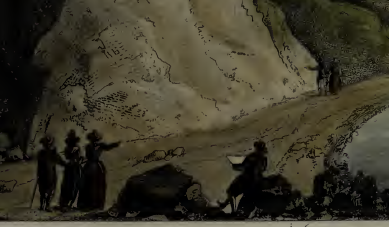
However, this, second, detail shows a rock, together with an artist drawing it, that looks suspiciously like the dome rock. It was not unknown for JMW Turner to invent scenes with elements borrowed from real places.(D00391 is a fantasy landscape with possibly a repeat of the dome rock)
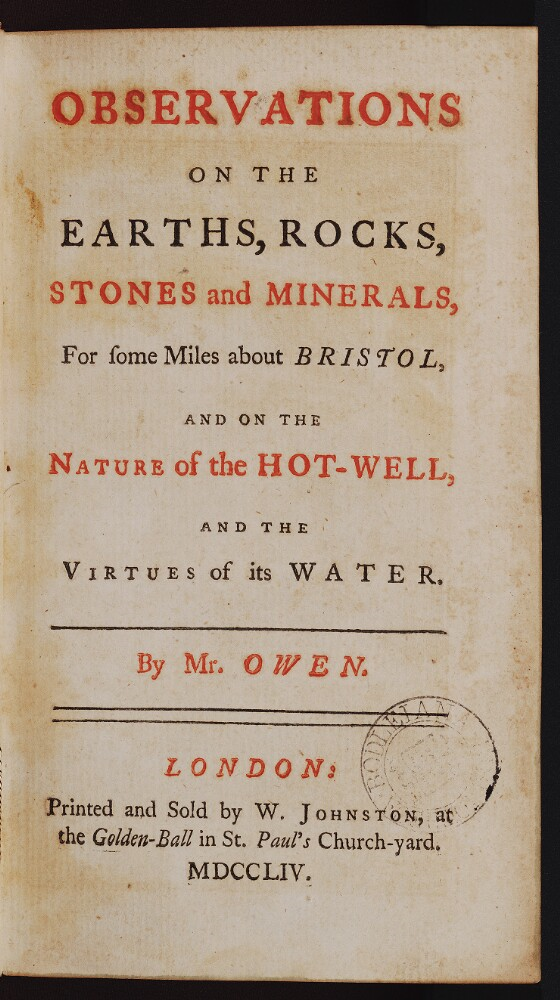
1754 Hotwells, St. Vincent's Rock; Mr. Owen's Observations
1754 'Observations on the Earths, Rocks, Stones and Minerals, for some miles around Bristol, and on the Nature of the Hot-Well, and the Virtues of its Water.' by Mr. Owen
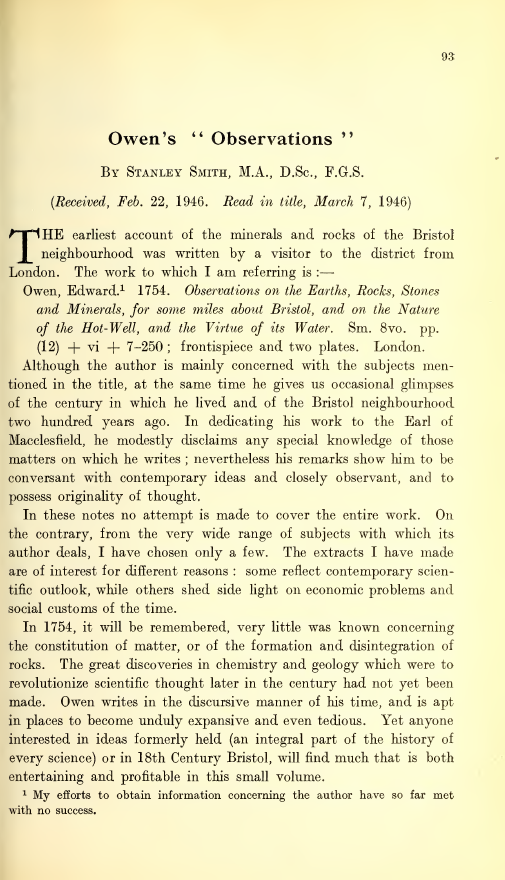
According to Stanley Smith of Bristol Naturalists Society, writing in 1946, Mr. Owen was Edward Owen (but cannot be the Edward Owen in the records of the National Library of Wales because the latter was later (1853-1943). view page
This etching by James Mynde (1702-1771) is the frontispiece to Mr. Owen's book and shows a view similar to Turner's 'Back View of the Hot Wells, Bristol' (Tate D00389)
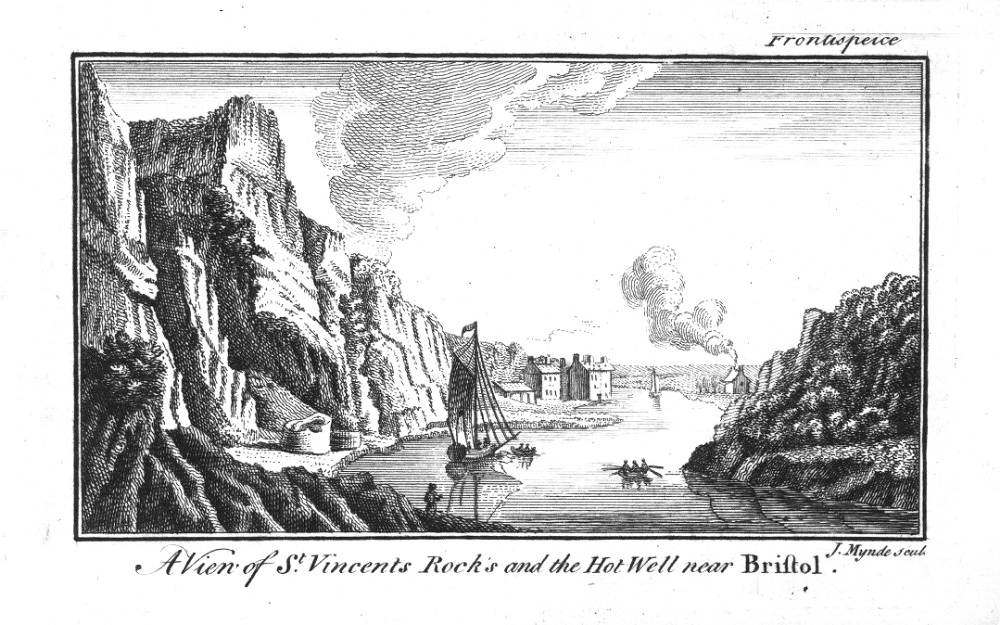
Turner's rock complex does not appear in Mynde's etching but could be hidden by the sail on the boat.