J.M.W Turner
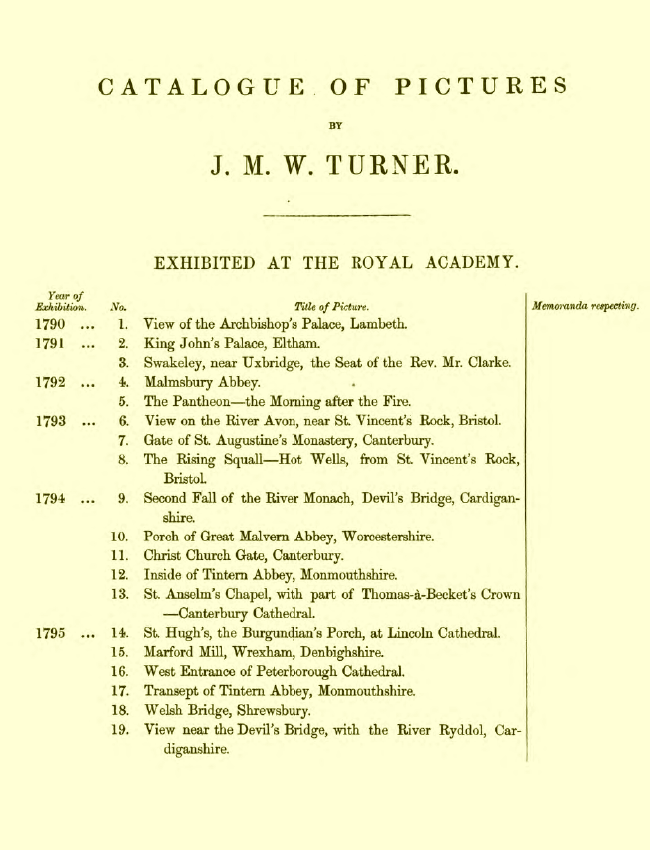
'The Rising Squall, hot wells, from St. Vincent's rock, Bristol'
One of His first Exhibited Oil Paintings
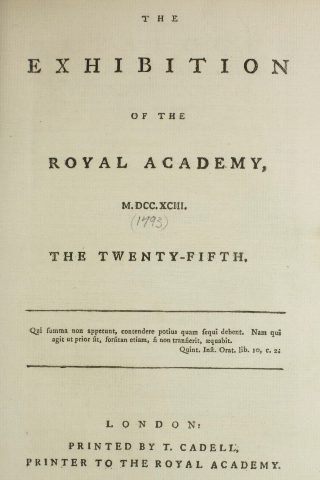
At the Royal Academy Exhibition
of
1793
|
|
|
|
J.M.W Turner
'The Rising Squall, hot wells, from St. Vincent's rock, Bristol'
One of His first Exhibited Oil Paintings
At the Royal Academy Exhibition of 1793
|
|
.
|
. | |
|
. |
.
|
. | |
|
J.M.W Turner
'The Rising Squall, hot wells, from St. Vincent's rock, Bristol'
One of His first Exhibited Oil Paintings
At the Royal Academy Exhibition of 1793 |
.
|
. | |
|
. |
.
|
Contents | |||
| Documents | iii | |||
| Preface | v | |||
| ... | ||||
| 1. Obituaries | ||||
| The Art Journal Obituaries | 1 | |||
| JMW Turner's Obituary in the Athenaeum | 7 | |||
| 2. 'Turner and his Works' | 9 | |||
| by John Burnet, with 'Memoir' by Peter Cunningham | 9 | |||
| Observations from Burnet and Cunningham | 15 | |||
| 3. 1845 Illustrated London News | 17 | |||
| 4. The Auction of 'The Rising Squall' | 19 | |||
| 9th & 11th July 1864 | 19 | |||
| The Identity of Lot 152 | 24 | |||
| 5. Provenance from 1793 to July 1864 | 25 | |||
| Catalogue | 25 | |||
| Rev. Robert Nixon | 30 | |||
| Rev. Dr. Francis Russell Nixon | 35 | |||
| Joseph Hogarth | 41 | |||
| 6. What Went Wrong? | 43 | |||
| C.F.Bell, Richard, Samuel and Gilbert Redgrave | 43 | |||
| The Myth that 'The Rising Squall' was a watercolour-drawing | 52 | |||
| Back to the Beginning | 53 | |||
| 7. Conclusion: The Journey of the Rising Squall | 57 | |||
| ... | ||||
| Index | ||||
|
0specific_identifications_an_oil_exhibited_in_1793__book_format
|
|||
.
|
. | |
|
. |
.
|
Documents | |||
| The Art Journal, January 1852, page 46 | 2 | |||
| The Art Journal, October 1856, pages 297 & 298 | 3 & 4 | |||
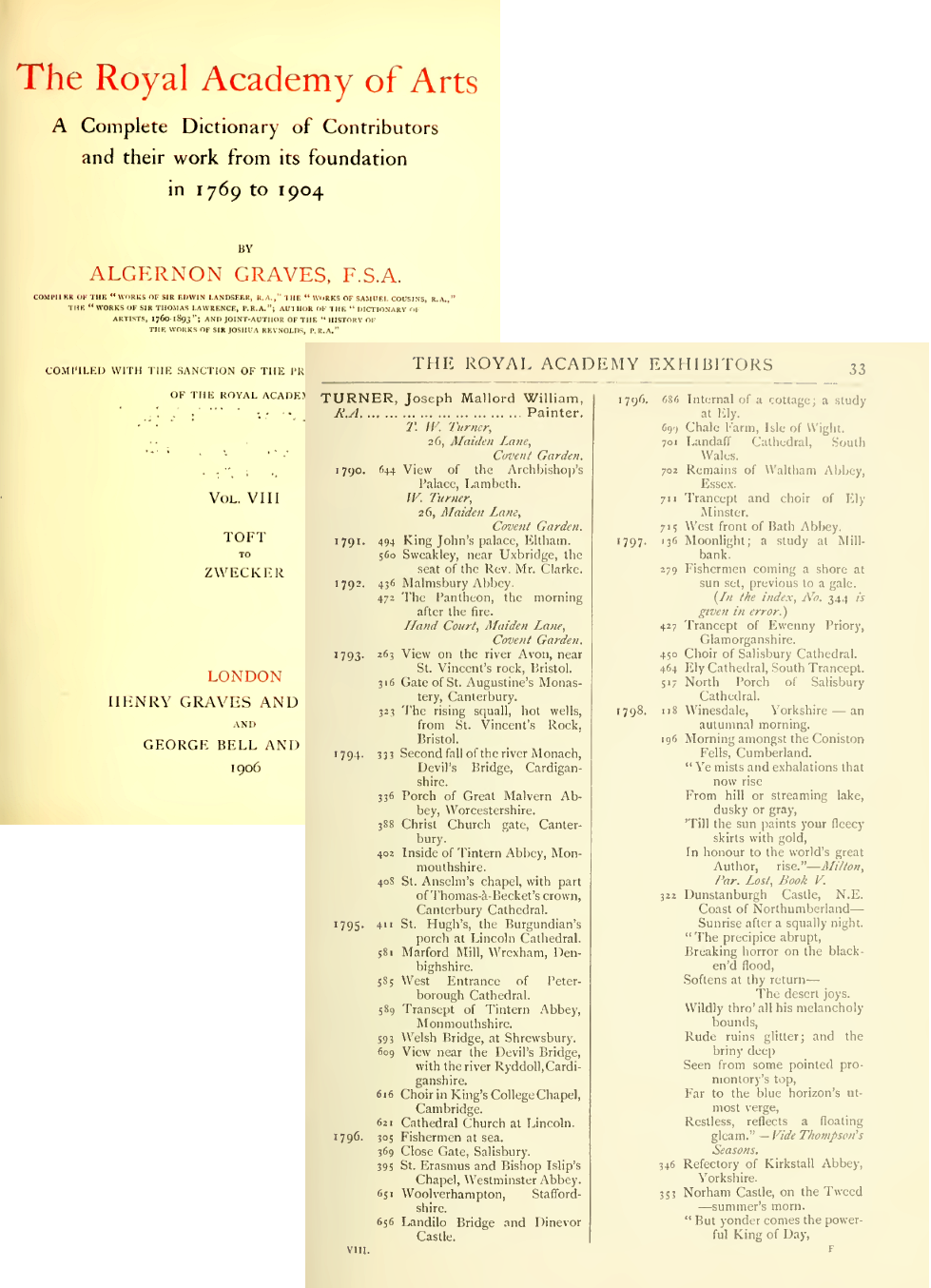
| Algernon Graves, 'Dictionary of Contributors', extracts | 5 | |||
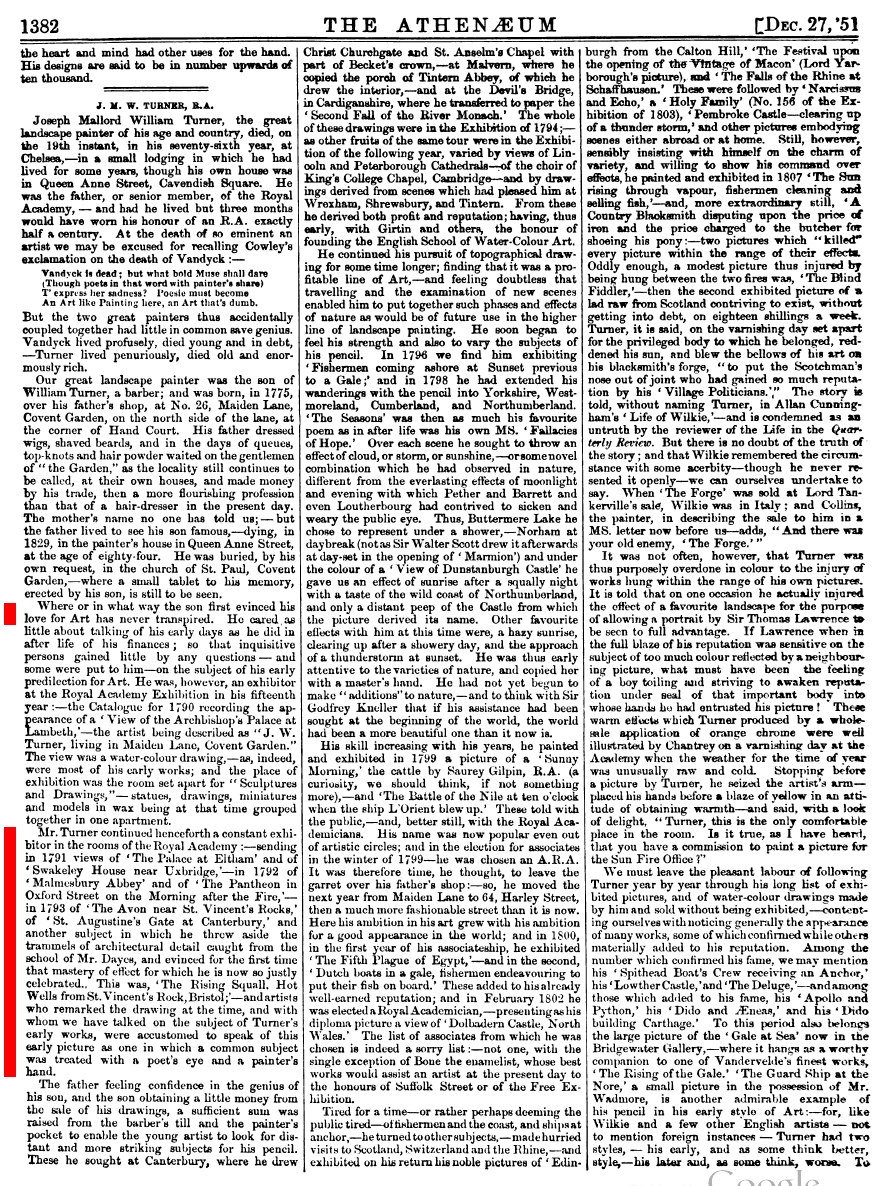
| The Athenaeum, December 27th, 1851, page 1382 | 6 | |||
| 'Turner and his Works', John Burnet & Peter Cunningham, extracts | 8 | |||
| Peter Cunningham, Memoir, pages 15 to 18 | 10 - 13 | |||
| John Burnet, Catalogue of Pictures, page 109 | 14 | |||
| The Illustrated London News, May 1845, page 291 | 16 | |||
| Christie's Sale Catalogue, 9th & 11th July 1864, extracts | 18 | |||
| Christie's e-mail, November 2019, extract | 19 | |||
| The Art Journal, September 1864, page 267 | 20 | |||
| George Redford, 'Art Sales', extracts | 21 - 23 | |||
| British Library e-mail, February 2021 | 24 | |||
| Sidney Lee, 'Dictionary of National Biography, extracts | 26 - 28 | |||
| Merchant Taylors' School Register, 1810, page 189 | 29 | |||
| Images of 'Sir Gregory Page Turner's House' | 30 | |||
| Society for the Encouragement of Arts, Manufactures and Commerce 1814, extracts | 31 | |||
| Gentleman's Magazine, 1818, page 639 | 31 | |||
| Linnean Society, 1827/1828, extracts | 32 | |||
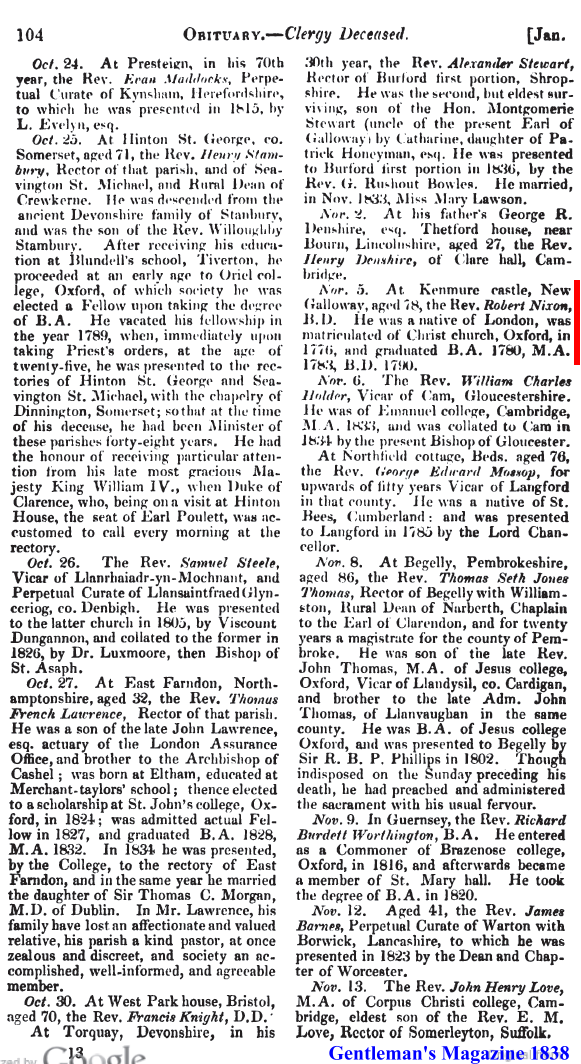
| Gentleman's Magazine 1838, page 104 | 32 | |||
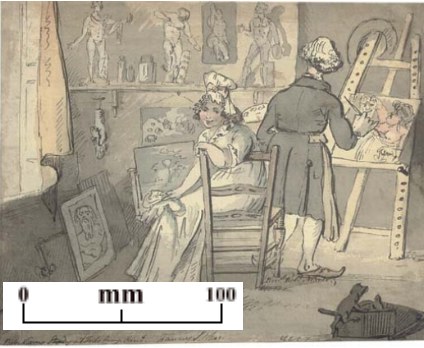
| 'Robert Nixon's Study at Foots Cray, Kent' | 33 | |||
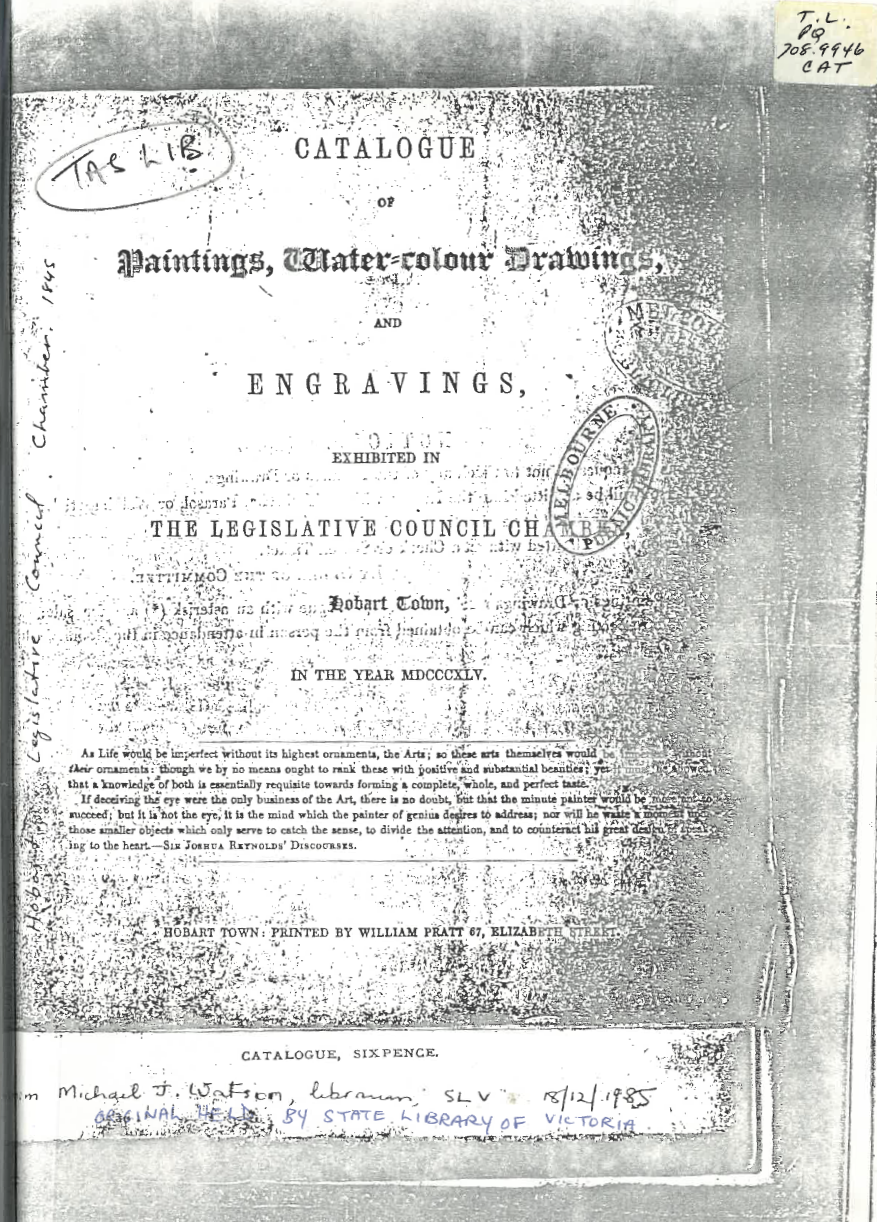
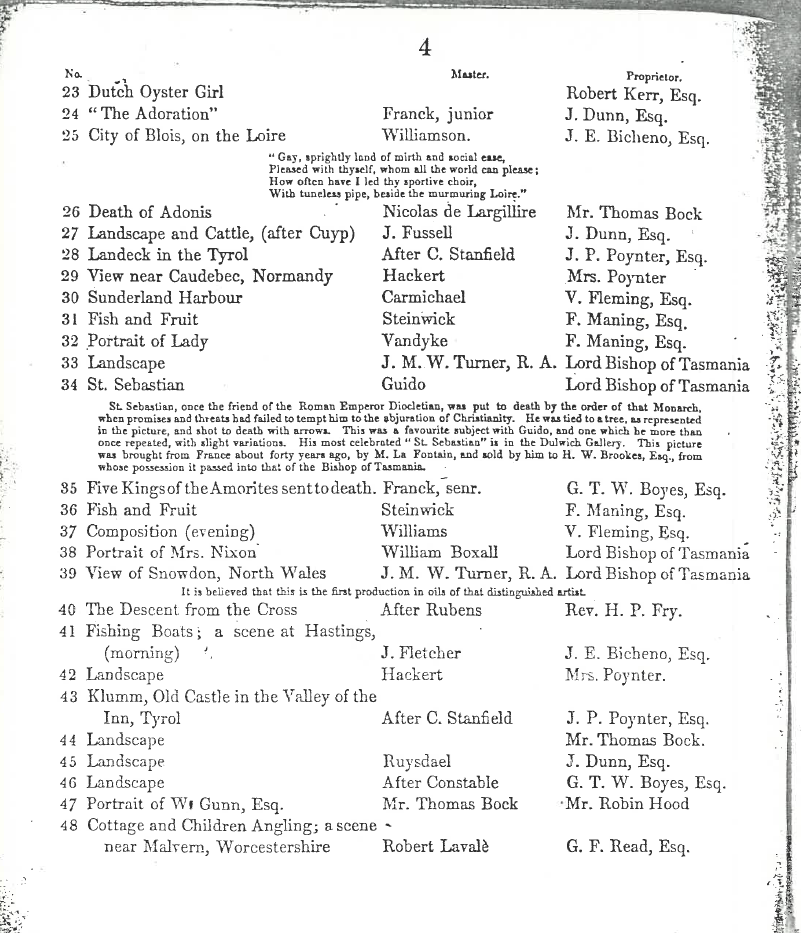
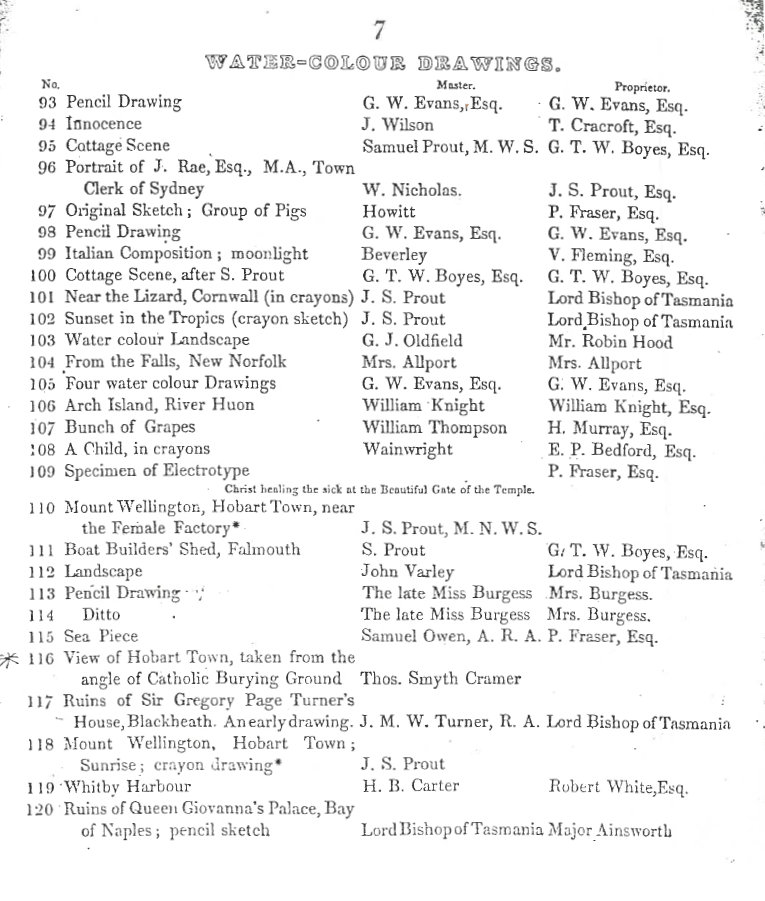
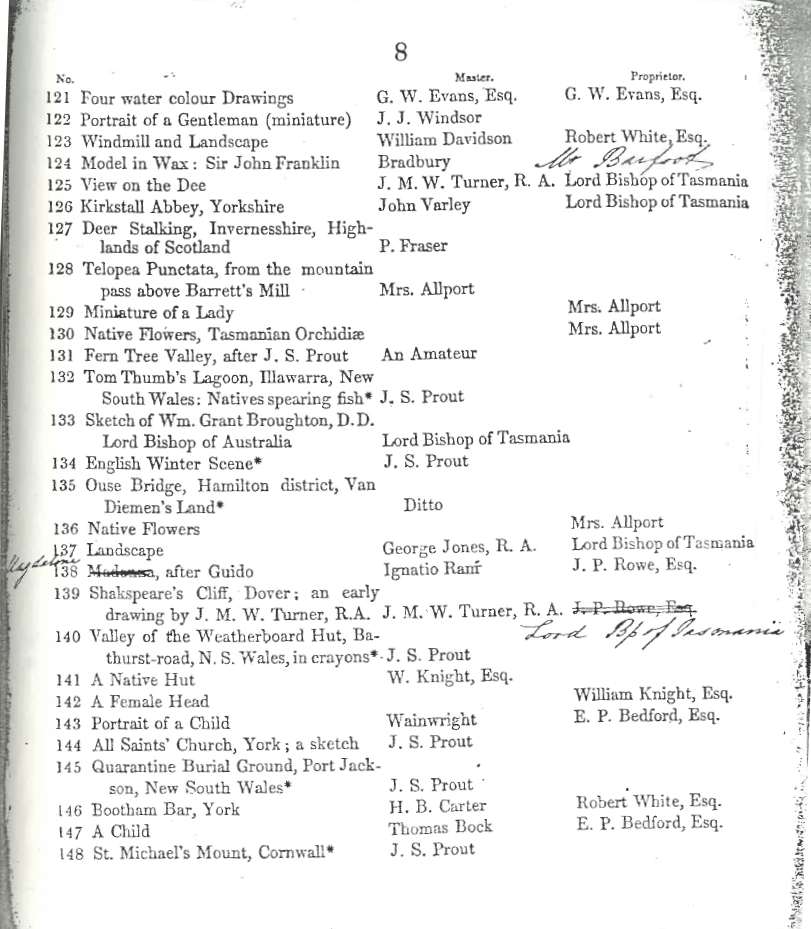
| Hobart Town Exhibition Catalogue 1845, extracts | 34 | |||
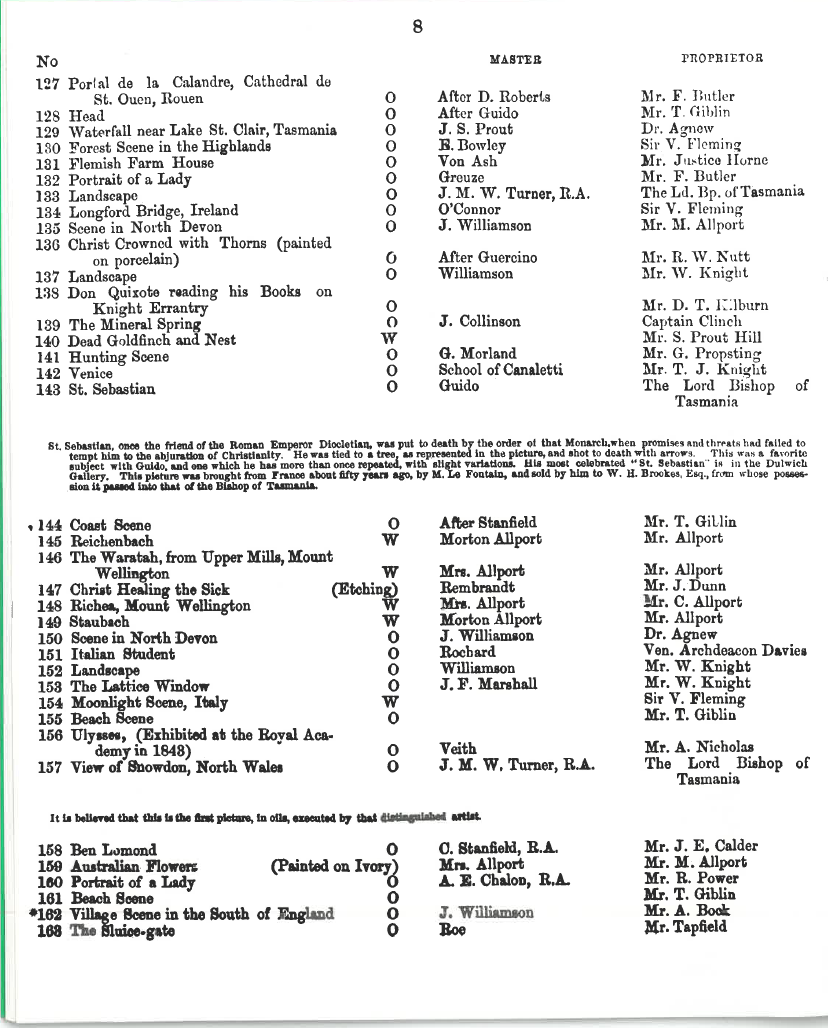
| Hobart Town Exhibition Catalogue 1858, extract | 36 | |||
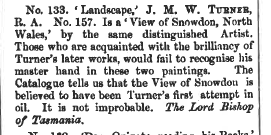
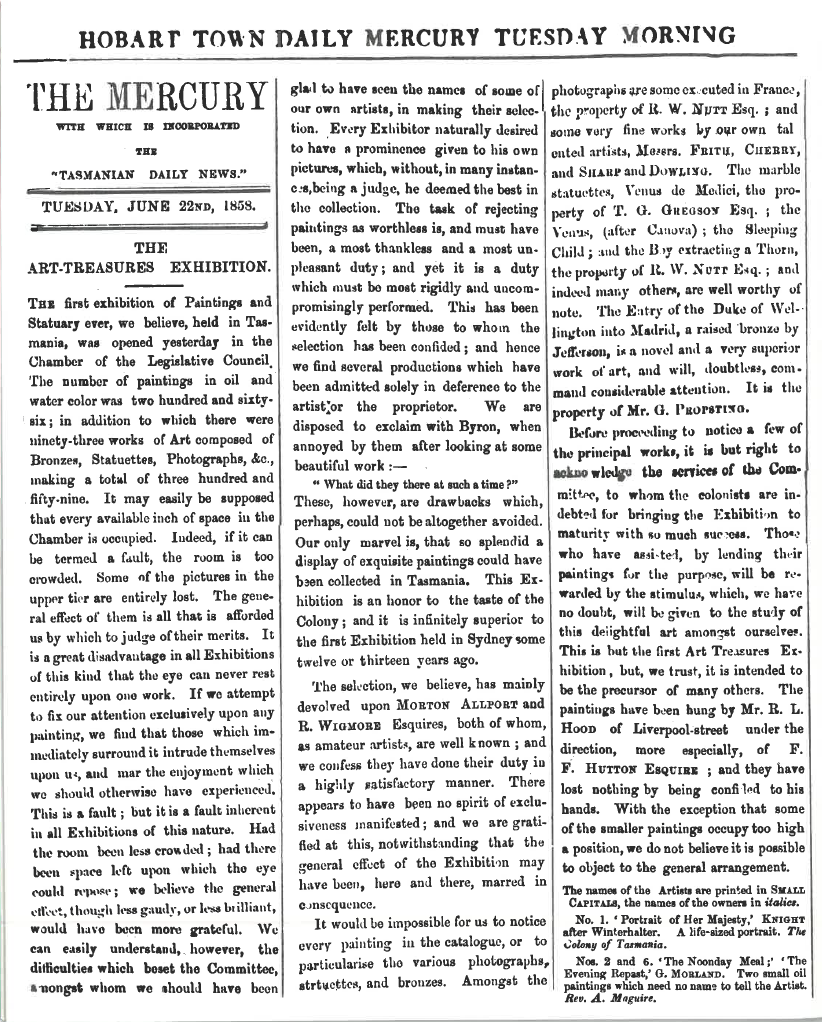
| Hobart Town Daily Mercury, 22nd June 1858, extract | 37 | |||
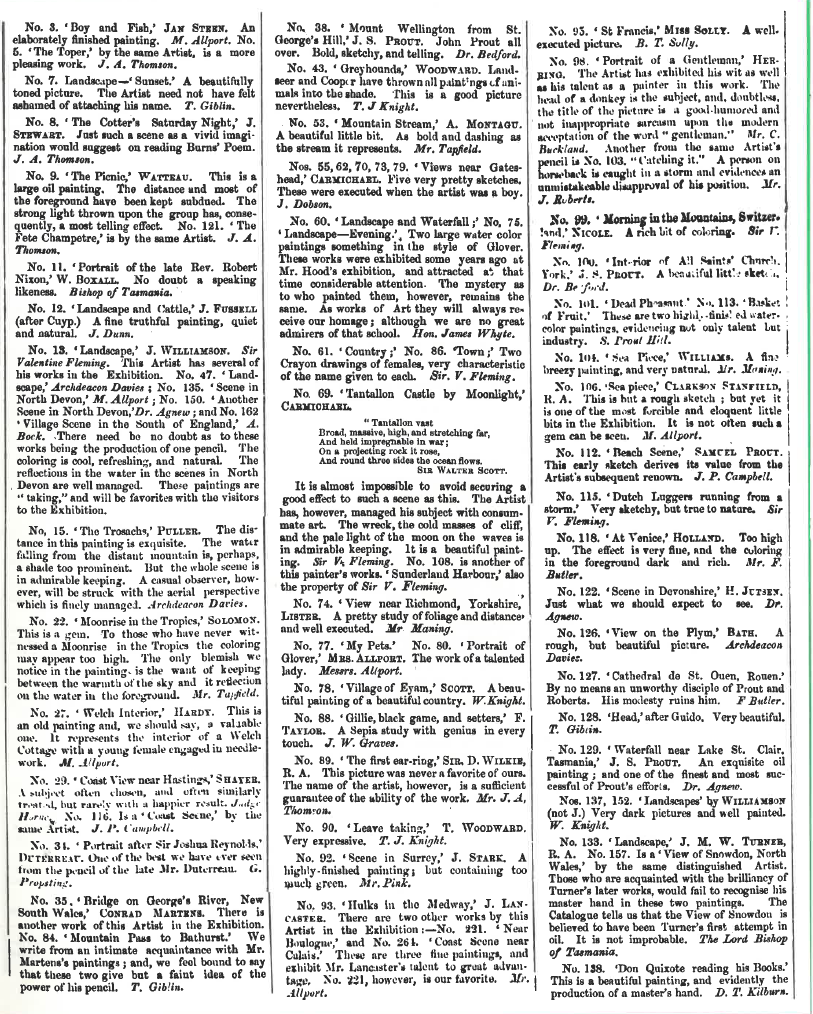
| Hobart Town Daily Mercury, 22nd June 1858, exhibition report | 38 - 39 | |||
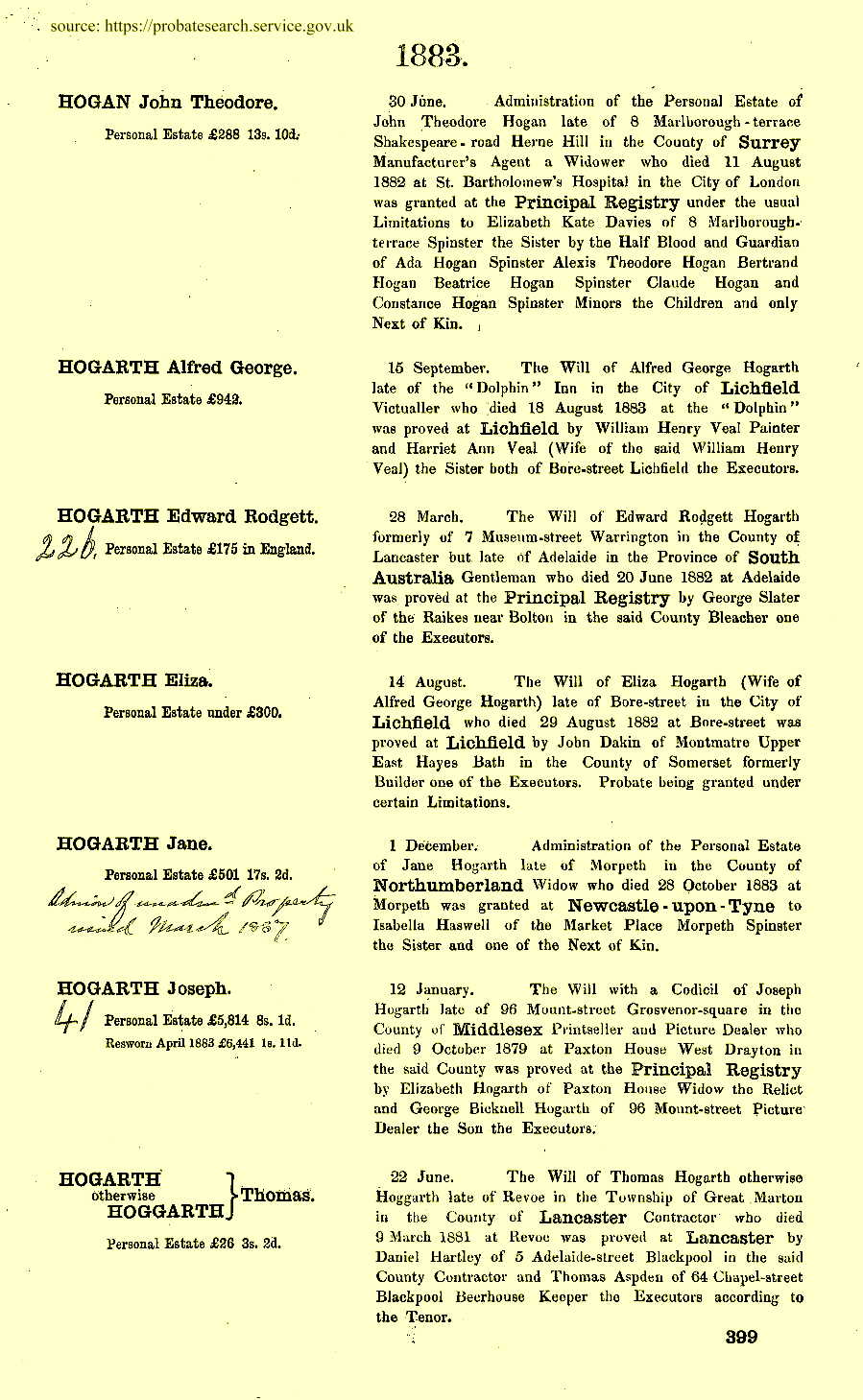
| Probate Register, death of Joseph Hogarth | 40 | |||
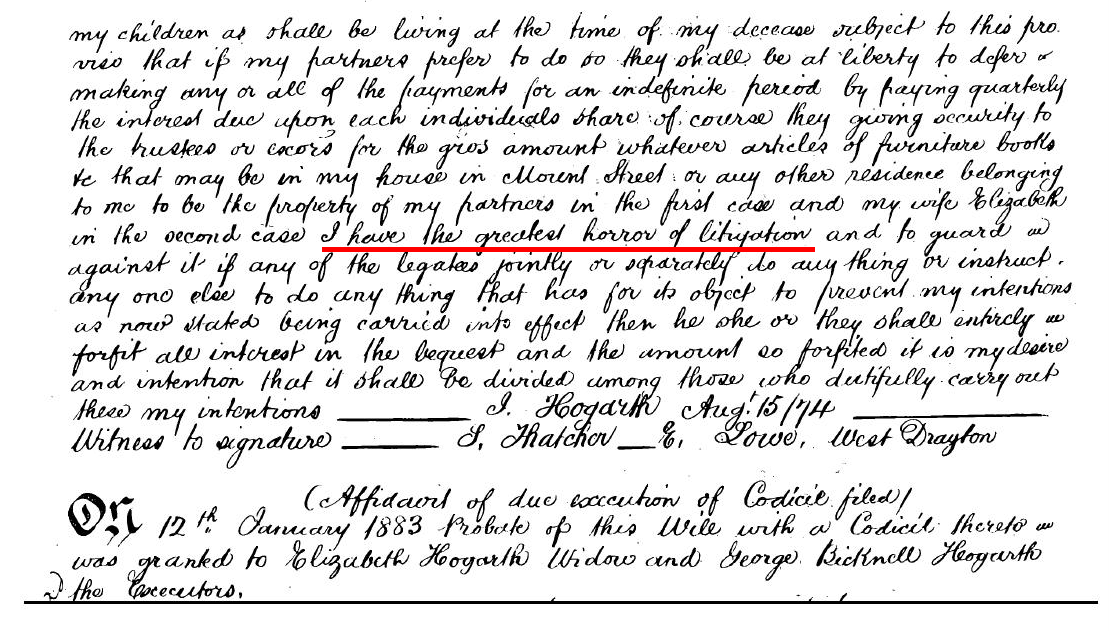
| Joseph Hogarth, codicil to his will | 41 | |||
| C.F.Bell, 'Works Contributed to Public Exhibitions', extracts | 42 | |||
| Richard and Samuel Redgrave, 'Century of Painters', 1866, page 40 | 44 | |||
| Samuel Redgrave, 'Dictionary of Artists', 1874, page 416 | 45 | |||
| Gilbert Redgrave, 'History of Water-Colour Painting', 1892, page 58 | 46 | |||
| Probate Register, death of Samuel Redgrave | 48 | |||
| Register of Deaths, October to December 1888, death of Richard Redgrave | 49 | |||
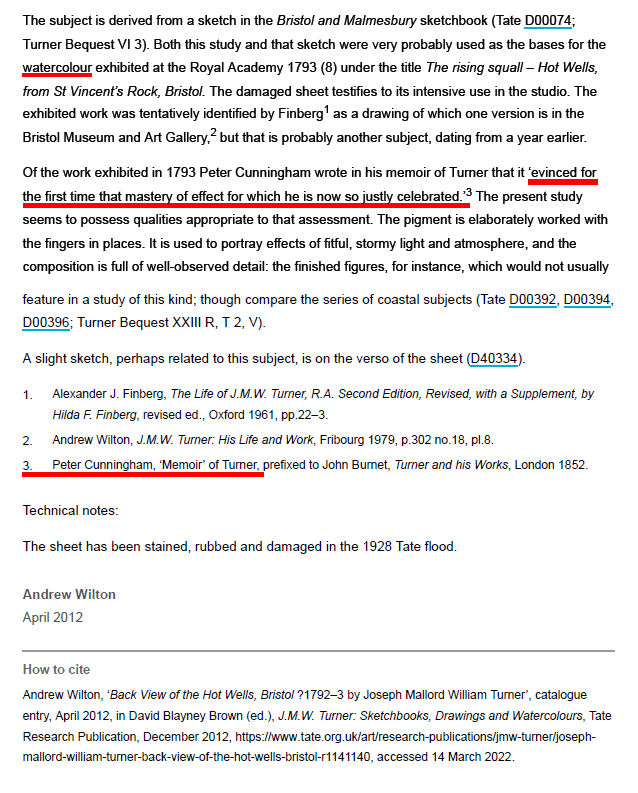
| Tate Internet Pages, 'Back View of the Hot Wells, Bristol' | 50 & 51 | |||
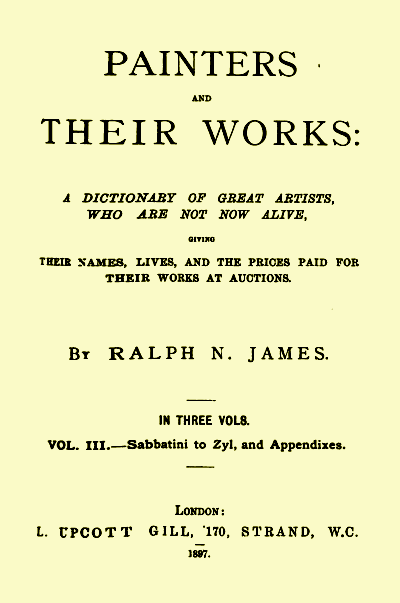
| Ralph N. James, 'Painters and their Works', pages 135 & 136 | 53 | |||
| Royal Academy Exhibition Catalogue, 1793, pages 9 to 11 | 54 & 55 | |||
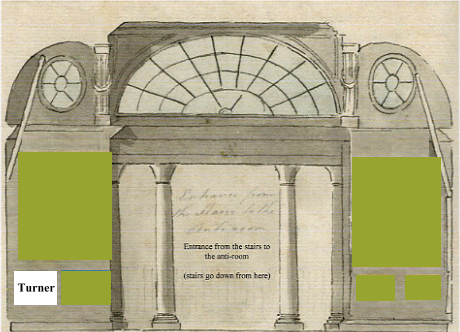
| West Wall of the ante-room at the 1793 RA Exhibition | 56 | |||
|
iii | |||
.
|
. | |
|
. |
.
|
Preface | |
|
Whilst I lay claim to having found this picture, this book is not about the picture that I found. This book charts the factual details of 'The Rising Squall, hot wells, from St. Vincent's rock, Bristol', JMW Truner's first exhibited oil painting, as found in the literature from the exhibition to it's disappearance and exposes mistakes which led to its classification as a watercolour. JMW Turner is said by some to be England's greatest artist; we put his portrait on our £20 note, his works are valued highly and images of them are ubiquitous. My justification for writing a book about such a well covered topic is that I have identified a mistake in the recorded history of it. This book sets out to correct the record and at the same time illustrate it with images of some of the key elements of the evidence. Many of these are now available on the internet. It is impossible to reproduce every document that has contributed to my research. However, I have included sufficient to support each important step in the painting's history. |
|
| v |
.
|
. | |
|
. |
.
|
||
|
In 1793 J.M.W. Turner then 17 years old sent oil paintings to
the
|
.
|
. | |
|
. |
.
|
1. Obituaries
|
|
|
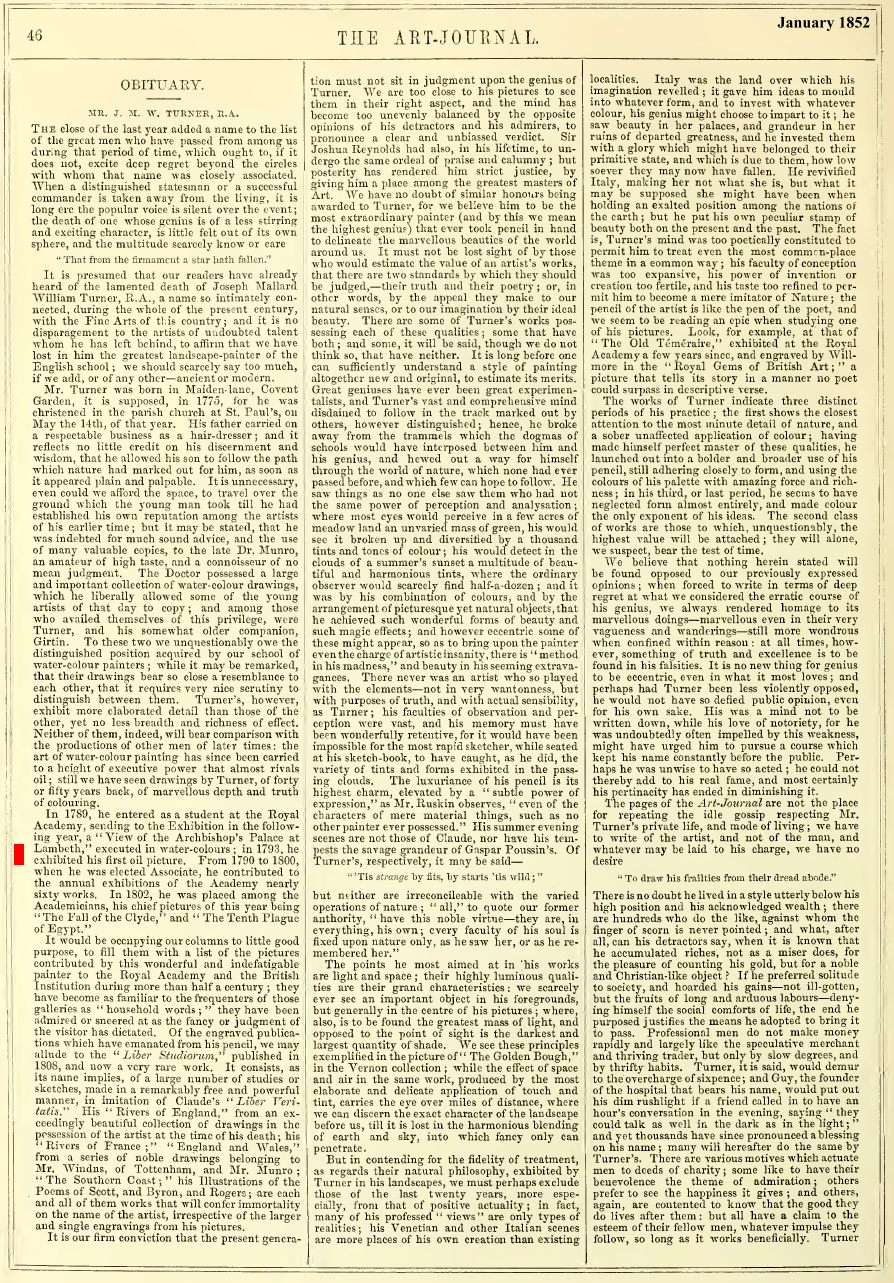
Following his death in December 1851 obituaries appeared in prominent magazines and some recorded the exhibition of an oil in 1793. One of these was 'The Art Journal" which published a two and a half page account in January 1852 .
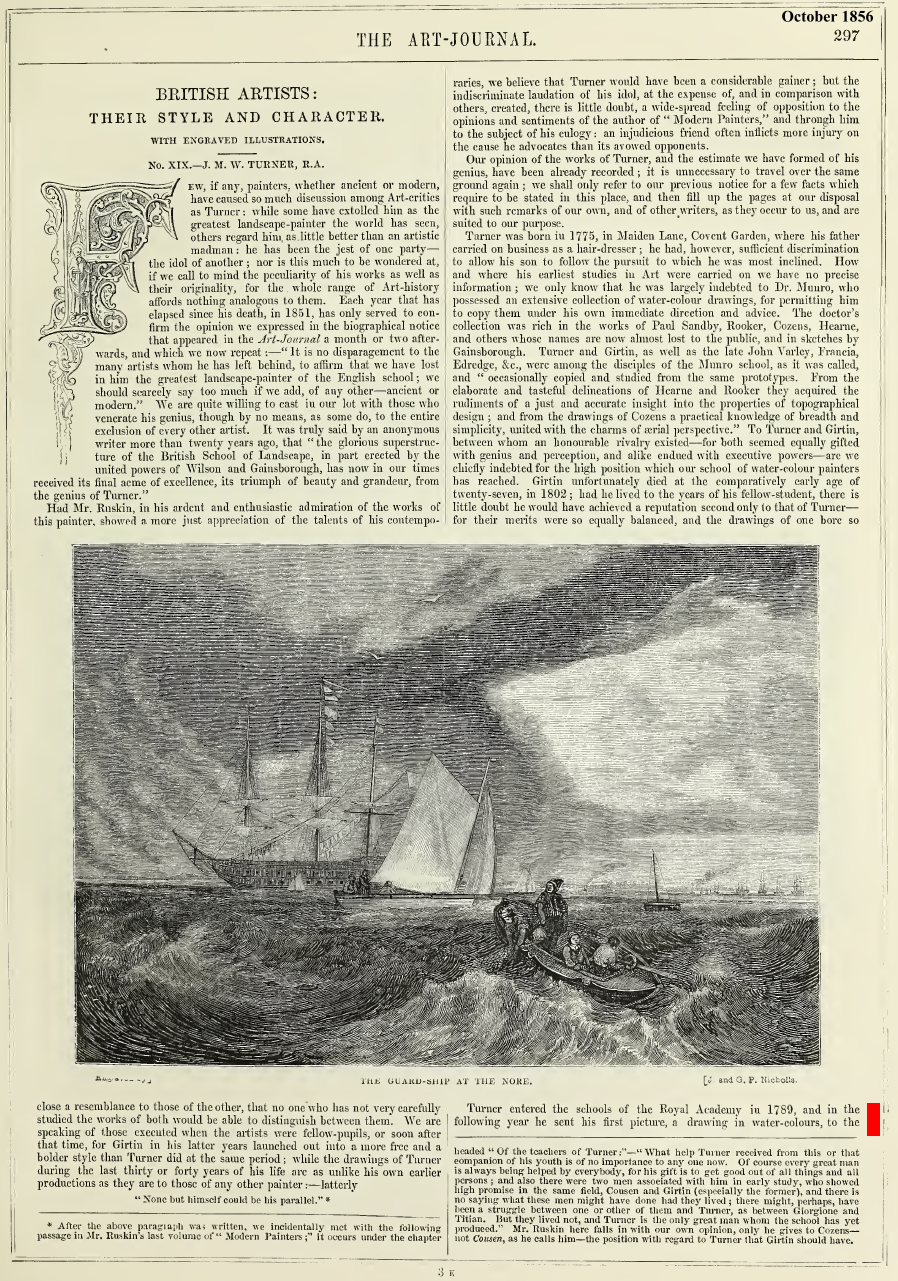
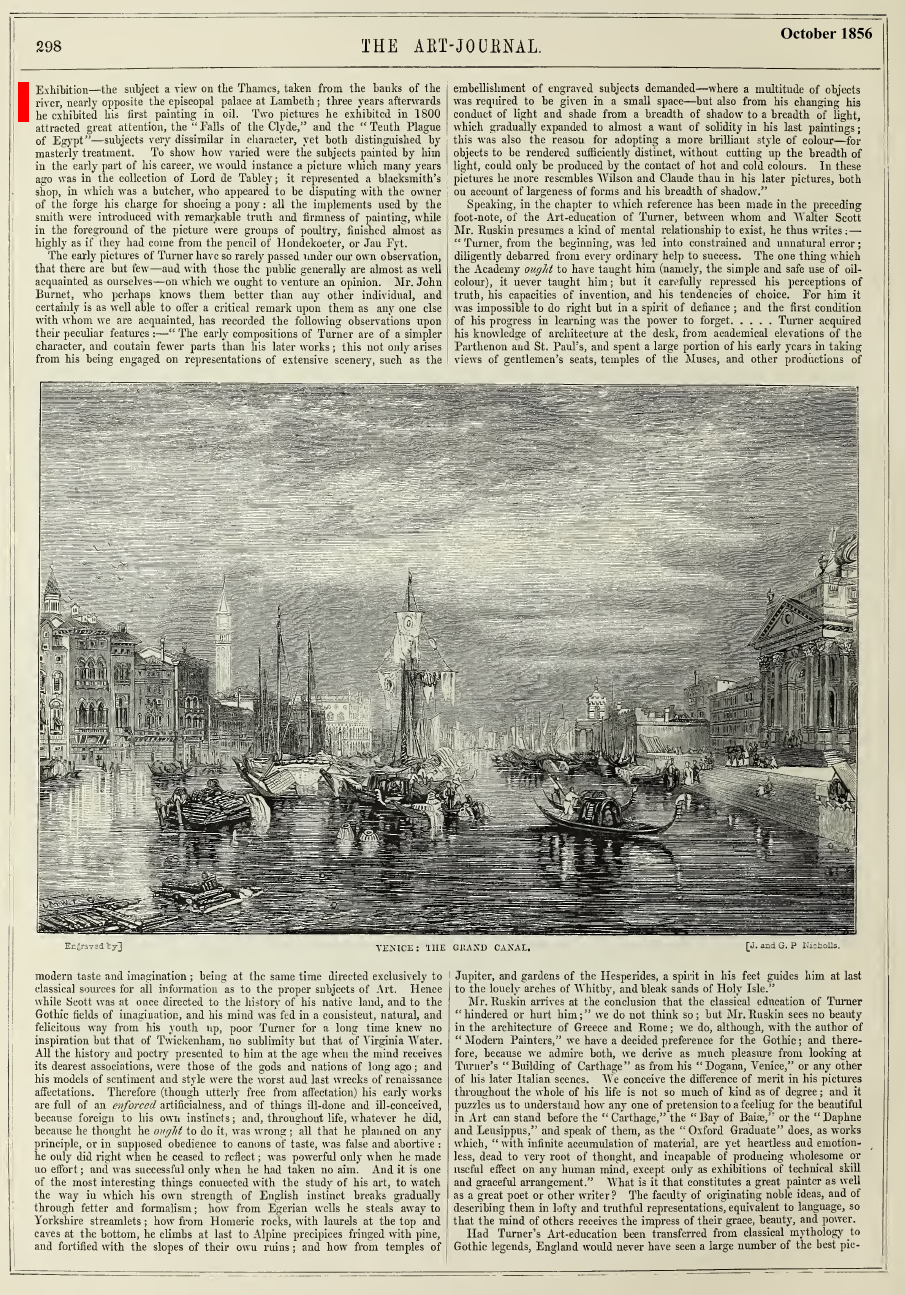
The interest in articles about Turner's work persisted and in October 1856 The Art Journal published a biographical article which once again specified the timing of his first exhibited oil.
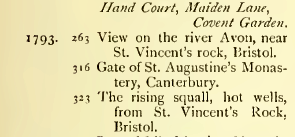
The 1856 article lacks the precision of the 1852 obituary but is quite clear about the exhibition of an oil painting in 1793. The Art Journal does not name the oil painting. (We will see later that at this time 'The Rising Squall' was in Tasmania in the possession of Rev. Dr. Francis Russell Nixon, Bishop of Tasmania and known only as 'Landscape'. It had been there since 1843 and was returned to London in 1862.) Besides 'The Rising Squall' in 1793 Turner exhibited two other works. (It can be shown that 'View on the river Avon' was also an oil; 'St. Augustine's Gate' was, and is, assumed to be a watercolour.
Graves does not say which of these are oils. |
|
|
1 |
.
|
|
|
| 2 |
.
|
|
|
| 3 |
.
|
|
|
| 4 |
.
|
Graves does not say which 1793 exhibit was the oil. |
|
| 5 |
.
|
|
|
| 6 |
.
|
Obituaries (continued)
|
|
|
We saw that The Art Journal of January 1852 and October 1856 did not name the oil painting of 1793 and from Algernon Graves that three works were exhibited. The Athenaeum published its obituary in the last week of December 1851.
Several points of fact emerge.
In the 1850's, use of the word 'picture' would normally be a reference to an oil painting whereas 'drawing' was used for watercolour-drawings. The latter were often referred to in catalogues as 'Drawings, Framed and Glazed' ('framed and glazed' indicating that they were not oils). However, this classification is not hard and fast and there is an ambiguity in this report in the 'Athenaeum' because the writer speaks of artists who 'remarked the drawing at the time'. There is another point woven into the extract, one which is quoted in many essays on the subject both in printed books and on the internet. These are the 'evinced' quotes:
The Athenaeum introduces an idea that 'The Rising Squall from St.Vincent's Rock , Bristol' might be the 'picture', described in the Art Journal the following January, 1852, "... in 1793, he exhibited his first oil picture." |
|
|
7 |
.
|
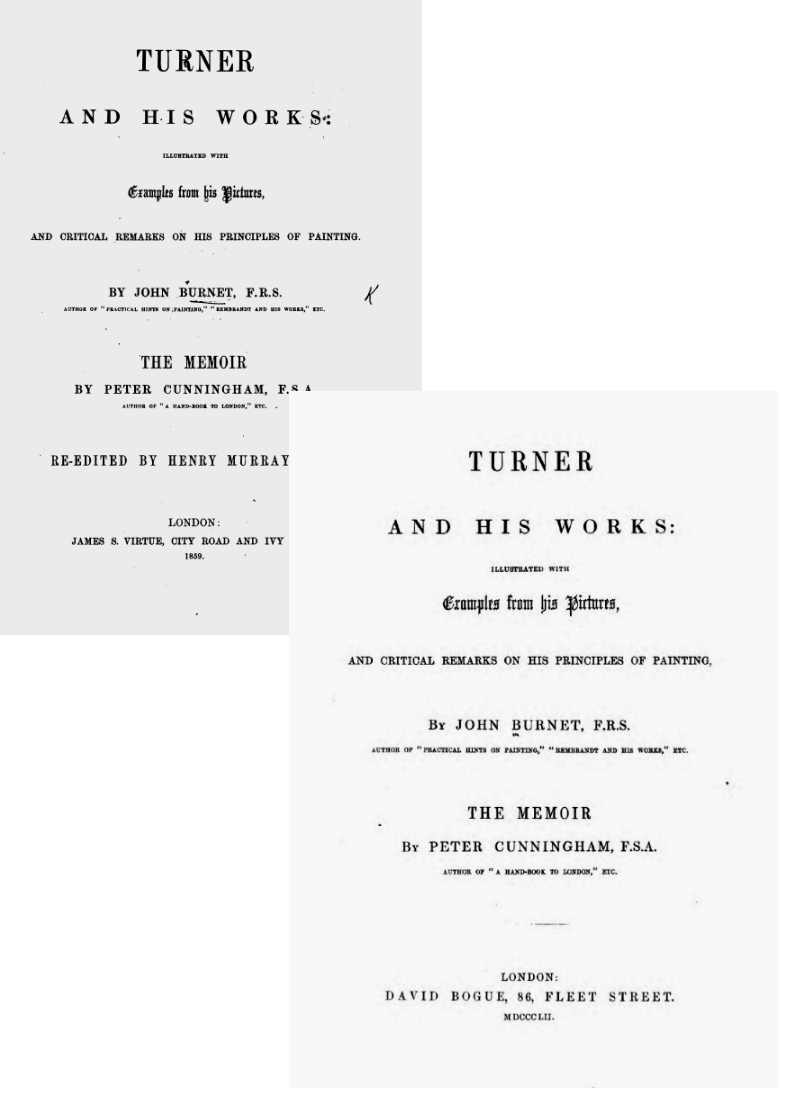
The two editions of 'Turner and his Works' by John Burnet.
The first edition was published in 1852. The text of the second, 1859, edition for the pages discussed here as regards 'The Rising Squall, hot wells, from St. Vincent's rock, Bristol' are identical (except for page numbering) |
|
| 8 |
.
|
2. 'Turner and his Works'
John Burnet (1784-1868)
|
|
|
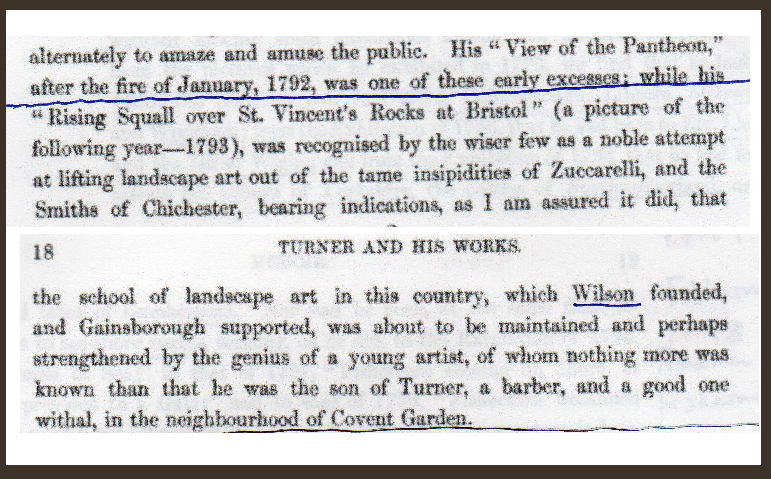
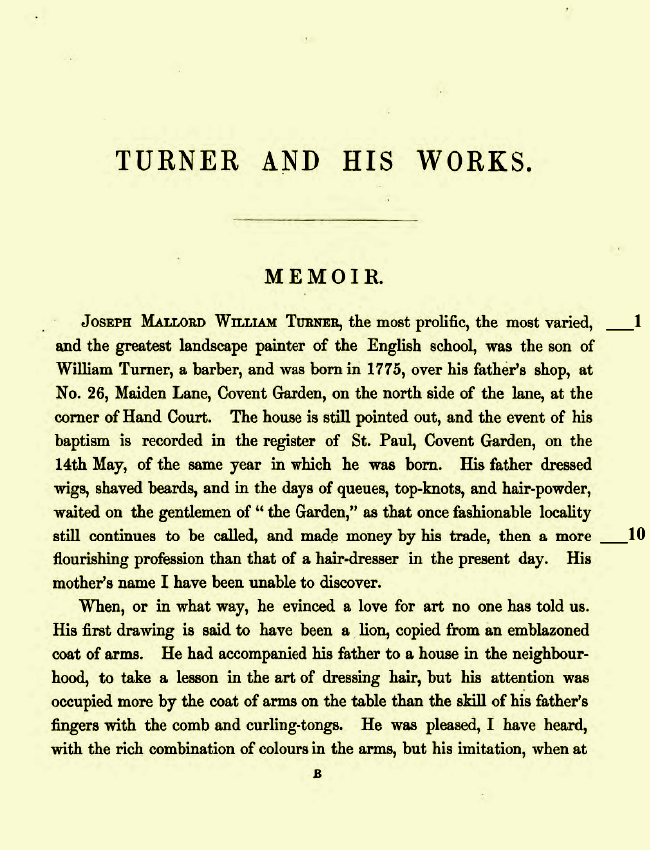
During the few months following Turner's death we have seen that The Athenaeum published his obituary noting that 'The Rising Squall from St.Vincent's Rock , Bristol' was exhibited in 1793 but in slightly ambiguous language did not confirm that it was an oil painting; then the Art Journal a few weeks later wrote of Turner's first exhibited oil painting in 1793 but did not name it. John Burnet's work 'Turner and his Works' followed with its first edition published in 1852. A reprint of 1859 is also widely circulated on the internet. The book begins with a much quoted 'Memoir' by Peter Cunningham in which, in the 1852 edition on pages 16 to 18, Turner's early exhibition works are discussed. Here, Cunningham calls the 1793 picture 'Rising Squall over St. Vincent's Rocks at Bristol'
Cunningham does not specify that it is an oil painting. However, he does compare the work with Gainsborough (1727-1788) and such comparison can be appropriate only for an oil. The same passage is printed on pages 3 and 4 of the 1859 edition. The first four pages of Peter Cunningham's 'Memoir' are reproduced on the following pages. In addition to his reference to 'Rising Squall over St. Vincent's Rocks at Bristol', Cunningham's use of the word 'evinced' is noted and this will be examined in more detail when we discuss the 2019 Tate Gallery online research pages. |
|
|
9 |
.
|
The 1852 first edition of Cunningham's 'Memoir' begins on page 15.
The opening of Peter Cunningham's 'Memoir' from the
1852 publication.
|
|
| 10 |
.
|
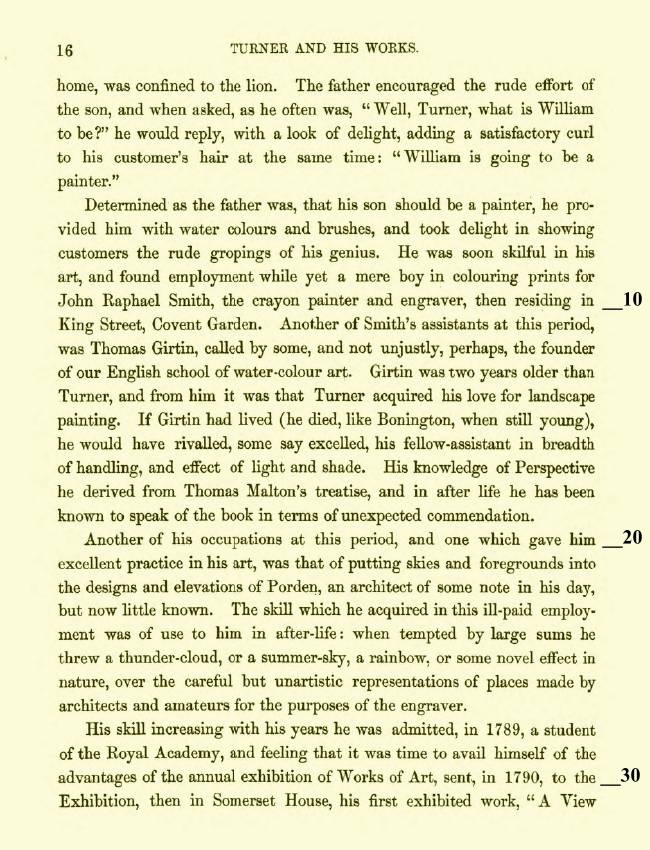
Cunningham 1852 page 16
Here Cunningham introduces the Royal Academy and begins to describe Turner's first exhibit, describing it, on line 31, as a 'work'. (On the next page Cunningham states clearly that this work was a 'watercolour drawing') |
|
| 11 |
.
|
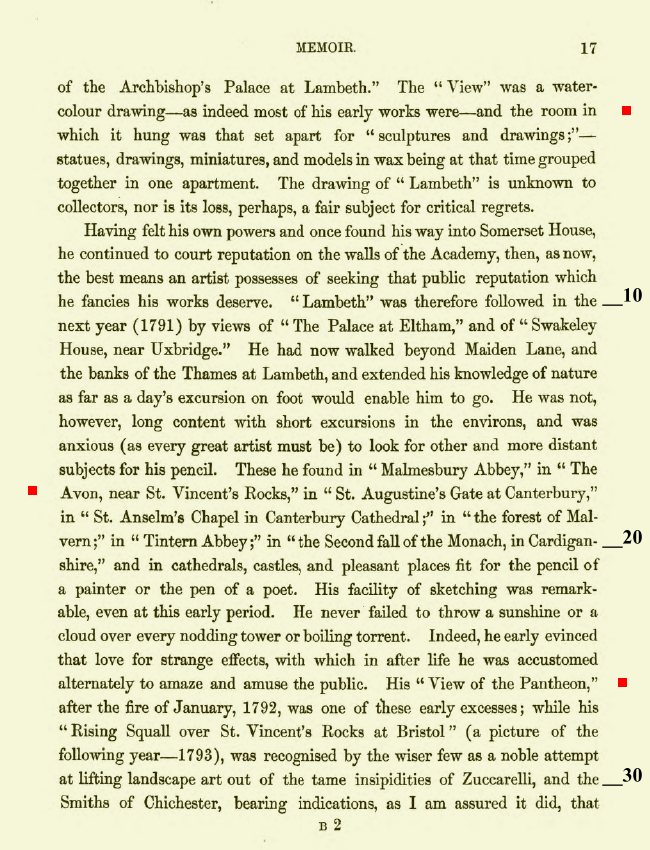
Cunningham 1852 page 17
On page 17 the second use of the term 'evinced' appears on line 24. This time the context is slightly different and is applied to "that love for strange effects". Again it does not apply to a particular painting. This page is concerned with listing the early Royal
Academy exhibits and as far as 'Malmesbury Abbey' follow the same
order. However, he then moves on to 'The Avon, near St. Vincent's
Rocks' and 'St. Augustine's Gate at Canterbury' (both exh. 1793). Next
'the forest of Malvern' which may refer to 'Porch of Great Malvern
Abbey, Worcestershire' exhibited in 1794 then two of the five 1794
exhibits before returning to 1792 'View of the Pantheon' and 1793
'Rising Squall over St. Vincent's Rocks at Bristol'. So this page is a
full list of exhibits from 1790 to 1793 and two (or three) 1794
exhibits reordered to suit the narrative.
|
|
| 12 |
.
|
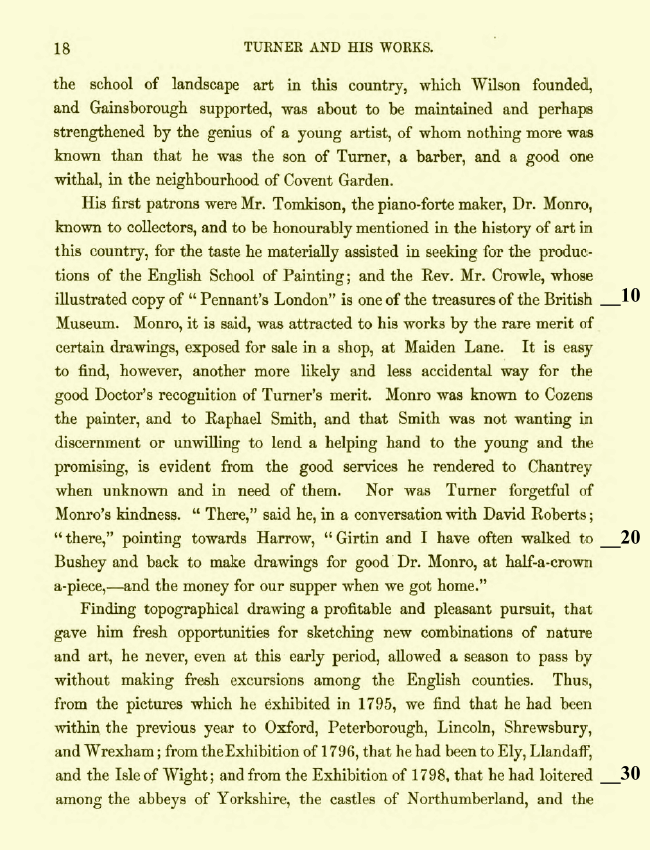
Cunningham 1852 page 18
On page 18 we find Cunningham's comparison of 'Rising Squall over St. Vincent's Rocks at Bristol' with the work of Gainsborough (line 2). After that there are no further references to the 'Rising Squall'. Bearing in mind a publication date of 1852, by which time Gainsborough was well established as a painter in oils, the only appropriate conclusion is that 'Rising Squall over St. Vincent's Rocks at Bristol' was considered by Cunningham to be an oil painting. |
|
| 13 |
.
|
Burnet 1852 page 109
There is only one mention of 'Hotwells' in the entire book. This is on page 109, 1793, No.8, in JMW Turner's original title for his 1793 exhibit. It follows that any reference to 'Hotwells' in the context of Burnet's 'Turner and his Works' must refer to this exhibit, 'The Rising Squall, hot wells, from St. Vincent's rock, Bristol'. |
|
| 14 |
.
|
Observations from Burnet and Cunningham | |
|
Certain observations drawn from Burnet's and Cunningham's texts are crucial to understanding the events which followed. In particular a Christie's auction of 9th - 11th July 1864 where a direct reference to this book is contained in the catalogue. These observations are as follows: 'HOTWELLS'
'RISING SQUALL'
'ST VINCENT'S ROCK'
'EVINCED'
Cunningham's use of the word 'evinced' conveys two general ideas. The first of these 'ideas' is "a love for art" and the second is "that love of strange effects". In the Aethaeneum the text is dealing with a particular subject: “The Rising Squall from St.Vincent's Rock , Bristol". |
|
|
15 |
.
| Illustrated London News, May 1845, an essay describing Turner's early life. | |
|
|
|
| 16 |
.
|
3. 1845 Illustrated London News |
|
|
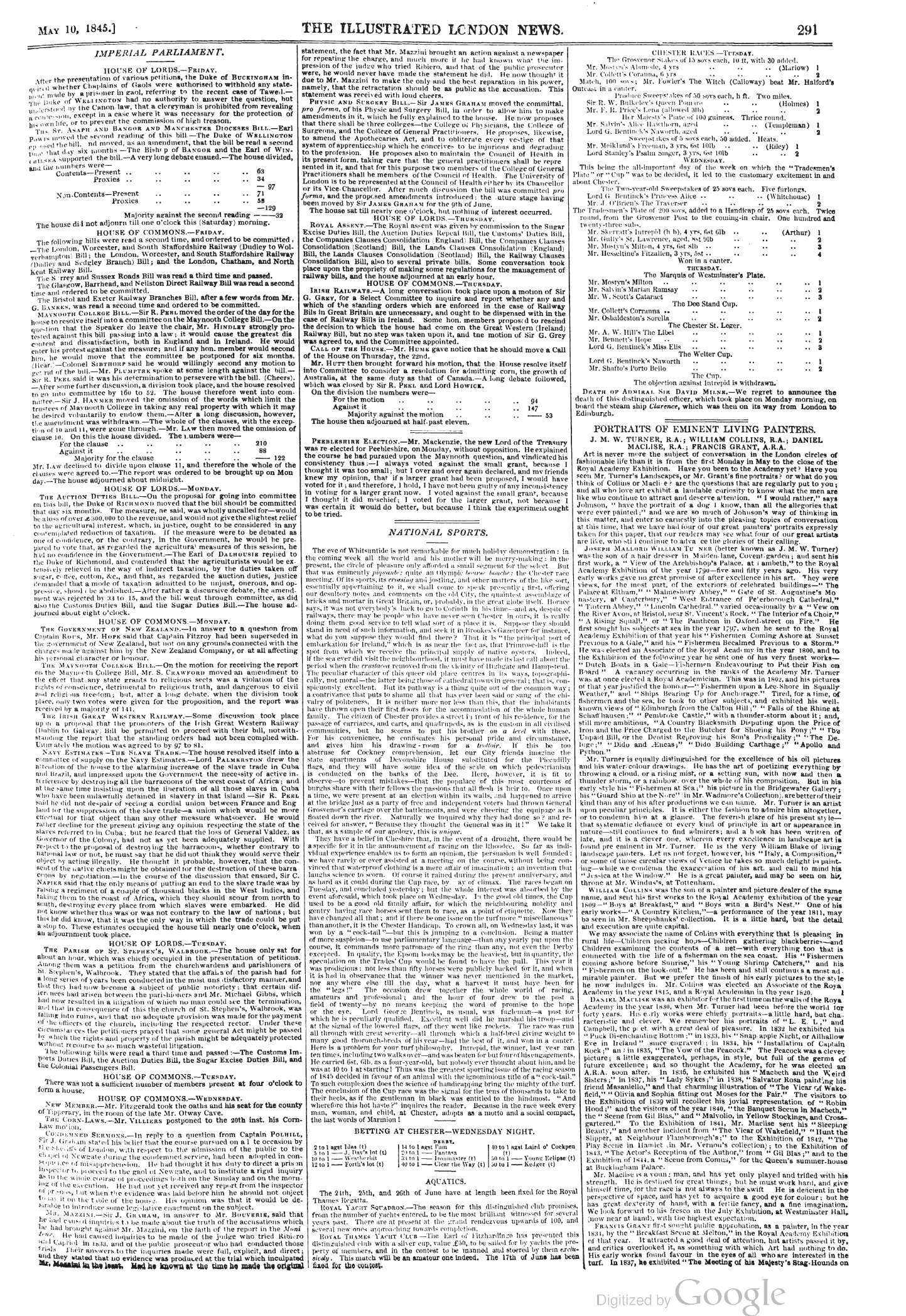
So far we have examined a cluster of commentaries around the time of Turner's death. This essay appears in the 'Illustrated London News' in May1845, six years before Turner's death.
In this essay 'The Rising Squall' is featured alongside the early watercolours. 'St. Vincent's Rock' is mentioned in the title of 'View on the River Avon' but there is no mention of 'Hotwells' or use of the word 'evinced'. The book referred to was probably the first volume of John Ruskin's 'Modern Painters' first published around 1843. |
|
|
17 |
.
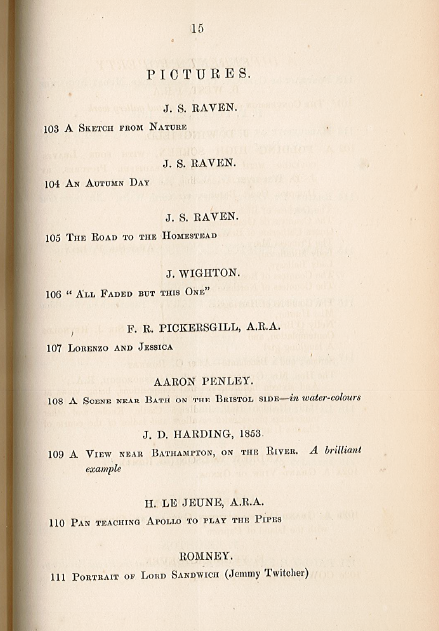
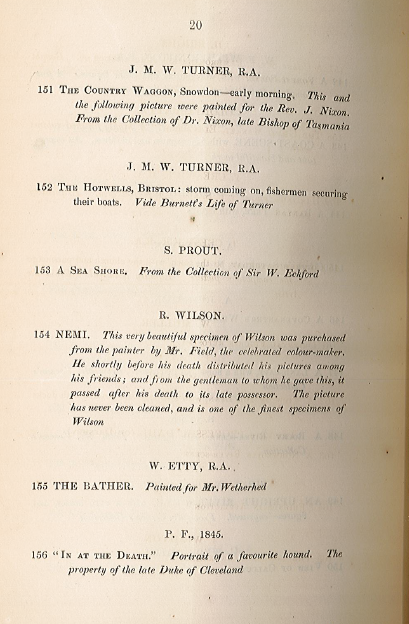
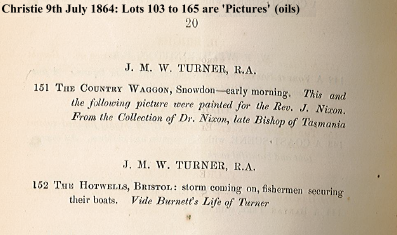
| Christie's Auction 9th & 11th July 1864; Catalogue cover and pages 3, 15 and 20. Lots 151 and 152 from the collection of the Bishop of Tasmania. | |
|
|
|
| 18 |
.
|
4. The Auction of 'The Rising Squall';
|
|
|
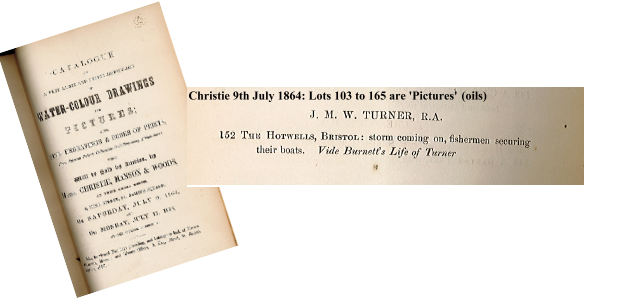
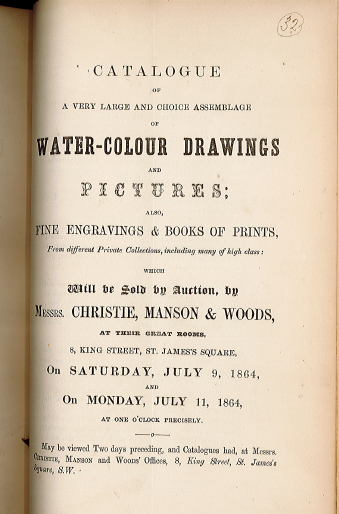
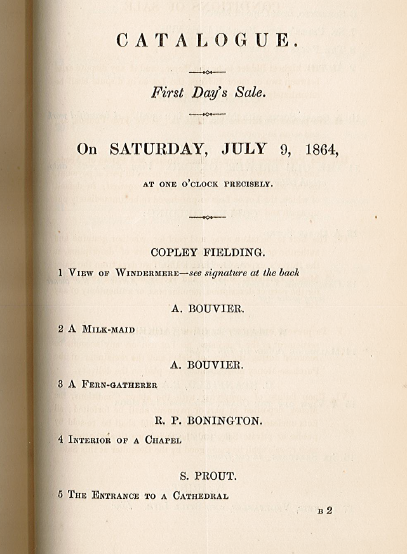
Pivotal to the recognition of 'The rising squall, hot wells, from St. Vincent's rock, Bristol' as an oil, is a Christie's auction of 9th & 11th July 1864. From the pages illustrated (left) it can be seen that this was an assemblage from different private collections. The provenance of lots 151 and 152 in that catalogue is printed as:
There is a small insignificant mistake here; the Rev. Nixon (1758-1837) was 'Robert' not 'J'. John Nixon (the artist) was his brother and it appears that the two have been confused. Rev. Dr. Francis Russell Nixon, Lord Bishop of Tasmania (1803-1879) was Robert's second son; his tenure as the Bishop of Tasmania had ended in 1862 hence described as 'late' in the catalogue. Later we will show that Rev. Dr. Francis Russell Nixon, Lord Bishop of Tasmania owned five works by JMW Turner, two oils and three watercolour-drawings which it appears that he sold, after his return to England in 1862, to Joseph Hogarth, the picture dealer. Lots 151 and 152 in this auction were recorded by Christie's as the property of 'Hogarth'; this e-mail from Christie's dated 4th November 2019 also shows that both lots were bought in and therefore remained with Hogarth after the sale.
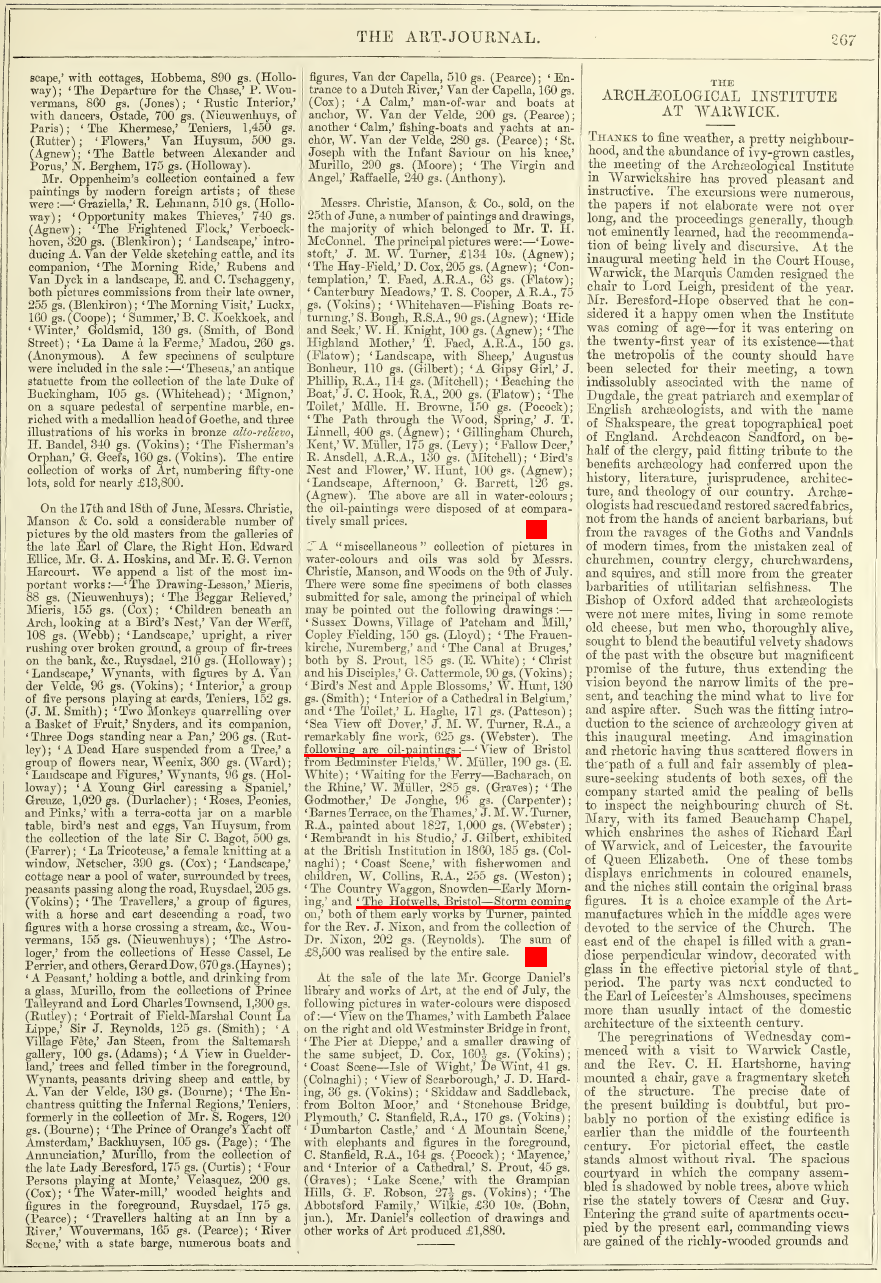
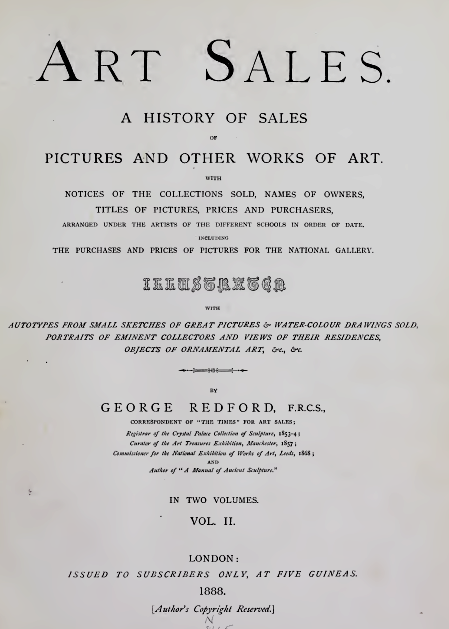
The catalogue for this, July 1864, sale contains a section headed 'Pictures' from lots 103 to 165; this heading usually indicates oil paintings. However, in this catalogue the heading 'Pictures' is not so straightforward. Within this section, lot 108 is described as being 'in water-colours'. Notably, no such qualification appears against the Turners and there is additional support from 'The Art Journal, New Series, Volume III, 1864, September', page 267 and George Redford's 'Art Sales' (illustrated on the following four pages) to be confident that lots 151 and 152 were oil paintings. |
|
|
19 | |
.
|
The Art Journal September 1864
|
|
| 20 |
.
|
Redford Art Sales - Title
|
|
| 21 |
.
|
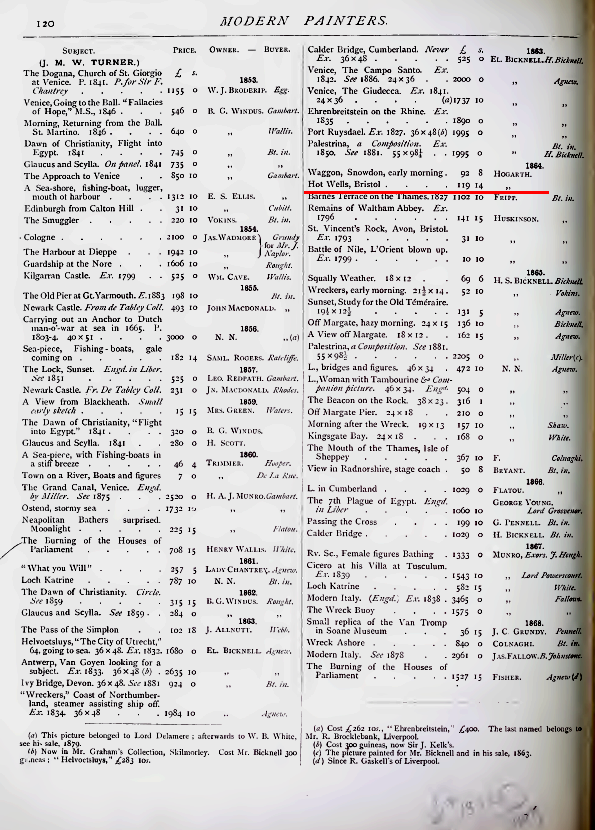
Redford Art Sales - Page 120
Redford's report: 1864, 'Hot Wells, Bristol', seller: Hogarth; no comment as to the buyer. |
|
| 22 |
.
|
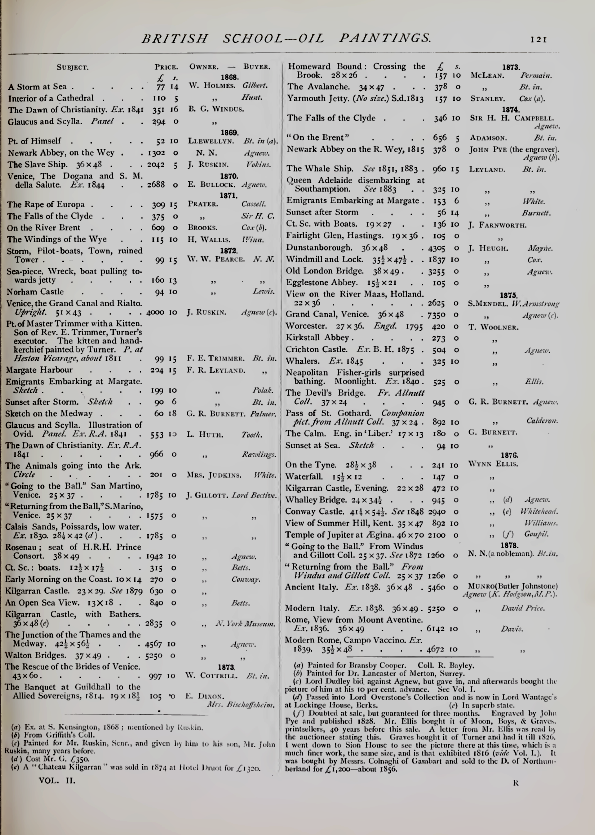
Redford Art Sales - Page 121
Redford pages 120 & 121 are in the section headed 'OIL PAINTINGS' |
|
| 23 |
.
|
The Auction of 'The Rising Squall'
(continued)
|
|
|
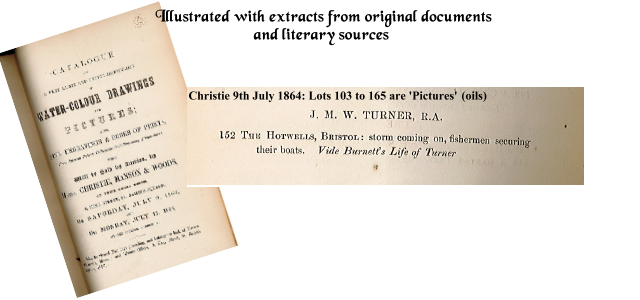
The full catalogue description of lot 152 is:
The identification of Lot 152 stems from the reference, 'Vide Burnett's Life Of Turner'. Although around this time there was a collecter of JMW Turner's work called 'George Burnett' he did not write such a book. 'Burnett in the catalogue appears to be a mis-spelling of John 'Burnet'. This was confirmed by e-mails with the British Library. The British Library found no trace of 'Burnett's 'Life of Turner'' and offered the following explanation:
At the date of the auction (1864) Burnet's book had been in circulation for twelve years and was likely considered an authoritative work. In 1864 here were two other authoritative books available, 'Turner and Girtin's Picturesque Views, Sixty Years Since' by Thomas Miller, published 1854 by Joseph Hogarth, and 'The Life of JMW Turner RA' by Walter Thornbury published in 1862. Miller's book does not mention "The Rising Squall" at all whereas Thornbury exhibits many contradictions. He never describes 'The Rising Squall' as a watercolour-drawing and at the beginning of his chapter entitled, "Turner's Art Life" he describes 'The Rising Squall, Hotwells' as one of JMW Turner's "earliest pictures" apparently indicating an oil. However, Thornbury continues by so conflating the terminology that he cannot be relied upon as evidence in this matter. Moreover, Thornbury's book had been in circulation for only two years at the time of the auction. To identify lot 152 we cross reference the text of the auction catalogue with that of Burnet's 'Turner and his works'.
Thus "Vide Burnett's Life of Turner" in the auction
catalogue identifies only one picture:
|
|
|
24 | |
.
|
5. Provenance from 1793 to July 1864
|
|
|
From the foregoing analysis it is certain that, on 11th July 1864, Joseph Hogarth was in possession of JMW Turner's first exhibited oil, 'The Rising Squall, hot wells, from St. Vincent's rock, Bristol' exhibited 1793. The auction catalogue entry at lot 151 provides an overview of its provenance:
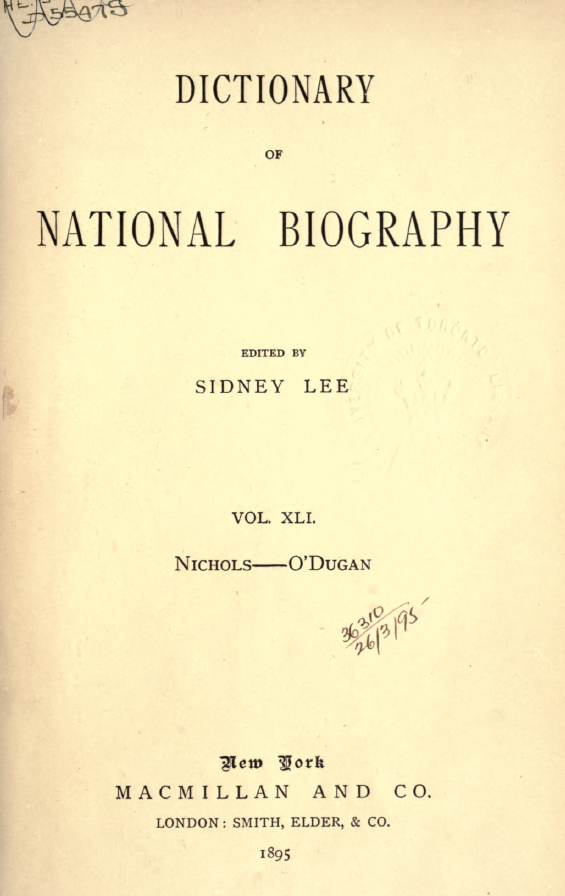
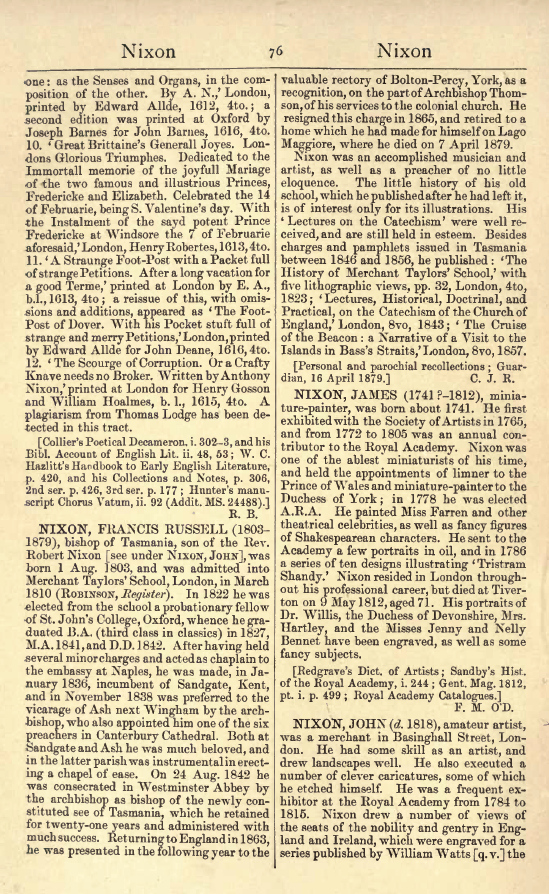
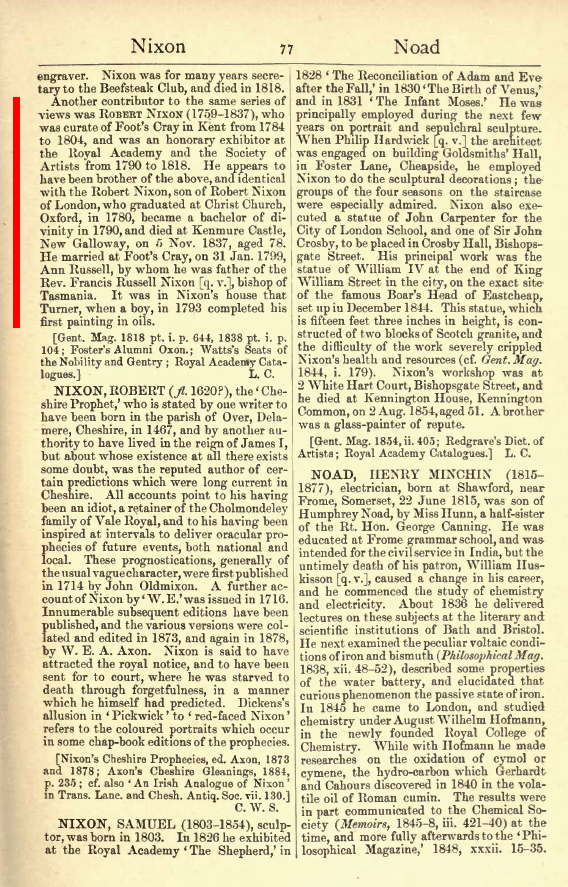
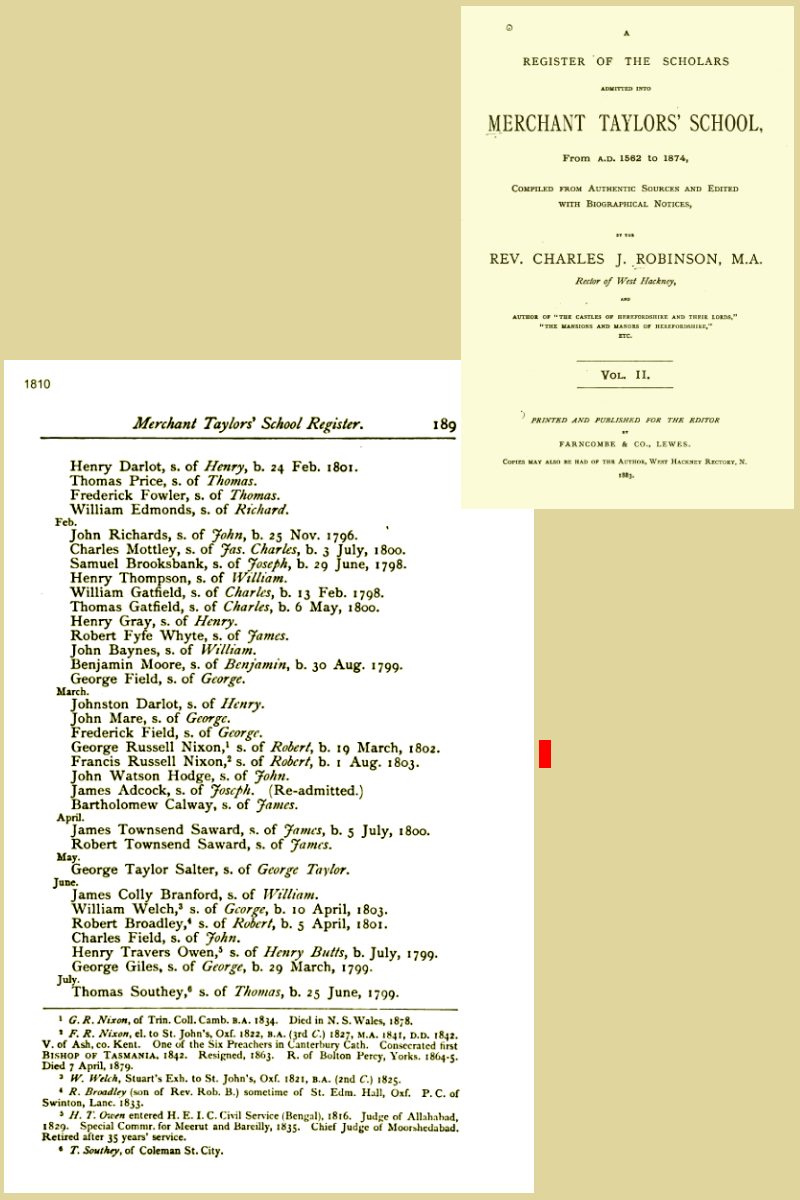
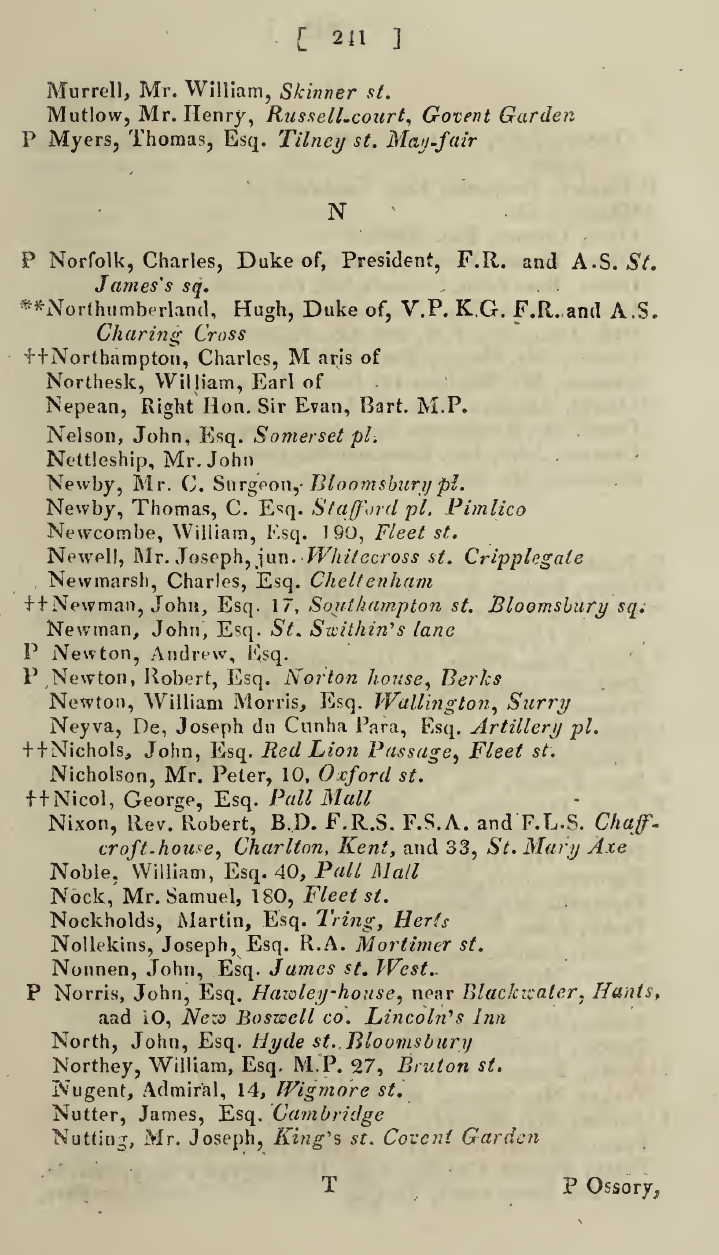
In the catalogue entry for lot 151 we see that the picture was 'painted for the Rev. J. Nixon'. There is a case of mistaken identity here because the 'Rev.' Nixon was 'Robert' not his brother John, the artist. 'Dr. Nixon, late Bishop of Tasmania' was Robert's second son. These relationships are recorded in 'Dictionary of National Biography' (Sidney Lee, 1895). Robert's first son, George, is recorded in the admissions register of Merchant Taylors' School, March 1810. Robert's third son, Wyatt, died in infancy. By 1895 (when 'Dictionary of National Biography' was published) a degree of confusion had set in regarding Turner's first oil painting. The reference on page 77 lines 18-20, in specifying 1793, may well be intended to indicate the first 'exhibited' oil, quoting the exhibition year. However, this is uncertain and these pages are illustrated only to corroborate the relationship between Rev. Robert Nixon, John Nixon and Rev. Dr. Francis Russell Nixon, Lord Bishop of Tasmania. Their dates are shown as follows:
Lee's dictionary clearly places Rev. Robert Nixon at Foots Cray, Kent from 1784 to 1804 where he therefore resided in 1793 when he took possession of 'The Rising Squall, hot wells, from St. Vincent's rock, Bristol' after the Royal Academy Exhibition. |
|
|
25 | |
.
|
Dictionary of National Biography
|
|
| 26 |
.
|
Dictionary of National Biography
|
|
| 27 |
.
|
Dictionary of National Biography
|
|
| 28 |
.
|
Merchant Taylors' School Register
|
|
| 29 |
.
|
Provenance from 1793 to July 1864 (continued)
|
|
|
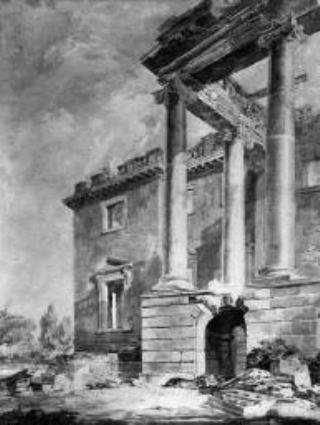
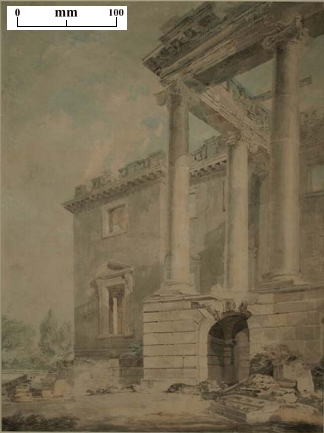
When Rev. Robert Nixon took possession of 'The rising squall, hot wells, from St. Vincent's rock, Bristol' at Foots Cray in 1793 he already had a small collection of Turner's works. Amongst them was a watercolour drawing, 'Ruins of Sir Gregory Page Turner's House, Blackheath' dating from from around 1790. The latter is now known as 'Ruins of Wricklemarsh, Blackheath' (16¾" x 12¾") in the possession of Leicester Museum & Art Gallery. It was sold by the executors of Sir William Richard Drake as 'View of Mr. Gregory Page Turner's House' at Christies on 27th June 1891, lot 291. The Burlington Magazine January 1975, vol 117 No. 862, page 48 reports that Wricklemarsh originally had six columns, four of which were removed in the 'early 1790's' (leaving just two in place). Turner's drawing shows three columns and must therefore date from before the 'early 1790's'.
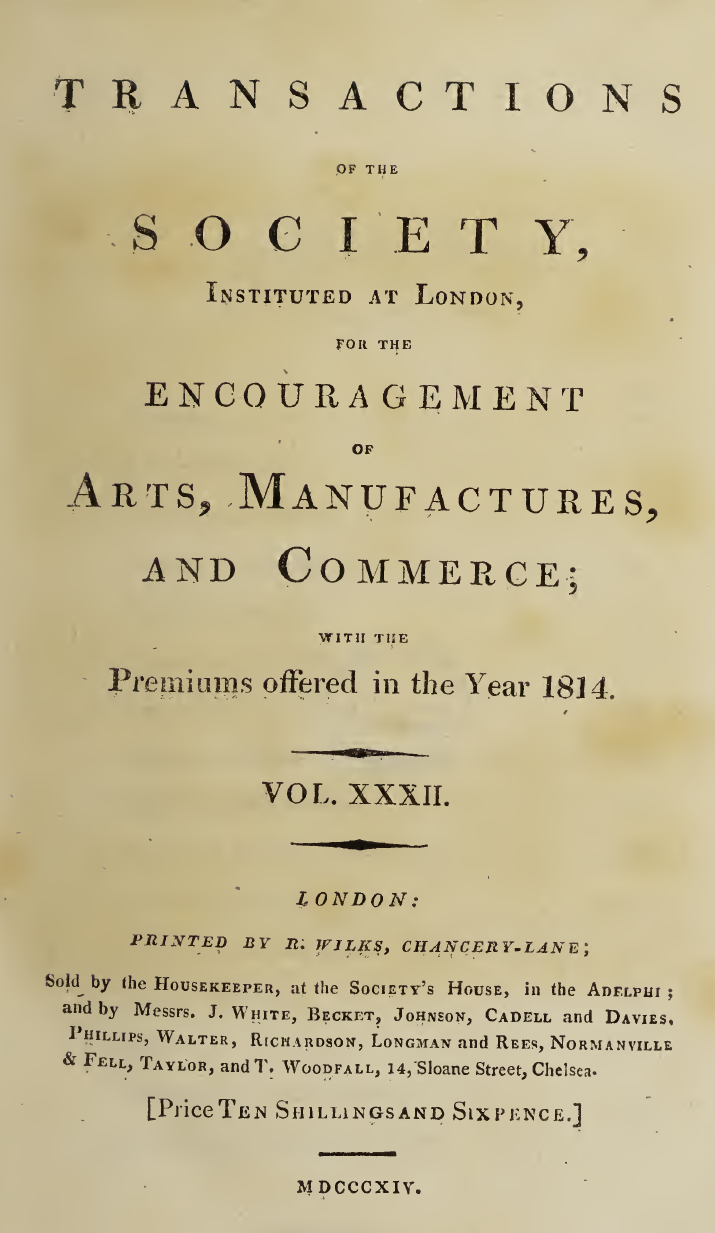
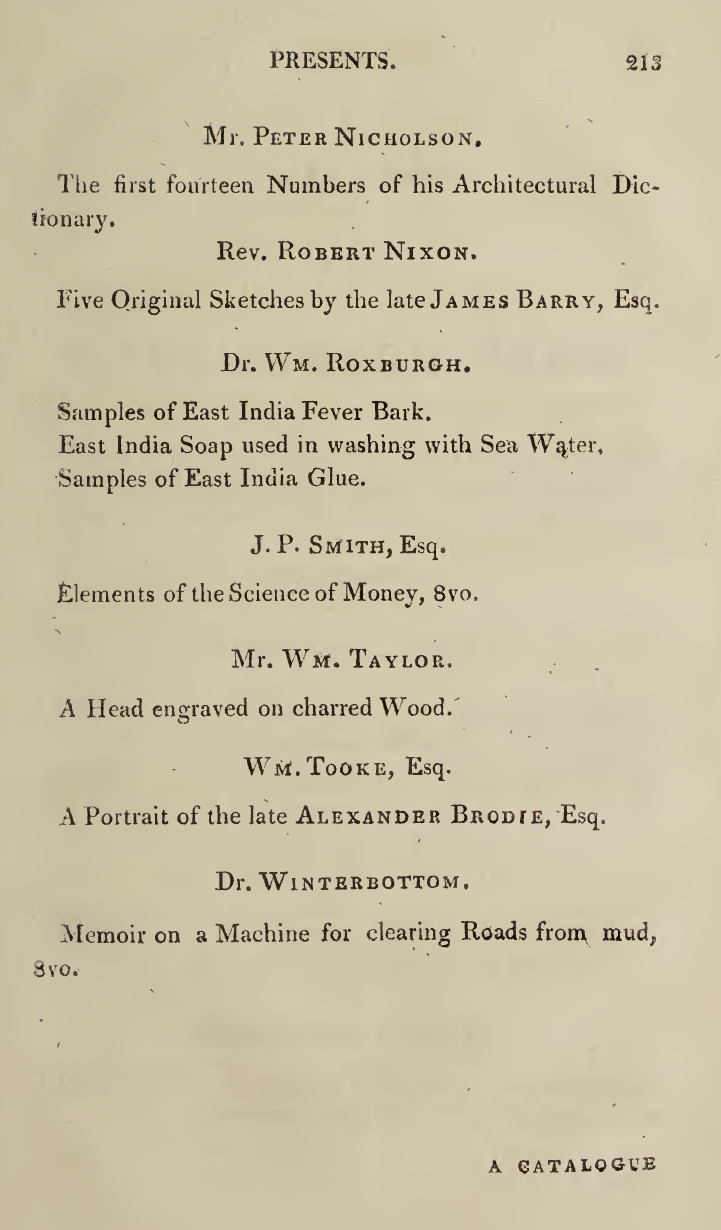
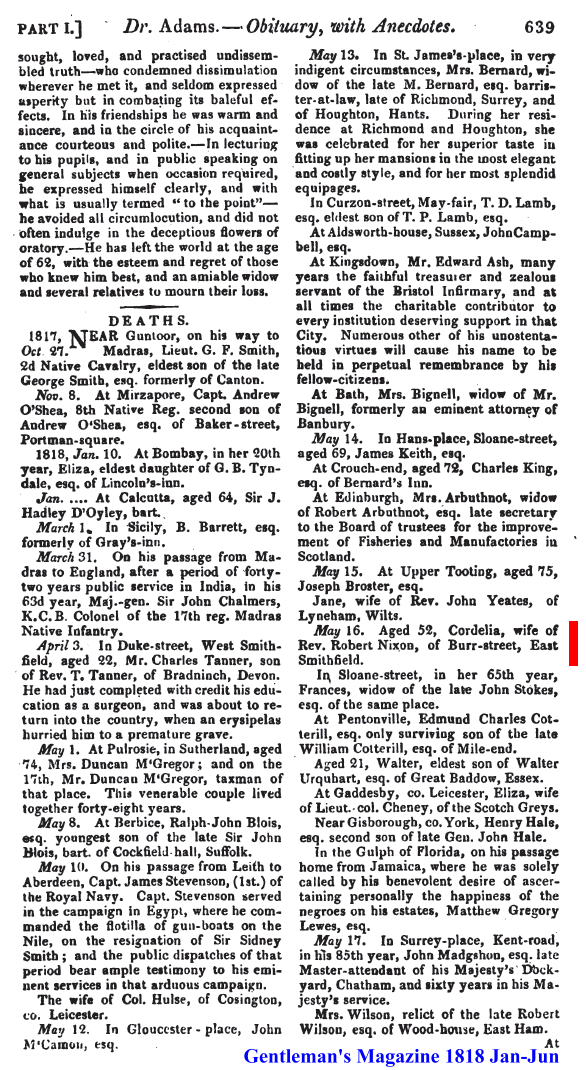
The image on the left came from the Tate Gallery website but has been removed; accession number: tw349. A similar, coloured photograph of the watercolour-drawing in Leicester Museum and Art Gallery is shown on the right and an inscription on it confirms that this is 'Ruins of Sir Gregory Page Turner's House, Blackheath' now known as 'Wricklemarsh, Blackheath, Kent'. Also in Rev. Robert Nixon's collection around 1793 were 'River Scene, View on the Dee' and 'Shakespeare's Cliff, Dover' watercolour-drawings both of which appeared in Joseph Hogarth's sale, Christie's, March 14th 1866, lots 440 & 441. The other oil, which appeared in Joseph Hogarth's sale of 9th - 11th July 1864, lot 151, 'The Country Waggon, Snowdon - Early Morning', was said by Rev. Dr. Francis Russell Nixon to be Turner's first painting in oil which would date it to before the 1793 Royal Acadeny exhibition. (Sir Walter Armstrong suggests that this picture was painted between 1798 and 1800. However, these dates are clearly wrong because several oils had been exhibited before 1798). In 1813 Rev. Robert Nixon presented five drawings by James Barry to the 'Society for the Encouragement of Arts, Manufactures and Commerce' (now the RSA). His gift was recorded in their 'Transactions, Vol. XXXII' and his address shown as Chaffcroft House, Charlton, Kent and 33, St. Mary Axe (London). By 1818, aged 60, he had moved to Burr-Street, East Smithfield (London) (see Gentleman's Magazine 1818 page 639, illustrated). |
|
|
30 | |
.
| Society for the Encouragement of Arts, Manufactures and Commerce 1814 / Gentleman's Magazine 1818 | |
|
|
|
| 31 |
.
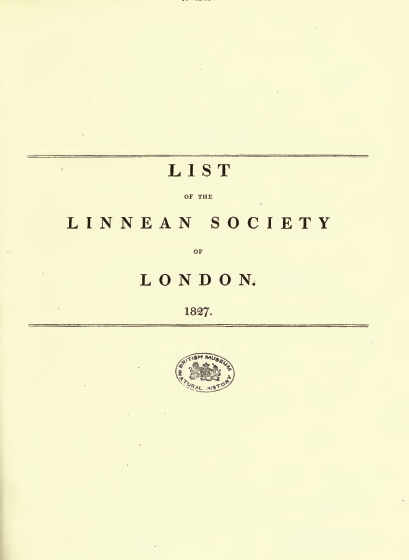
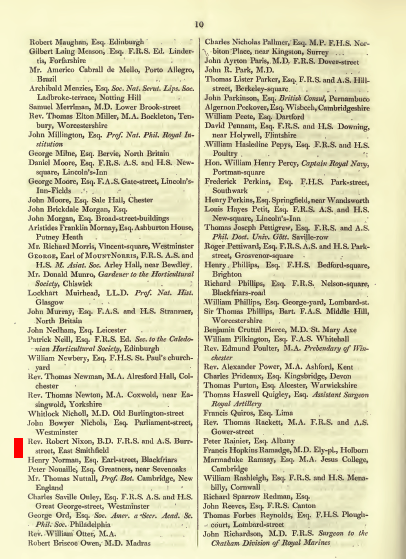
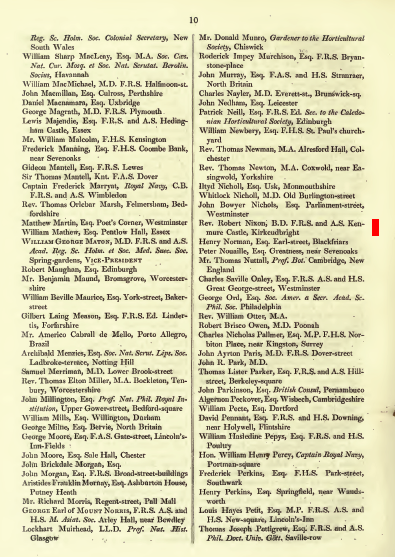
| Linnean Society 1827 & 1828 / Gentleman's Magazine 1838 | |
|
|
|
| 32 |
.
|
Provenance from 1793 to July 1864 (continued)
|
|
|
Rev. Robert Nixon was a Fellow of the Linnean Society. Their annual lists recorded names an addresses of the Fellows. The pages illustrated for 1827 and 1828 show him resident in Burr-street, East Smithfield until 1826. (The annually published lists show data for the previous year) In 1827, aged 68, Rev. Robert Nixon moved to Scotland. He resided in Kenmure Castle where he served as a domestic chaplain until his death in 1837.
'The rising squall, hot wells, from St. Vincent's rock, Bristol' was in the possession of Rev. Robert Nixon from 1793, at Foots Cray, to 1827, at Burr-Street. and then for the last ten years of his life at Kenmure Castle although it is not clear whether Robert took his collection to Scotland. If not, the collection would have passed to his sons in 1827. Otherwise, 1837. We have no record of any part of Robert's collection gifted or bequeathed to George. The part of his collection which descended to Rev. Dr. Francis Russell Nixon, Robert's second son is, however, well documented and included these five works by JMW Turner.
|
|
|
33 | |
.
| Hobart Town Exhibition 1845 | |
|
|
|
| 34 |
.
|
Provenance from 1793 to July 1864 (continued)
|
2 |
|
At the time it was acquired by Rev. Francis Russell Nixon, whether this be 1827 or 1837, 'The rising squall, hot wells, from St. Vincent's rock, Bristol' became known simply as 'Landscape'. (After his move to Tasmania, Francis exhibited the two Turner oils inherited from his father as 'Landscape' and 'View of Snowdon, North Wales', (the latter being clearly 'The Country Waggon, Snowdon - Early Morning'). In 1827 Rev. Francis Russell Nixon was unmarried and living in Layton, Essex;
In 1829 he married his first wife Frances Maria Streatfield; their marriage record shows him as 'Reverend Francis Russell Nixon, a clerk of Leyton, Essex. They had daughters, Fanny (born 1834) and Harriett (born 1835). He was appointed chaplain to the embassy in Naples but by 1836 Frances Maria had died and in January 1836 he was appointed to Sandgate, (Folkestone), Kent and on 5th December married his second wife Anna Maria.Woodcock at Dover. Rev. Robert Nixon died on November 5th 1837 so if Francis' took possession of his share of the collection at this time he did so whilst at Sandgate. From 1838 to 1842 Francis served as curate of St. Nicholas at Ash Next Wingham, near Canterbury, Kent. The collection was in his possession throughout his tenure at Ash. In 1842 Francis was appointed Bishop of Tasmania; his full title became 'Rev. Dr. Francis Russell Nixon, Lord Bishop of Tasmania' and various abbreviations of this appeared in publications that followed. He sailed, with his family and possessions including his art collection, on the Duke of Roxburgh on 7th March 1843 and arrived in Hobart Town on 18th July 1843. His daughter, Fanny, died during the voyage. The five works by JMW Turner in the Bishop's collection were exhibited at the Hobart Town exhibition of 1845:
|
|
|
35 | |
.
| 'Landscape' (133) and Snowdon (157) were exhibited again in 1858; 1858 Hobart Town catalogue | |
|
|
|
| 36 |
.
|
Provenance from 1793 to July 1864 (continued)
|
|
|
The two oils were exhibited again in 1858. 'The rising squall, hot wells, from St. Vincent's rock, Bristol' was again exhibited as 'Landscape'; No. 133; notice that it is marked 'O' for 'oil'. The 1858 exhibition was reported in the Hobart Town Daily Mercury on 22nd June. The report for 'Landscape' ('The Rising Squall') No. 133 and 'View of Snowdon, North Wales' was written by Rev. Dr Francis Russell Nixon, Lord Bishop of Tasmania himself.
Note what the Bishop said about connoisseurship of
both works:
Rev. Dr. Francis Russell Nixon served in Tasmania until 1862. He returned to London, arriving 22nd May 1862. He had retired the Tasmanian office due to ill health and his next appointment was less demanding, Bolton Percy in York. It is unlikely that the Turner paintings went with him. Four of the five, including "The Rising Squall", are next found in auctions of properties of Joseph Hogarth the picture dealer based in London at 5, Haymarket. Between the return of Rev. Dr. Francis Russell Nixon and the first of those auctions (9th July 1864) Joseph Hogarth exhibited six photographs at the 1863 Photographic Society Exhibition held at the Gallery of the Society of British Artists, Suffolk Street, Pall Mall East. Exhibit 471 was 'A frame containing six copies of Turner'. The identity of the pictures appearing in the six photographs is unknown. A catalogue is said to be held by the Victoria and Albert Museum, London ('www.peib.dmu.ac.uk' as of June 2022). |
|
|
37 |
.
| 'Landscape and Snowdon were exhibited again in 1858; 1858 Hobart Town Daily Mercury | |
|
|
|
| 38 |
.
| 'Landscape and Snowdon were exhibited again in 1858; 1858 Hobart Town Daily Mercury | |
|
|
|
| 39 |
.
| Joseph Hogarth Probate, Paxton House, West Drayton | |
|
|
|
| 40 |
.
|
Provenance from 1793 to July
1864 (continued)
Joseph Hogarth |
|
|
'The Rising Squall' and 'The Country Waggon' did not sell at the auction of 9th July 1864. The Art Journal recorded the buyer as 'Reynolds' but that was probably the failed bid. There are further sales of 'The Country Waggon' and of the three watercolour drawings. There is no record that Joseph Hogarth sold 'The Rising Squall' and, if it remained unsold at his death, he died with it in his possession. There are no later sightings of the picture. Joseph Hogarth's probate shows that he died at Paxton House, West Drayton. That is not the modern-day Paxton House at Berwick upon Tweed. A peculiar phrase in the codicil of his will gives rise to a suspicion that all was not well in Joseph's life. He wrote, "I have the greatest horror of litigation". 'The Rising Squall' did not emerge following his death; this may suggest that he may have deliberately hidden it with some other possessions.
The last sighting of 'The rising squall, hot wells, from St. Vincent's rock, Bristol' was on 9th July 1864 in the possession of Joseph Hogarth and this ends the evidential provenance. Joseph Hogarth bought the lease of a property in West Drayton in 1873. This was a piece of land with two houses built on it. One was a semi kown as 2, Orchard Villas; the other was a large detached house called Orchard House. He renamed Orchard House to Paxton House. He let 2 Orchard Villas which was later renamed to '1 Orchard Villas' and later to 113 Station Road. Subsequent renumbering made this property 147 Station Road and it is here that the picture may have been abandoned. |
|
|
41 |
.
| C.F.Bell, 1901 | |
|
|
|
| 42 |
.
|
6. What Went Wrong?
|
|
|
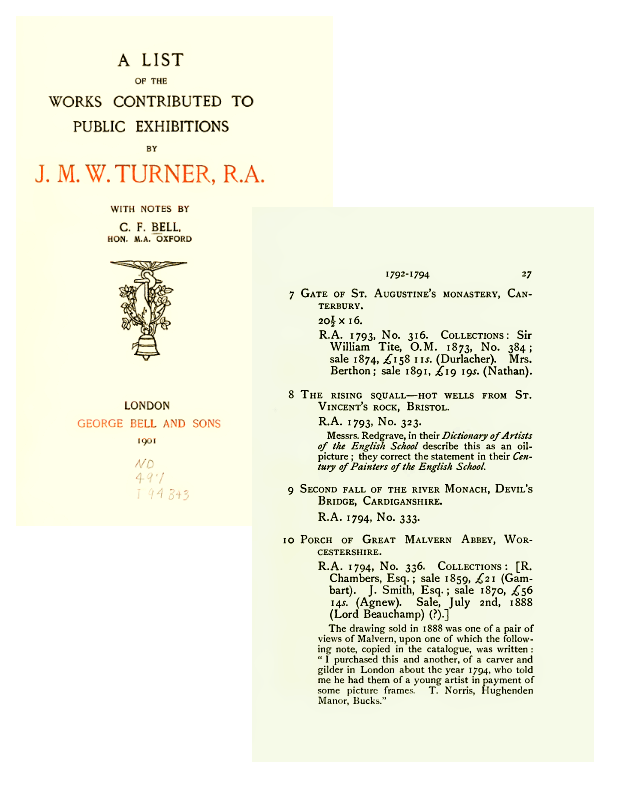
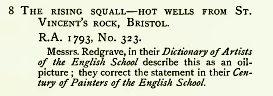
How 'The Rising Squall' was transformed from an oil picture into a watercolour drawing. In a nutshell 'The Rising Squall' was transformed into a watercolour drawing due to an unbelievingly stupid mistake by C. F. Bell. Here is C. F. Bell's statement regarding 'The Rising Squall'.
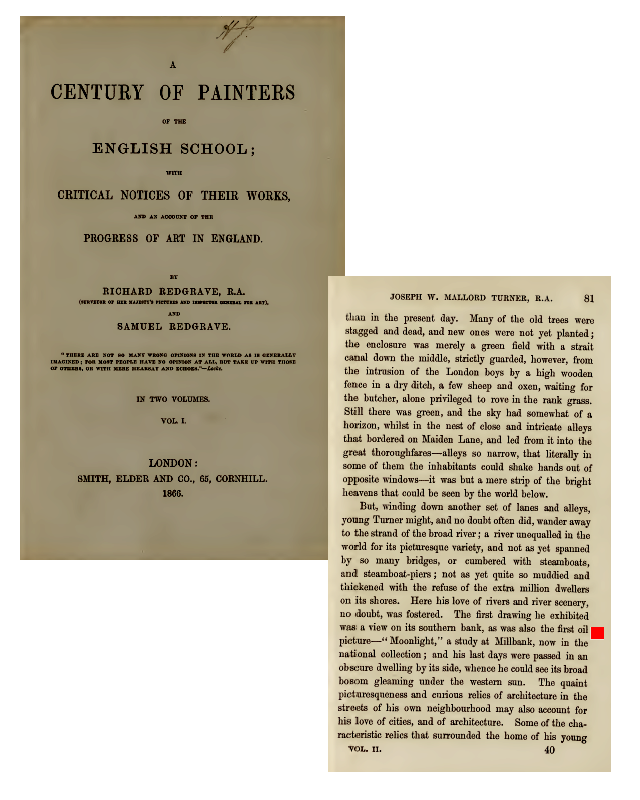
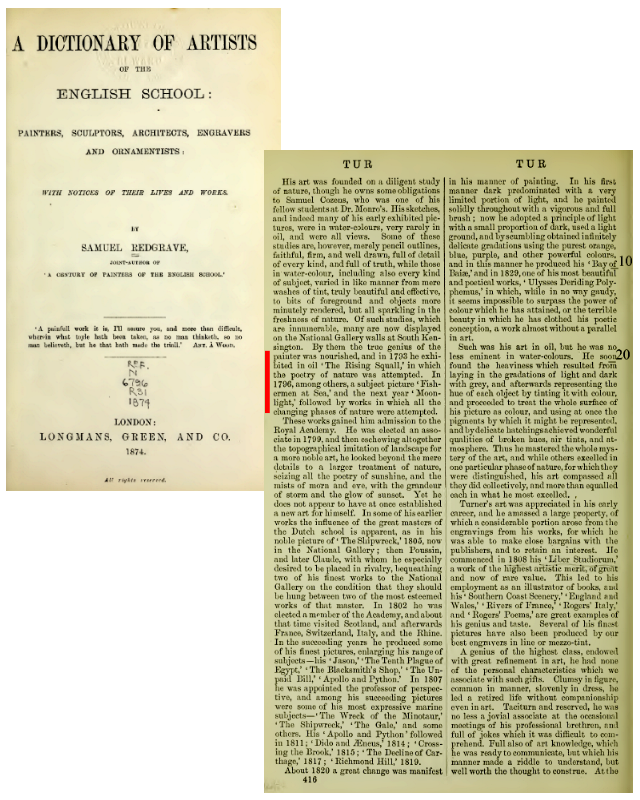
He cites two references:
These are illustrated on the following two pages: (Note that their order is reversed.)
Substituting this information into C.F.Bell's statement we have:
Bell's proposition is that the authors, in 1866, 'corrected' a statement made in 1874. This is clearly ridiculous. |
||
|
43 |
.
| Richard and Samuel Redgrave, Century of Painters
of the English School, published 1866 in two volumes.
The title page illustrated is from Vol. 1, the extract for Turner, page 81 is from Vol. 2. |
|
|
|
|
| 44 |
.
| Dictionary of artists of the English School, by Samuel Redgrave was published in 1874. | |
|
|
|
| 45 |
.
| Gilbert Redgrave, Richard's son | |
|
|
|
| 46 |
.
|
What Went Wrong? (continued) | |
|
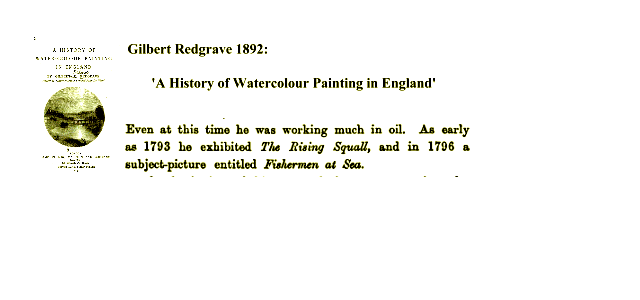
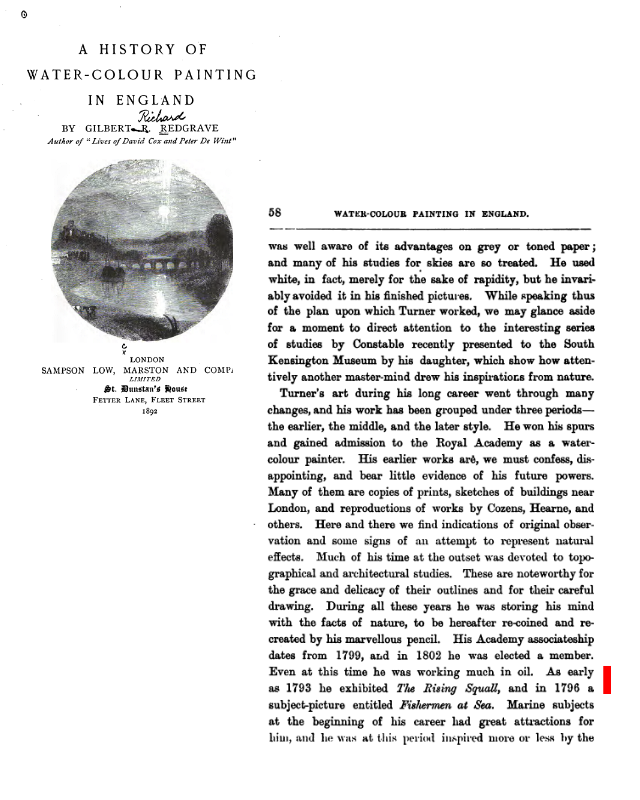
C.F. Bell compounded his error in respect of 'Messrs. Redgrave' because he (Bell) completely ignored Gilbert Redgrave. Gilbert was Richard's son and published 'A History of Watercolour Painting in England' in 1892 (nine years before Bell's publication). Gilbert Redgrave couldn't have been clearer:
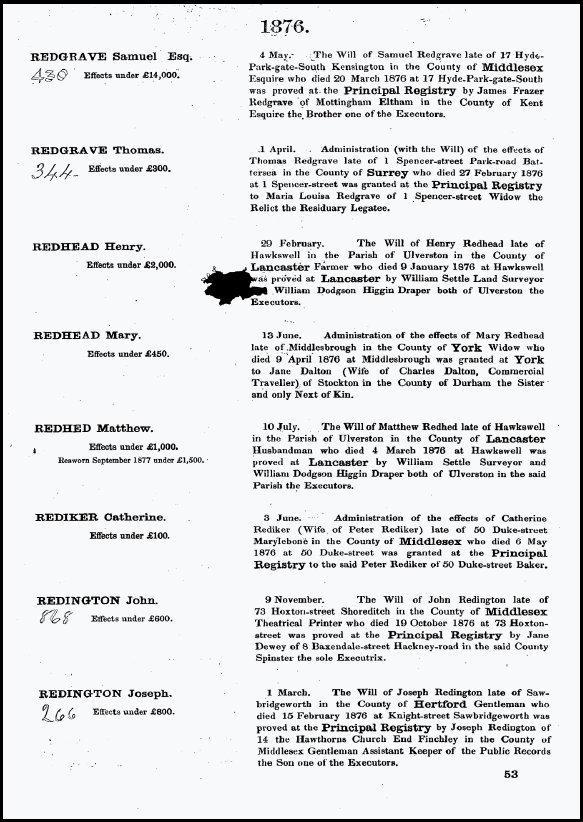
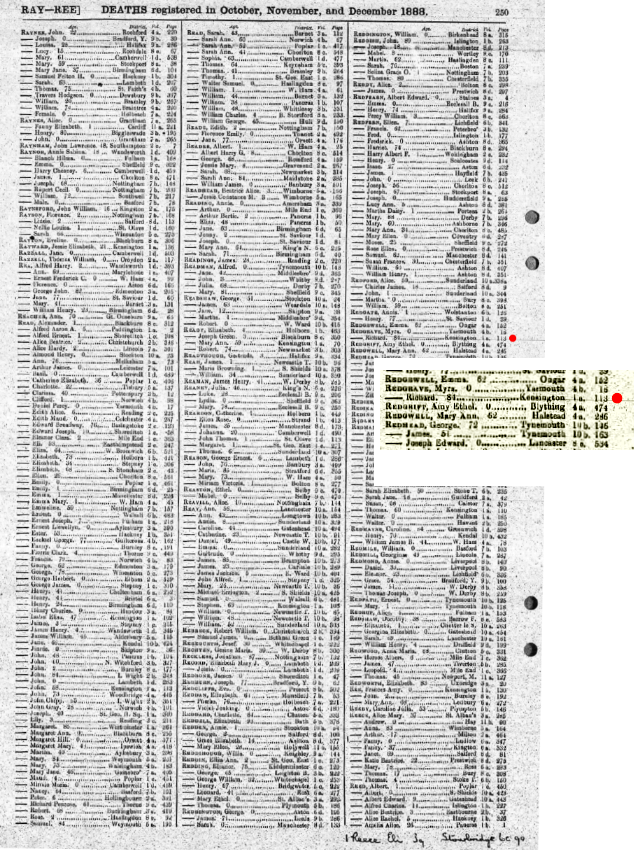
Samuel Redgrave died in 1876. Richard Redgrave died in 1888. (Illustrated, Samuel's probate; Richard's page, from the register.) Two years after the death of Samuel, in1878 his 'Dictionary of Artists of the English School' was reprinted. There was no change to the content in respect of 'The Rising Squall' Following Richard's death, 'Century of Painters of the English School' was reprinted, in 1890. It can be seen from the new publication dates that the reprints appear in the 'wrong' order and it appears that C. F. Bell was working from the reprint dates instead of the original publication dates. A reprint of Gilbert Redgrave's 'A History of Watercolour Painting in England' was made during Gilbert's lifetime in 1905 when he was aged 61. If he had issues with the content it could have been corrected at this time. It may be said, of C.F. Bell, that he did not have modern resources, libraries and the internet. However, this mistake is not about resources but just about a very simple error that is very easy to make when dealing with an overwhelming amount of information. |
||
|
47 |
.
| Samuel Redgrave (1802-1876) died 20th March 1876 | |
|
|
|
| 48 |
.
| Richard Redgrave (1804-1888) died 1888, Kensington. Page from Register. | |
|
|
|
| 49 |
.
|
What Went Wrong? (continued)
Tate Research page 1 |
|
|
|
|
|
50 |
.
|
What Went Wrong? (continued)
Tate Research page 2 |
|
|
|
|
|
51 |
.
|
What Went Wrong? (continued)
|
|
|
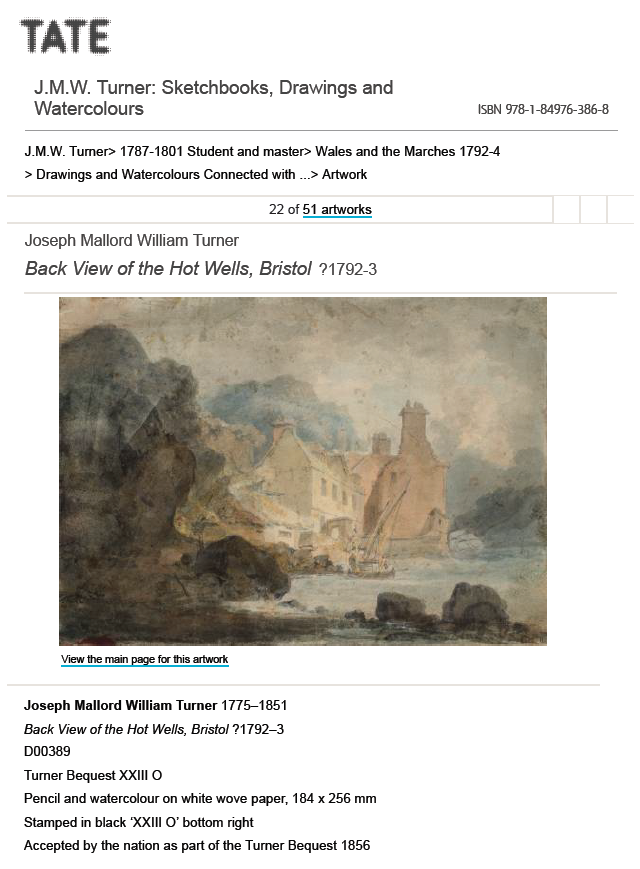
C. F. Bell's erroneous analysis persisted. Many publications perpetuated the myth that 'The Rising Squall' was a watercolour-drawing and this continues. The internet is littered with references to it and these proliferate thanks to artificial intelligence. The error has also found its way into the most prestigious collection of all: the Turner Bequest in the Tate. (illustrated previous two pages) It should be mentioned that there is a mistake in the Tate's essay. There is a citation of Peter Cunningham's work:
However, this is not the quotation from Peter Cunninham's Memoir'. Earlier we discussed the 'evinced' quotations and they were:
The passage quoted is from the December 1851 obituary in the Athenaeum. |
|
|
52 |
.
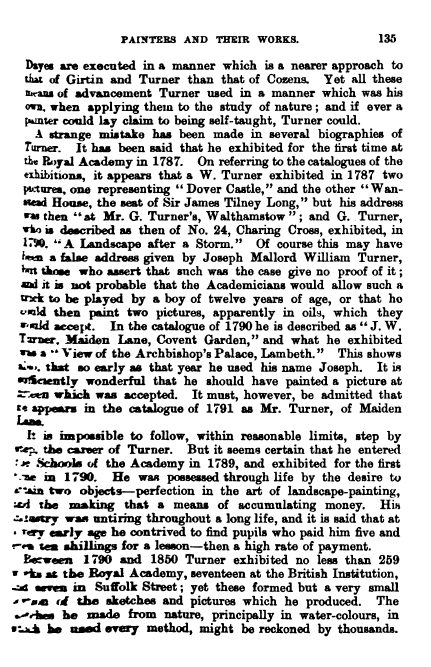
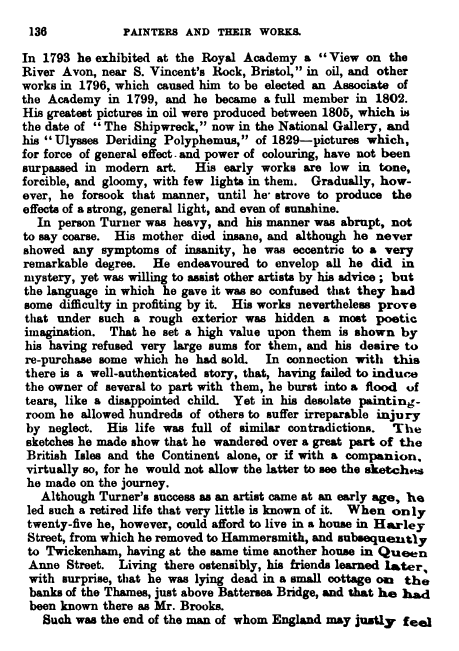
| Ralph N. James, 'Painters and their Works', 1897 | ||
|
|
What Went Wrong? (continued)
|
|
|
Ralph N James (c1810-1899), in 'Painters and their Works' 1897 (L. Upcott Gill) Volume 3, page 136, gives the year of Turner's first exhibited oil as 1793:
James provides a title but not as the 'Rising Squall' and this is an indication that he consulted the Royal Academy Exhibition catalogue and concluded that the picture in the ante-room was an oil.. |
||
|
|
||
| 53 | ||
.
|
What Went Wrong? (continued)
|
|
|
In 'Painters and their Works' 1897 (Illustrated) the author Ralph N James following the common understanding that oils were exhibited in the great room and ante-room saw Turner's catalogue entry and wrote:
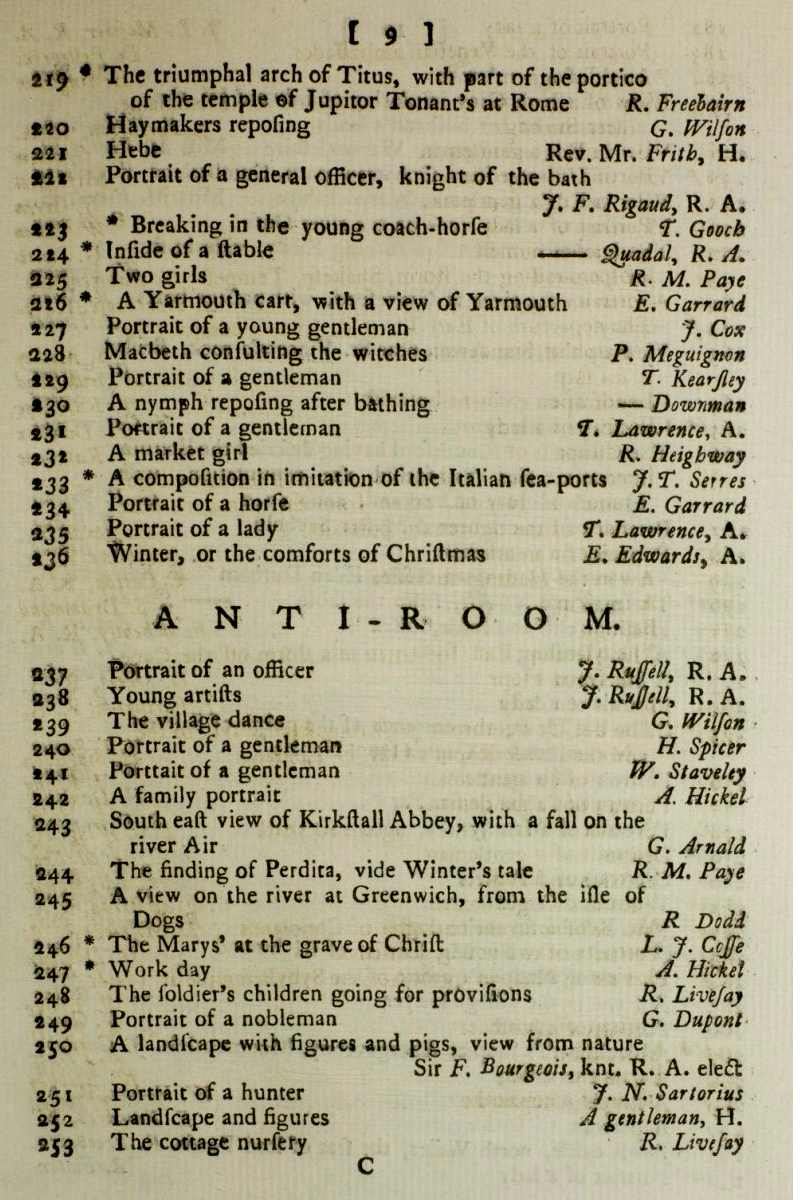
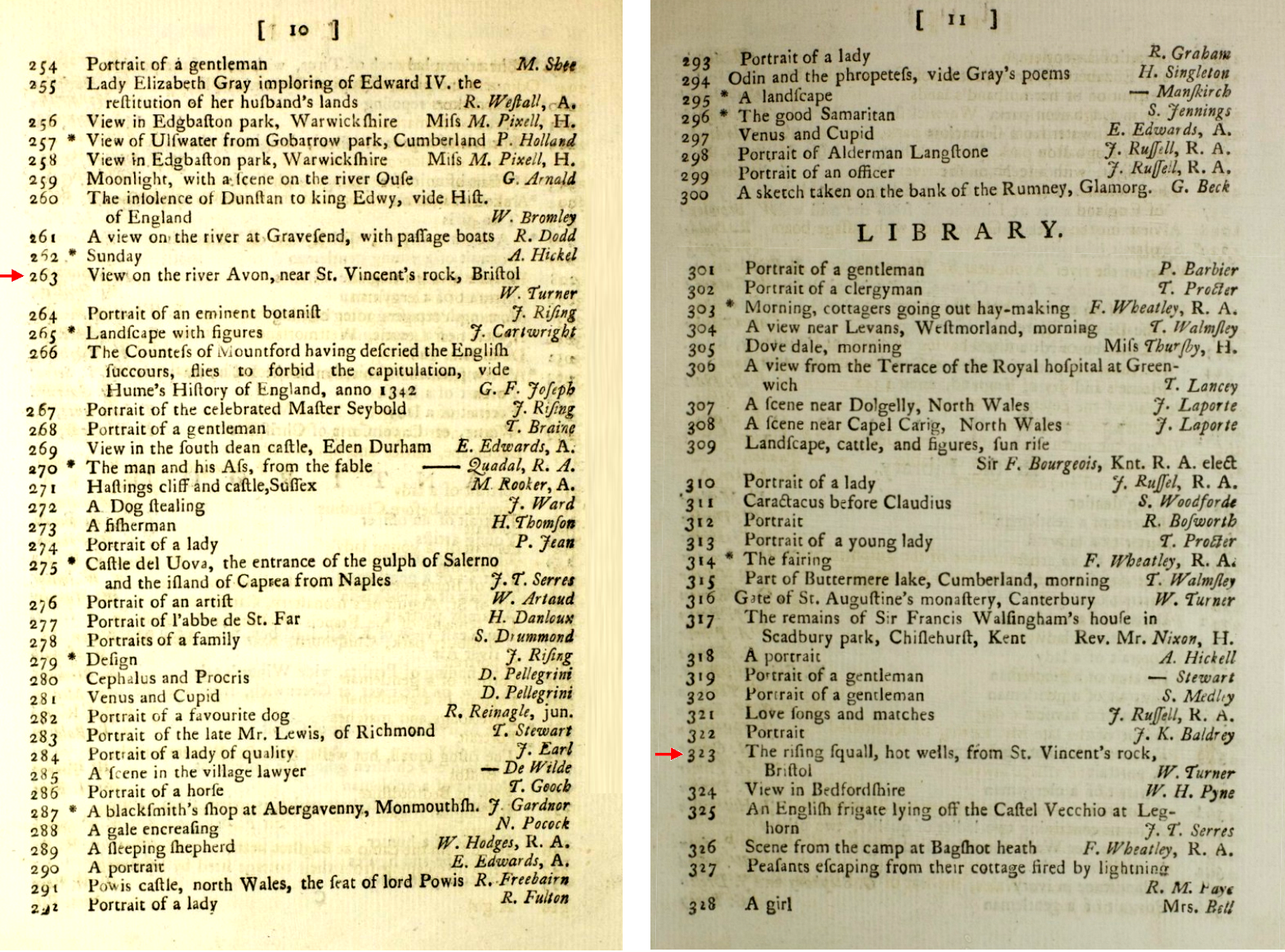
James provided a title but not as the 'Rising Squall' James assumed that 'View on the river Avon, near St. Vincent's rock, Bristol ' was the oil because the catalogue showed it in the ante-room. (on page 10) |
| Royal Academy 1793 Catalogue | |
|
|
|
| 54 |
.
|
In an earlier version of this text we wrote: Whilst it is possible, it is very unlikely that Turner's watercolour-drawing 'View on the River Avon, near St. Vincent's Rock, Bristol' was hung in the ante-room. and explained this by a transposition of titles in the catalogue. However, it seems more likely that: 'The rising squall, hot wells, from St. Vincent's rock, Bristol', was hung, downstairs, in the library as shown in the catalogue and: 'View on the River Avon, near St. Vincent's Rock, Bristol', hung in the Anti-Room, was also a oil. 'View on the River Avon, near St. Vincent's Rock, Bristol' was exhibited in the Anti-Room at No. 263 and as such is likely to have been an oil. It was not marked as 'drawing' or 'crayon' in the Anderdon/Bell copy of the 1793 catalogue; (the Russells were marked) It appeared in the Huskinson sale where Christies recorded it as 'exhibited RA 1793'. Redford recorded its presence in the Huskinson sale as an oil. |
| Royal Academy 1793 Catalogue | |
|
|
|
| 55 |
.
| The Rising Squall At The Royal Academy | |
|
The probable position of Turner's, 'View on the River Avon, near St. Vincent's Rock, Bristol', in the ante-room in 1793 derived from Sandby's drawings of the 1792 exhibition and the numbering in the 1793 catalogue. This picture was auctioned at Christie's on 27th April 1864 (lot 90) by Leonard Huskinson. 'The rising squall, hot wells, from St. Vincent's Rock, Bristol' was at 323 in the Library, then: ...at the 1845 / 1858 Hobart Town exhibitions. ...at the auction of 9th July 1864
|
|
| 56 |
.
|
7. Conclusion:
The journey of 'The Rising Squall' From oil to watercolour and back again! |
|
|
The journey of 'The Rising Squall' is a troubled one. Inspired by visits to the Narraway family in Bristol in 1791 and May 1792, painted in the winter of 1792, after receiving oil paints and canvas from Rev. James Douglas of Rochester and encouraged in pursuit of oil painting by Rev. Robert Nixon of Foots Cray, it was exhibited in the Library in Somerset House from 29th April to 8th June 1793. It was an oil painting amongst many other watercolours and oil paintings by more familiar names than Turner and, being in the Library, was misinterpreted as a watercolour. Of its few days or weeks after the exhibition nothing is known. However, it was soon on its way to Foots Cray Kent and the Rev. Robert Nixon who cared more about the painter than the painting. After some twelve years it moved to London with Rev. Nixon, first St. Mary Axe then Burr Street, East Smithfield. In 1827 Rev. Robert then 70 years old moved to Kenmure in Scotland. Did 'The Rising Squall' go with him? It emerged in Tasmania, in the possession of Rev. Robert Nixon's second son, Rev. Dr. Francis Russell Nixon, Bishop of Tasmania, at Upper Davy Street in Hobart Town and in 1845, forty two years after its appearance at the Royal Academy, was, at last, exhibited again. However, its title was missing and it was known only as 'Landscape'. It moved with the Nixons in 1850 to 'Bishopstowe, New Town' (Now Runnymede Museum) and was exhibited again in 1858, still as 'Landscape' Back in London in 1864 it found its true identity again with Joseph Hogarth. Even so, at its auction at Christies the original title was not printed in the catalogue. Instead it was identified by a cryptic reference but one which was capable of only one interpretation. Unsold, it remained with Joseph Hogarth who died in 1879. Its mythical transformation to watercolour began in 1901 with C. F. Bell's misinterpretation of research by the Redgraves and persists to this day. For many years a watercolour-drawing in Bristol Museum was said to be 'The Rising Squall'. The Tate Gallery website still has references to 'The Rising Squall' as a watercolour and the internet is littered with similar erroneous statements. In early 2025 'View on the River Avon, near St. Vincent's Rock, Bristol' was found. In this picture there is no noticable sign of a squall, it is not a view 'from' St. Vincent's Rock and there is only one fisherman on the boats. However, it has been misidentified as 'The Rising Squall' - Is history repeating itself? The purpose of this book is to restore 'The Rising Squall' to its proper place in history as one of J.M.W. Turner's first exhibited oil paintings. Further work will hopefully reveal its true identity. |
|
|
57 |
.
|
. | |
| 0specific_identifications_an_oil_exhibited_in_1793__book_format.htm | ||
|
. |
.
|
Index | |
|
To be constructed |
.
|
. | |
|
. |
.
|
Acknowledgements | |
|
To be constructed |
.
|
. | |
|
. |
.
|
Extended Bibliography | |
|
To be constructed |
.
 ...
...
 ...
...


 ...
...
 ...
...
 ...
...
 ...
...
 ...
...
 ...
...
 ...
...
 ...
...
 ...
...
 ...
...