BACKGROUND ~O~
The discovery of JMW Turner's oil on canvas exhibited at the Royal Academy
in 1793 ~O~
BACKGROUND
Chronology of Events Leading Up To the
Exhibition of 'The 1793 Hotwells Oil' and its Destination Thereafter
with added background in green,
additional notes and indefinite possibilities in
[light brown]
This chronology is illustrative. Is is based on a balance of probabilities having regard to the evidence collected.
23 April 1775 Turner birth
23 April 1789 Turner 14th birthday
March 1790 Turner
delivered his first exhibit to the RA Exhibition:(d)
644 View Of The Archbishop's Palace, Lambeth
23 April 1790 Turner 15th birthday
March 1791 Turner
delivered to the RA Exhibition: 'King John's palace, Eltham' No.
494
March 1791 Turner delivered to the RA
Exhibition: 'Sweakley, near Uxbridge, the seat of the Rev. Mr.
Clarke' No. 560
23 April 1791 Turner 16th birthday
1791 Turner returned to London
1791 (a) Turner painted two small
watercolours based on his visit to Bristol D00389 and D00391 (must
pre-date the oil 'The Rising Squall' but must post-date D00074)
1791 (c) Turner painted (or finished if it
was started at the Narraways) Malmesbury Abbey watercolour (based on his
visit to Bristol) for 1792 RA exhibition (436)
1791 Turner finished (or nearly finished) the watercolour (started at
the Narraways) of 'View on the river Avon, near St. Vincent's rock,
Bristol' which would become RA 1793 exhibit 323 (But may have been
intended for 1792 had there been no Pantheon fire)
1792: 14 January 1792 Pantheon fire. Turner sketched and painted his
watercolour D00121 over the next few days or weeks
March 1792 Turner delivered to the RA
Exhibition: 'Malmesbury Abbey' No. 436
March 1792 Turner delivered to the RA
Exhibition: 'The Pantheon, the morning after the fire', D00121, No.
472
23 April 1792 Turner 17th birthday
1792 He painted in oil a near copy of his Self
Portrait at the Narraways
1792 In late 1792 Turner painted an oil on canvas which would become
RA 1793 exhibit 263
March 1793 Turner delivered to the RA
Exhibition: An oil on canvas No. 263 which Cunningham called
'Rising Squall over St. Vincent's Rocks at Bristol'.
March 1793 Turner delivered to the RA
Exhibition: A watercolour No. 316 which he (Turner) called 'Gate of
St. Augustine's monastery, Canterbury'
March 1793 Turner delivered to the RA
Exhibition: A watercolour No. 323 which (shown herein sup.) was
'View on the river Avon, near St. Vincent's rock, Bristol'
April 1793 Turner 18th birthday
1793 Following the exhibition Turner collected
his exhibits which he returned to his studio
1793 (summer) Another vistit to Kent - The
tour which resulted in the 1794 Rochester engraving
1793 Turner compiled work, probably
sketches, for the 1794 engraving of Rochester.
. . . . . The 1793 exhibit which Cunningham called 'Rising Squall
over St. Vincent's Rocks at Bristol' was probably delivered to the Rev.
Robert Nixon
. . . . . at Foots Cray during this tour.*[2]
The inference of the extract in the footnote is that Nixon commissioned
the work but it could have been a gift.
1793 After Foots Cray Turner probably visited the Douglas family
again (where he prepared work for the Rochester engraving). He had left an
oil on canvas ('Rochester Castle and the Adjacent Grounds') on his earlier
visit and it is possible that he now brought the Self Portrait canvas.
1793 During this tour there appear to be additional Canterbury
sketches.
1793 At the end of this Kent Tour Turner
returned to London
1793 (later) Turner painted 'A Watermill' oil on paper based on a
watermill near the west gate, Canterbury.
Notes on the chronology:
(a) 1791 or 1792. The
order of D00389 and D00391 is not clear but they both include the dome
rock.
(b) The chronology will be expanded in later
notes.
(c) Plans for Turner's 1792 exhibits were
interrupted by the Pantheon fire.
(d) Exhibit entries are shown in blue.
(d) 'Background' entries are shown in green.
[_NEXT_]
20_95
*[1] There is no record of why he gave these pictures away. The reason is probably that they were too wet to transport. Turner was accustomed to watercolours drying overnight whereas the oils would need a matter of weeks even if painted thinly. It is more than likely that they were just 'left' with the respective recipients rather than being regarded as 'gifts'. Although the assumption has been that it was bequeathed by the Rev. Douglas upon his death, the Douglas picture may have simply remained with Margaret from the time Turner painted it.
*[2]
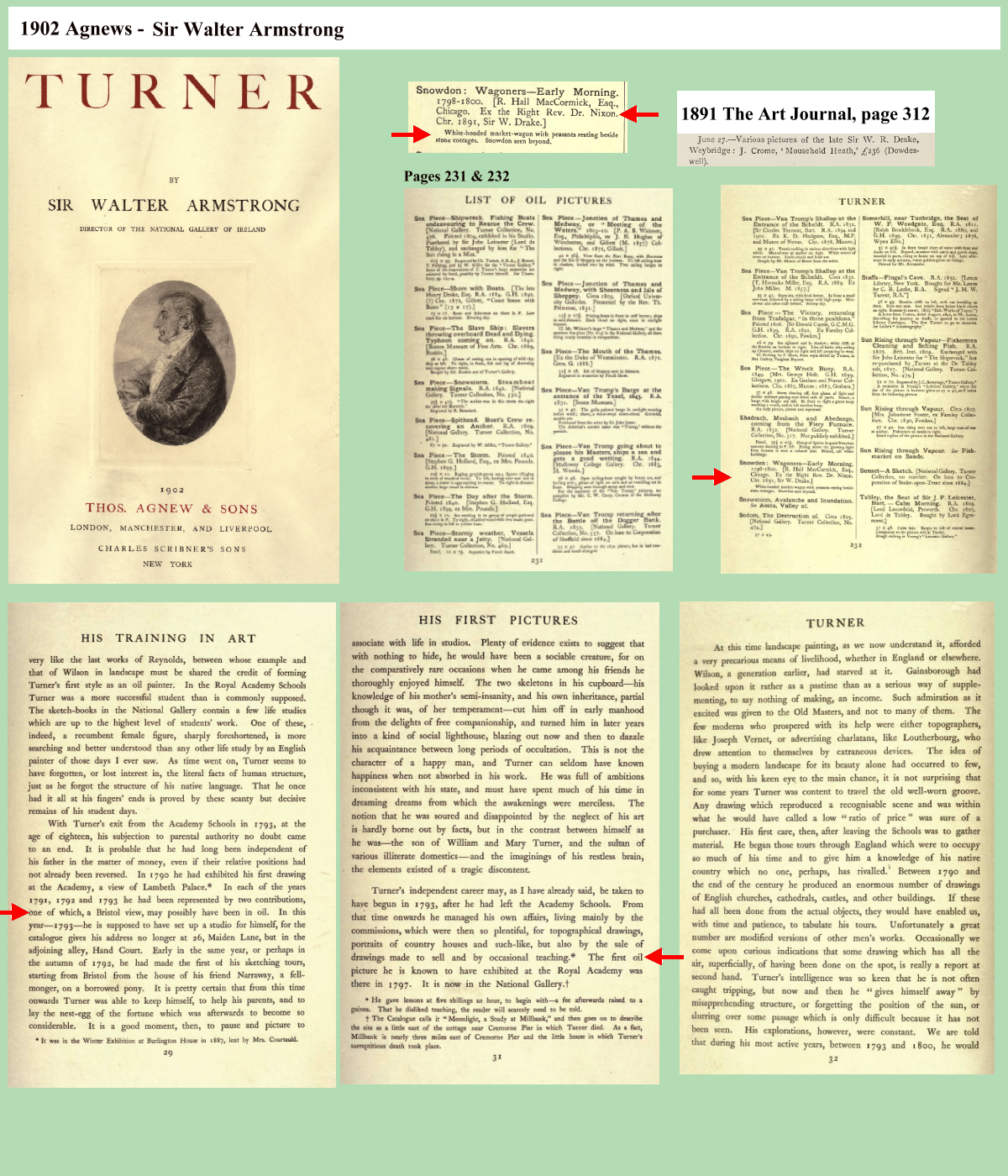
Further provenance is available for 'The Country Waggon, Snowdon - Early Morning' in Armstrong as 'Snowdon: Waggoners - Early Morning' where there is a description of the picture. In 1891 this picture passed to Sir W Drake. Armstrong does not mention the Hotwells picture.
*[2] (cont) The circumstances of the 1864 sales:
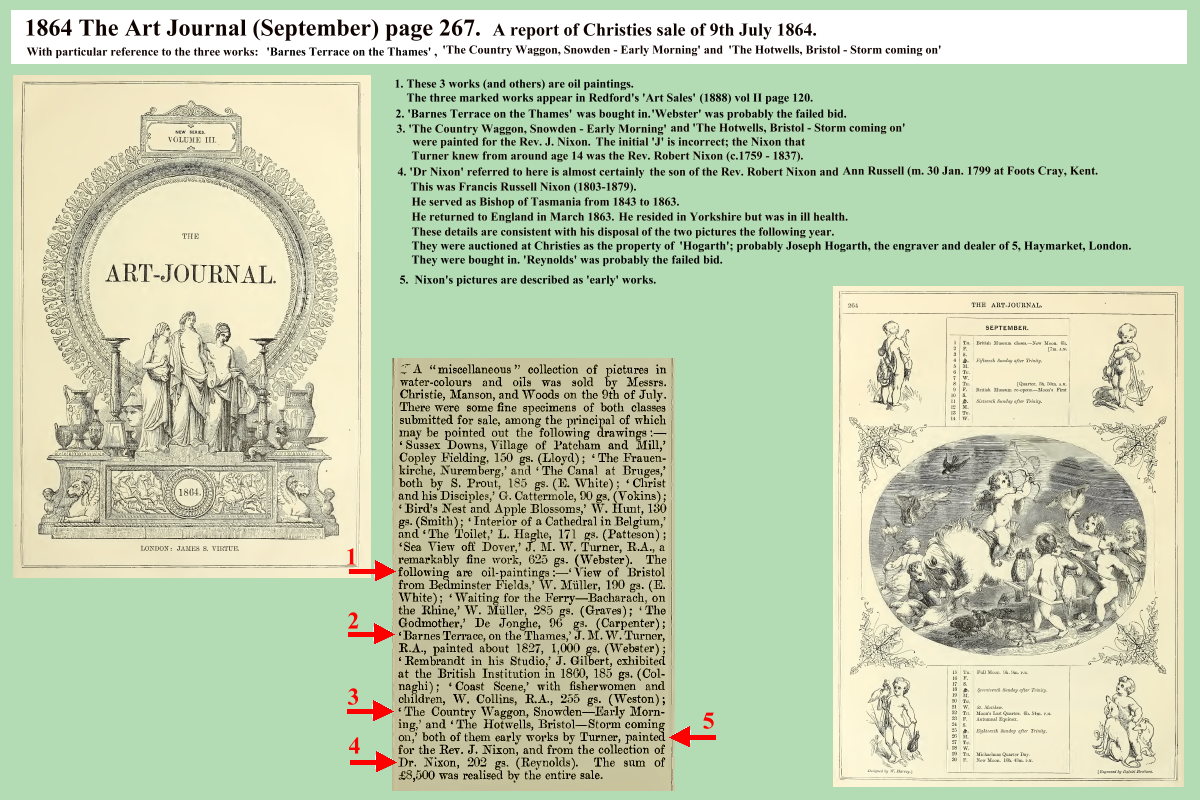
The Art Journal and Armstrong above leave no doubt that Nixon owned
'Hotwells' and 'The Country Waggon'. There was, however, an earlier 1864
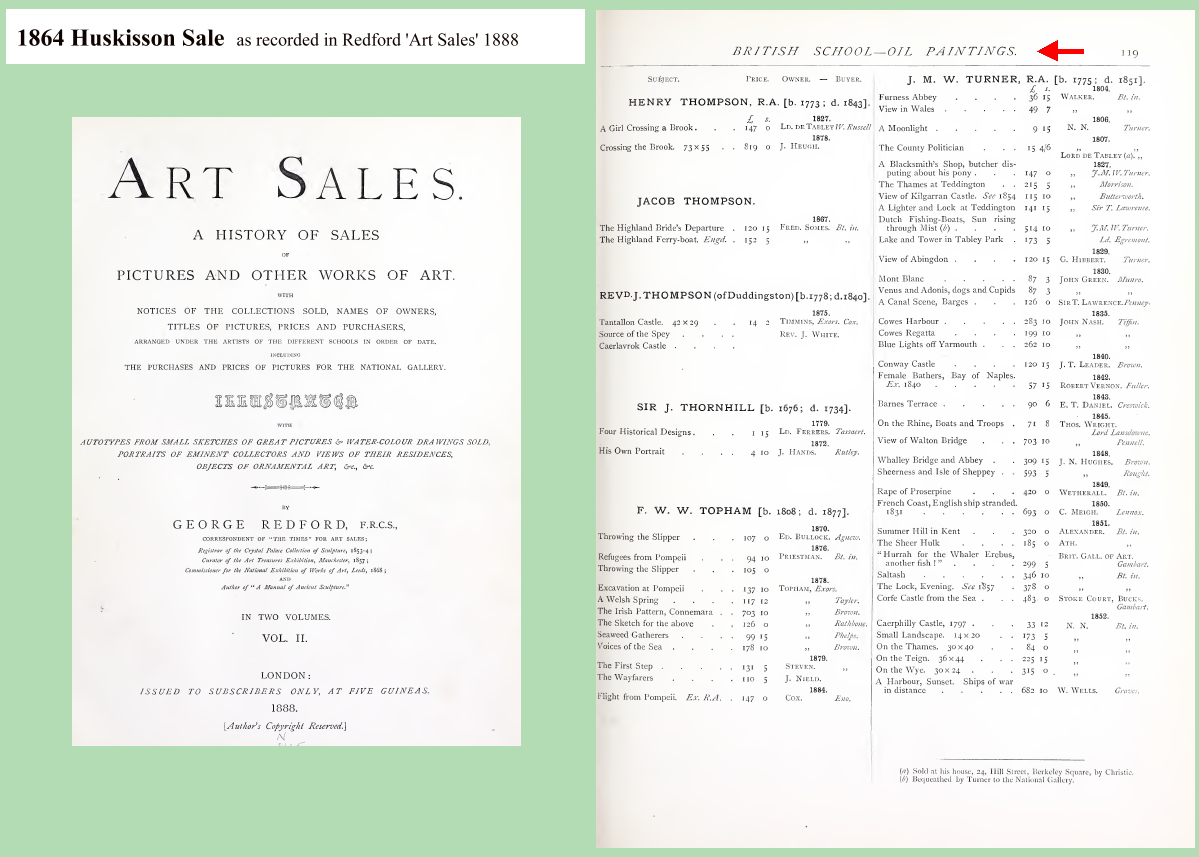
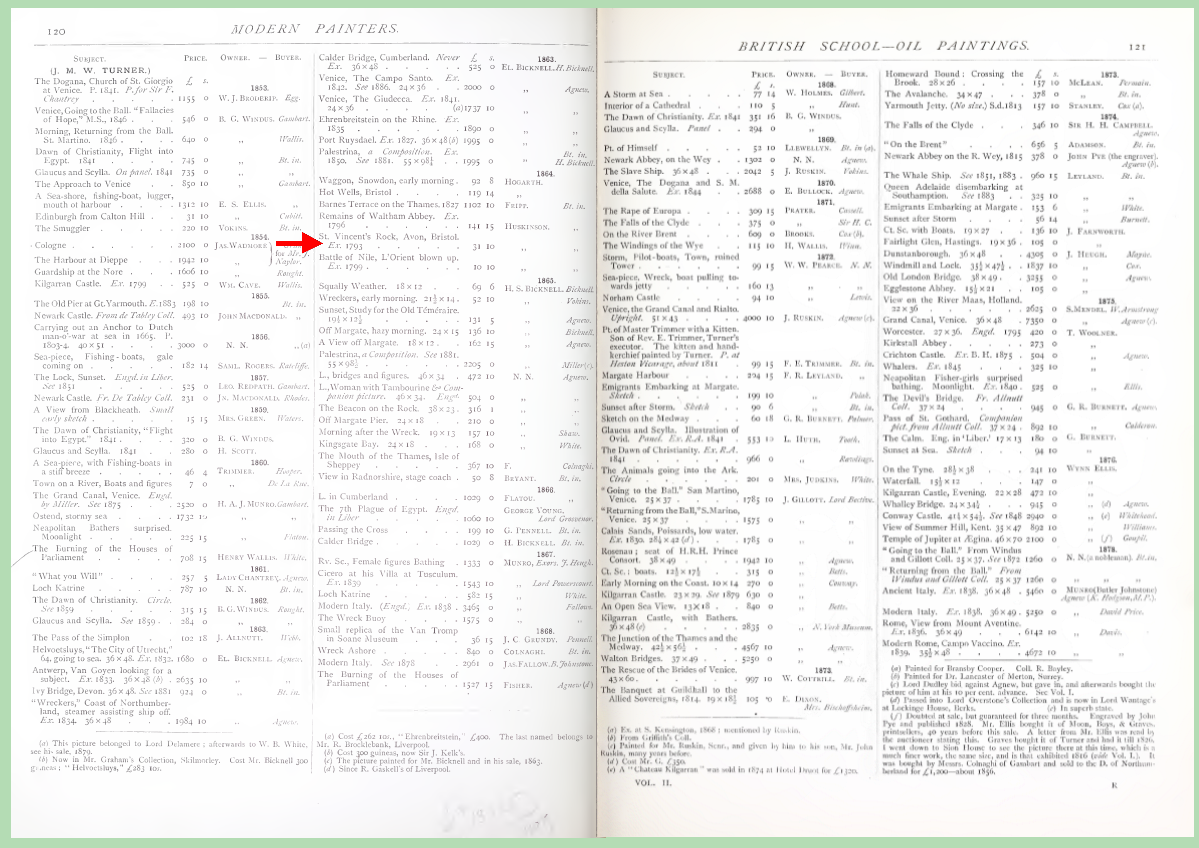
sale at which three pictures were offered for sale by 'Huskisson'. This
sale was recorded in Redford and confirmed by e-mail from Christies.
Huskisson appears to have offered the 'Hotwells' picture clearly
described as the 1793 RA exhibit. This picture belonged to Nixon so it is
possible that Nixon owned the other two, 'Battle of the Nile' and 'Remains
of Waltham Abbey'.