CUNNINGHAM & CATALOGUE ~O~
The discovery of JMW Turner's oil on canvas exhibited at the Royal
Academy in 1793 ~O~
CUNNINGHAM & CATALOGUE
Combined Literary Evidence and the 1793 Royal
Academy Exhibition Catalogue
.
These findings are completely independent of any discovery of the oil:
.
From the above it is concluded that Turner exhibited an oil in 1793 and his title for it was 'The rising squall, hot wells, from St. Vincent's rock, Bristol'. It was not marked up for sale so it can be firmly assumed that it was returned to Turner at the end of the Exhibition. From there it was delivered to The Rev. Robert Nixon at Foots Cray and descended to his second son Rev. Dr. Francis Russell Nixon, Bishop of Tasmania. Following sales in 1864 the picture was lost.
.
[_NEXT_]
10_20
*Footnotes:
*[1] Albeit Turner's actual tiles and not Cunningham's Monkhouse's or Redgrave's hybridised versions
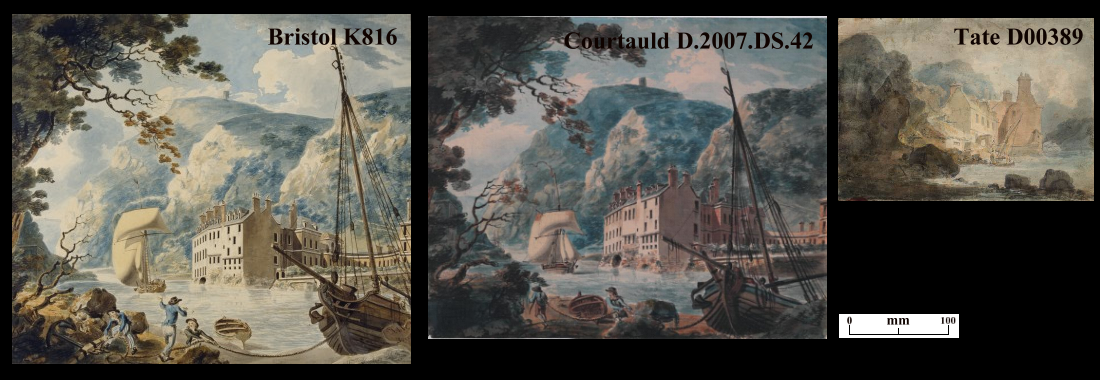
*[2] These three watercolours have been at various times been said to have been exhibit 323 and thought to be 'The rising squall, hot wells, from St. Vincent's rock, Bristol'. There have been many attempts to read into them some quality of 'Rising Squall' but in reality not one of them show any rising squall at all. Squalls and storms were well established in seapieces in 1793 and Turner was well aquainted with them even at 17 years old in 1793.
None of these depict a rising squall. However, they all fit the description 'View on the river Avon, near St. Vincent's rock, Bristol'. However, Turner already had a title for D00389; 'Back View of the Hot Wells, Bristol' so his exhibited 'View on the river Avon, near St. Vincent's rock, Bristol' must have been Bristol K816 or Courtauld D.2007.DS.42 or something entirely different. Dimensions of Bristol K816 are approx. 14"x16" but it appears to have been trimmed when compared with the Courtauld; on the left the base of the little tree is missing, on the bottom the small boat is incomplete and on the right the stern of the ship appears to have been removed. Note that wave crests run at approx 90 degrees to the Hotwells riverbank as they do in the candidate oil. It should also be noted that the scenes are not 'real' - much is Turner's invention (see the Bristol Museum notes that accompany their exhibit).
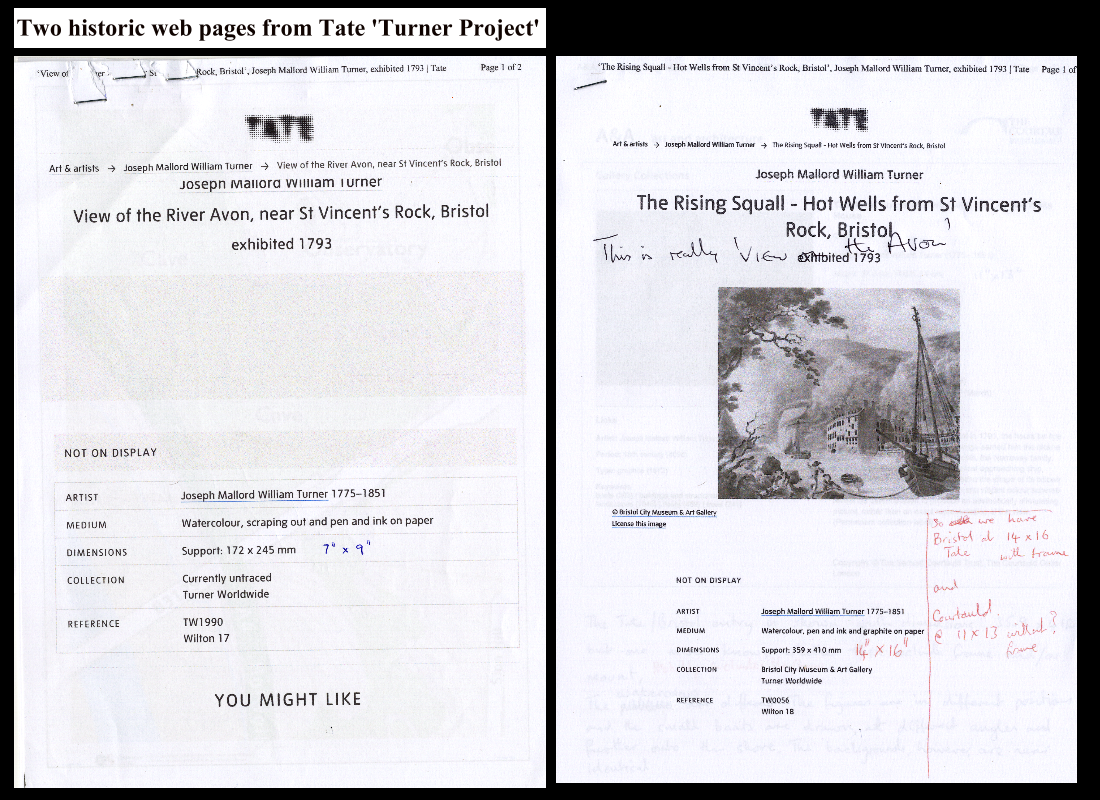
Historic web pages show how the 'The
rising squall, hot wells, from St. Vincent's rock, Bristol' was thought to
be the exhibit in Bristol Museum.
(note that there are two references for this work:
TW0056 and K816)(displayed here with the writer's annotations
because the originals are no longer available)
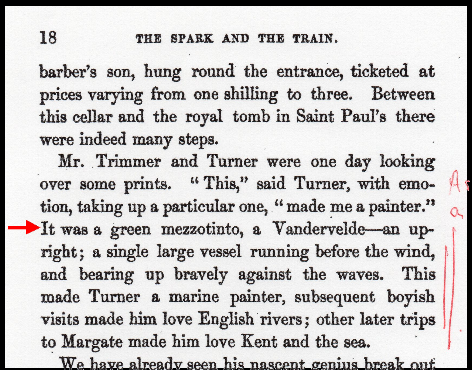
This extract from Thornbury (1862 edition) illustrates Turner's early appreciation of van de Velde:
So a 'squall' to Turner when he named his paintings for the 1793 exhibition would have a particular genre that was established inter alia by van de Velde. This painting by van de Velde (which could be the one referred to in Thornbury!) is known now by several names including 'A Ship on the High Seas Caught in a Squall'. This is what Turner understood as a squall.
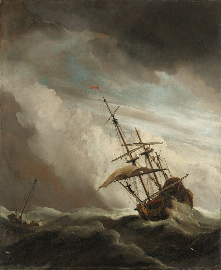 Van de Velde, 'A Ship on the High Seas Caught in a Squall', or 'The Gust',
oil on canvas, 30"x 25", Rijksmuseum.
Van de Velde, 'A Ship on the High Seas Caught in a Squall', or 'The Gust',
oil on canvas, 30"x 25", Rijksmuseum.
*[3] Catalogue Discrepancies
This discrepancies section is not intended as a criticism of the catalogue compilers but merely serves to illustrate that small unintentional mistakes could happen. In some circumstances last minute changes were not reflected in the catalogue and were put right in subsequent editions (general overview of reading David Solkin 'Art On The Line'). Note that these discrepancies may have been investigated and explained in other publications. The purpose here is just to highlight their existance.
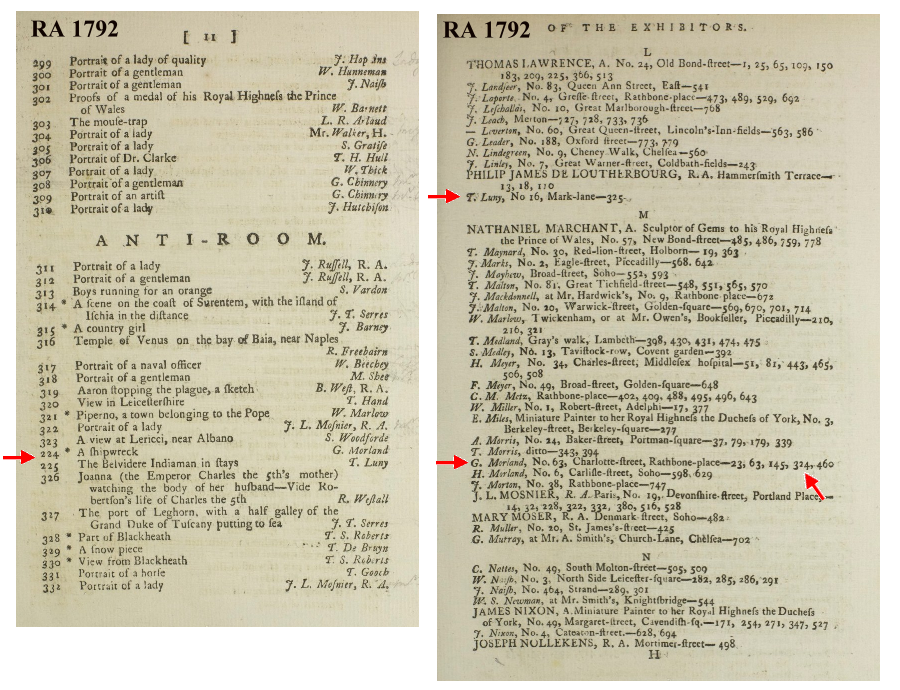
In the 1792 catalogue there are misprinted exhibition numbers for Morland and Luny in the anti-room. '324' and '325' are printed as '224' and '225'. They are correctly printed in the List Of Exhibitors:

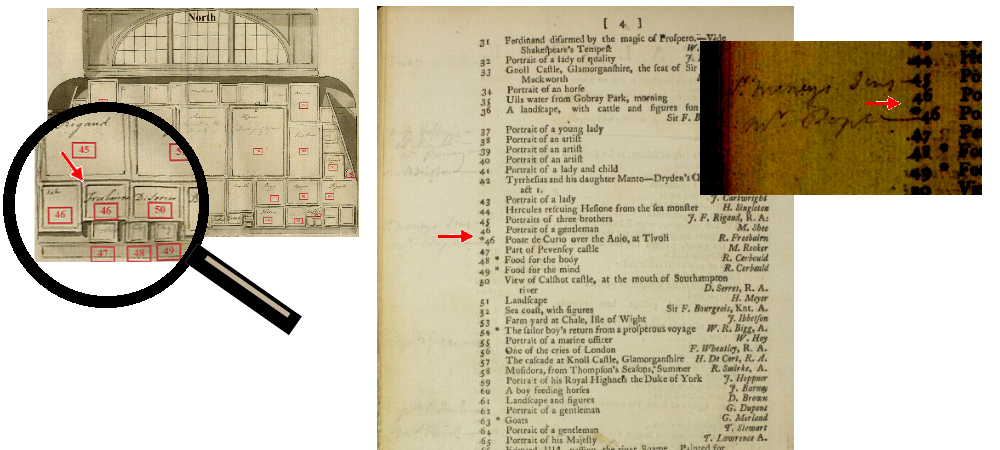
1792 There are two paintings number 46.
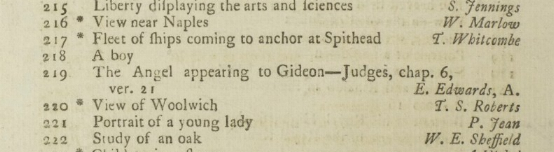
1792: No. 218 A Boy - No artist name but also no picture because it is not in Sandby’s diagram. This would indicate that Sandby drew his diagrams from the actual exhibition as hung (not beforehand as a guide to how to hang them.)
1792: In the following entries catalogue details do not match what Sandby recorded in his drawings:
No. 362 in Sandby's drawings shows 'Stewart'.
The catalogue shows 'Artaud' and in the List of Exhibitors: Artaud
93, 362
The List of Exhibitors shows two artists named Stewart: G Stewart
64,590; T Stewart 4
Sandby's diagrams show that pictures 362 & 4 are similar sizes;
they could have been swapped. In Sandby's diagram No. 4 looks like
'Stewart' but it is less clear than the definitive writing at 362.
No. 351 in Sandby's drawing is 'Raithbone'.
In the catalogue No. 351 is shown as 'Raeburn',
The List of Exhibitors for Raeburn 6, 351; and for Raithbone
102,174,212,530
If Sandby actually saw a Raithbone at exhibit 351 then the catalogue
is wrong. The question is, 'Who to Trust?'. Sandby was a distinguished
artist and RA; his drawings should be beyond question.
No.354 is seen as 'Wood' in Sandby's drawing.
In the catalogue it is 'Ward'.
In the List of Exhibitors ' J Ward' 123,141,354,356; and 'W Wood' 245
This looks, at a glance, like a Sandby mistake but would he make such
a mistake? 356 was clearly a 'Ward' (Sandby and catalogue agree), Why
would Sandby record a 'Wood' at 354 unless that is actually what he saw?
In the examples above there may be mistakes in either the catalogue or Sandby's drawings. Again this demonstrates that catalogue entries did not always entirely match exhibition exhibits.
In the1793 catalogue entry for No. 260 (W Bromley) differs slightly between two editions that have been examined during preparation of this footnote: The online version of the title entry shows “... king Edwy, vide...”; the AND/8/196 for page 10 shows “... king Edwy : vide...”. This tiny typesetting difference must be meaningful - this was hand set type and the small change would have involved a lot of effort.
1793 In the List of Exhibitors Pellegrini 281 as misprinted as 288, in this catalogue it has been corrected in manuscript.
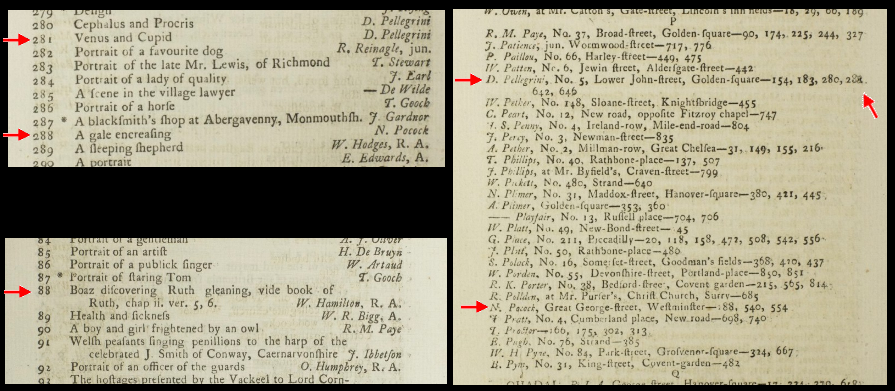
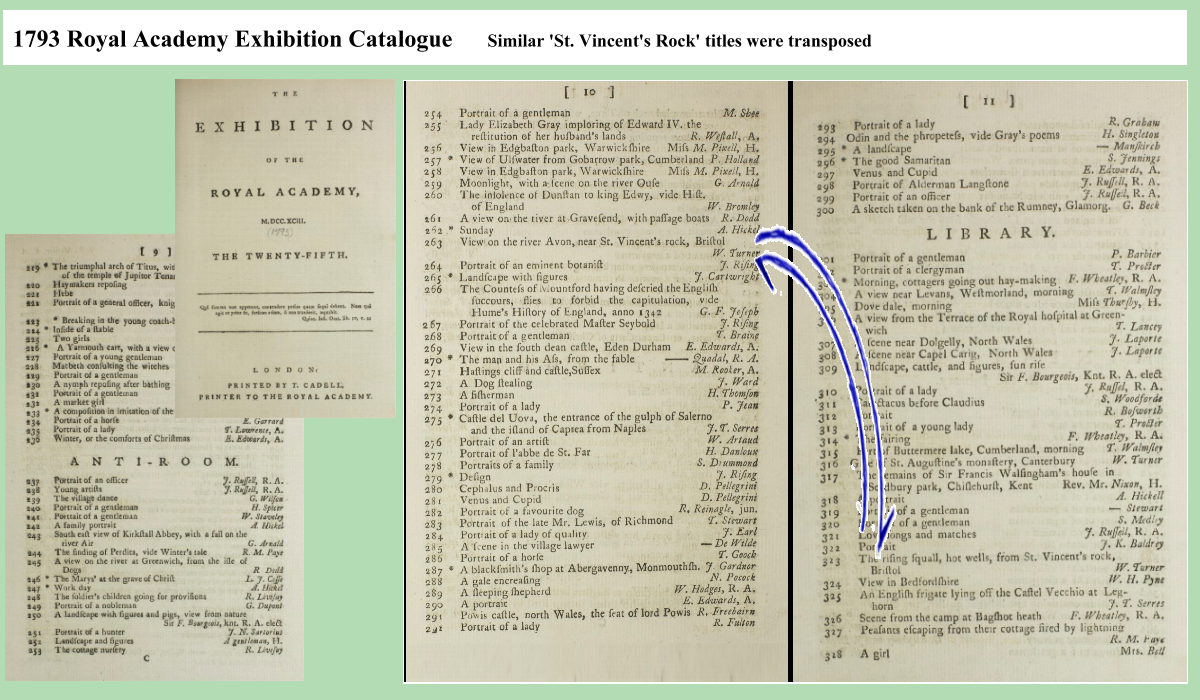
1793 By this analysis W Turner's titles transposed on Pages 10 & 11
10_20