LITERARY EVIDENCE ~O~ The discovery of JMW Turner's oil on canvas exhibited at the Royal Academy in 1793 ~O~ LITERARY EVIDENCE
To Determine The Identity of JMW
Turner's 1793 Exhibit In The Anti-Room
Literary Evidence
Abstract
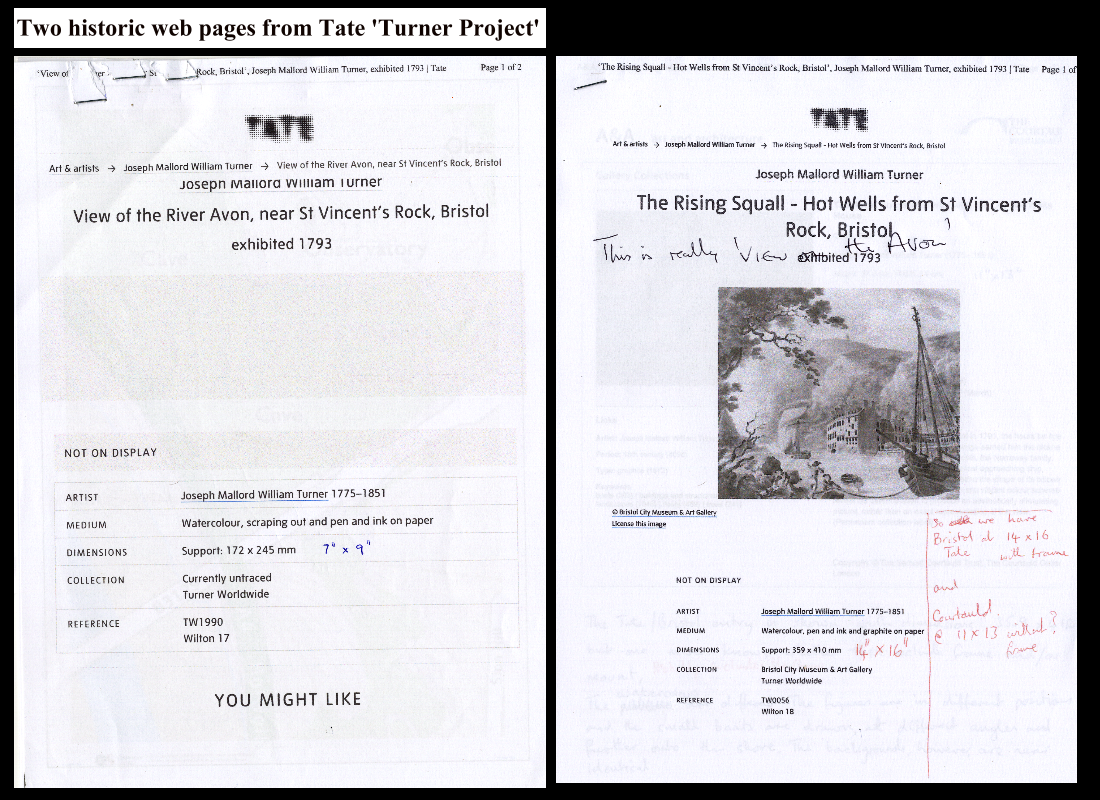
In the early 2000s, as part of the 'Turner Project', Tate Britain published two pages on the internet describing two works by JMW Turner. These two pages were references to exhibits said to have been in the 1793 Royal Academy Exhibition.
These two pages were removed in 2019 but are reproduced as a footnote to this abstract.
The purpose of this study was to find out the true nature of these exhibits and to identify them if possible. Key features of literary evidence, published before 1925, have been re-examined and the results are presented as a chronological list followed by a detailed discourse of each item.
From their positions in the exhibition it is determined that one was an oil (Anti-Room) and the other a watercolour drawing (Library). From literary references it has been found that an exhibit referred to using various titles similar to 'The Rising Squall - Hot Wells from St. Vincent's Rock, Bristol' was an oil. The exhibit 'View of the River Avon, near St. Vincent's Rock, Bristol' was found to be a watercolour. Titles of these two works originate in the 1793 Exhibition Catalogue which places 'The Rising Squall - Hot Wells from St. Vincent's Rock, Bristol' in the Library but because this title was an oil it could not have been hung in the Library. It follows that the titles in the catalogue were transposed:
It is further found that after the exhibition
The identification of the watercolour is only 'probable' if it later becomes certain then this note will be updated.. The oil has been identified but is controversial and is not included within the scope of this study which, whilst being part of the broader remit of attribution of the oil, does not rely on discovery of the oil for its integrity.
[_NEXT_]
07_10